Supporting Village Halls and Community Buildings throughout Berkshire

We provide a specialist Community Buildings Advice Service (CBAS) to members that give unique support to volunteer village hall & Community Building trustees/ management committees.

This bespoke service is mostly funded by the CBAS members paying for an annual subscription with additional funding to lower the fee for halls in Wokingham Borough from Wokingham Borough Council. A grant was also received from Peter Samuel Charitable Trust.


In 2022-23 we were able to deliver the following to our CBAS Membership;

  • Answer 161 requests for guidance from members that included a variety of questions/issues from gas safety, CCTV policies, online book systems, jubilee celebrations, banking issues, concerns over Trustees’ behaviour and much more.

A Village Hall in West Berkshire called our CBAS Advisor Kate extremely concerned as their latest insurance premium quote had increased by a whopping 40% compared to the previous year. Kate delved into this and contacted some reputable Village Hall insurance specialists. As a result of Kate’s research, the Village Hall got a much better deal and was able to reduce it by £200 compared to the previous year – a much better outcome than a 40% increase!

  • We offer our members free access to Basecamp – a digital platform that allows sharing and a discussion platform that contains case studies and key supporting documents. Discussion on this platform over the last year included sharing recommendations for baby change units and structural engineers, how to procure contractors, setting up Warm and Digital Hubs, and insurance for bouncy castle events.
  • Kate arranged and delivered a range of useful training workshops including;
    o Digital Savvy Village Halls
    o Hallmark 2 Wokingham
    o Hallmark 2 West Berkshire
    o Low Carbon Village Halls
    o Environmental Policy & Audit
    o Trustee Training
    o Energy saving
    o Hallmark Level 1
    o Funding (inc. Platinum Jubilee fund)
    o Dementia-Friendly Village Halls
    o Social Media for village halls
  • The service also provided proactive information and advice by distributing information on matters of interest and funding opportunities in e-newsletters every other month.
  • To represent our CBAS members Kate attended West Berkshire Council Community Energy subgroup, & Wokingham Borough Council Climate Change Partnership meetings. Kate collaborates with 38 other advisors across England to share knowledge, understand issues and find solutions. In turn, all 38 advisors in England attend an annual conference spearheaded by our national body Action with Communities in Rural England.

Jacob from a Berkshire Village Hall

“In terms of support, Kate Meads was instrumental in helping to navigate an extremely tumultuous time. Kate was extremely quick to respond to calls and emails, never treated a question as stupid (though I’m sure some were) and always took the time to provide thorough, well-thought-out, insightful and helpful advice and/or guidance. I’m happy to say our hall is now a thriving, buzzing hub for our community and a lot of that is down to support Kate gave me and the committee, to empower us and help us to make good decisions. Our community is certainly better off thanks to her involvement.”

Linda Gale, Trustee from Spencer’s Wood Village Hall

The management committee at Spencers Wood Village Hall has benefitted enormously from our membership of Community Buildings Advice Service both before Covid lockdown and more especially since, when the task of picking up the pieces has been difficult for most community buildings management groups.

Kate Meads and her team at CCB have always been a great source of information and advice whenever the committee has sought clarification on various management issues including Personnel management, Health & Safety, Utilities guidance, Energy efficiency, Trustee responsibilities, Fundraising and Grant opportunities, PR and Social Media, and general law and community issues.

Through our membership of CCB’s Community Buildings Advice Service they have been able to offer training to committee members, both face to face and online, which has been very helpful, sometimes showing how other village halls are managed and other times providing more in-depth knowledge and insight into the many management areas that the committee has responsibility for. The scheme for Hallmark accreditation has been particularly enlightening.

On a more personal note, Kate and her team have always been receptive to the concerns of individual members of the committee, showing depth of empathy and understanding, and always confidentiality. In short, I believe the service provided is essential to support the various volunteers managing community buildings.


Rural households are being disproportionately impacted by the cost-of-living crisis

Our national body Action with Communities in Rural England (ACRE) cites the combined impact of rising fuel prices, cost of housing and access to services as factors making life especially difficult for people living in the countryside.

In a briefing considering how the rural characteristics of the cost-of-living crisis published recently, the charity claims deprivation in the countryside is often overlooked by policy makers who fail to recognise the profoundly limiting circumstances in which many low-income households find themselves.

It is estimated that 27% of rural households are currently in fuel poverty, many of whom are off the gas grid and have not received the same level of government subsidy as those on dual tariffs.

Housing affordability has also got worse in rural areas since the pandemic. Between 2020 and 2021, it was estimated rental prices in suburban and rural areas jumped by 11% compared to just 2% in urban areas. And in 2022, the cheapest properties to buy were 8.8 times the earnings of those on lower incomes, compared with 7.6 times earnings in the city.

Perhaps the most distinctive challenge facing rural households is access to services. Given that rural residents often need to travel more frequently and further to access employment and services, they have also been disproportionately affected by rising fuel prices which increased from £1.16 per litre for petrol in 2020 to £1.65 in 2022, and £1.19 to £1.78 for diesel respectively.

The human consequences of the cost-of-living crisis in rural areas can already be seen. Citizen Advice reports that energy debt is now the most common problem that people are presenting with in rural areas. A recent academic study supported by a range of organisations including ACRE, found that 91% of frontline workers in rural areas have seen homelessness increase in their area over the past five years. And data published by the Trussell Trust shows that 65% more food parcels were distributed in rural districts in 2022/23 compared with 2020/21.

The briefing comes as the All-Party Parliamentary Group for Rural Business and the Rural Powerhouse chaired by Julian Strudy MP and Lord Cameron of Dillington published its own report, ‘The Rural Premium’ based on written and oral evidence from stakeholders across the rural economy including ACRE. This report also details how those living and working in rural communities are at a disadvantage in terms of everyday living requirements, housing, employment and energy.

Commenting on the publication of ACRE’s briefing, Richard Quallington, Executive Director of the charity said: “Far too often the needs and concerns of rural communities escapes the lens of policy makers. This has certainly been the case over the past couple of years as the cost-of-living crisis has disproportionately ground down on many lower income rural households. Not only have sticky plaster initiatives such as the Energy Bills Support Scheme failed to recognise and address the specific circumstances of those living in the countryside, but long-term structural problems such as the lack affordable homes and access to services have gone neglected.

Whilst there is no magic bullet, we hope that at the very least the evidence we have published will trigger a much-needed conversation about what it means to be left behind in rural areas, and what can be done to achieve levelling up in the countryside”.


National Village Hall’s Conference – The value of networking.

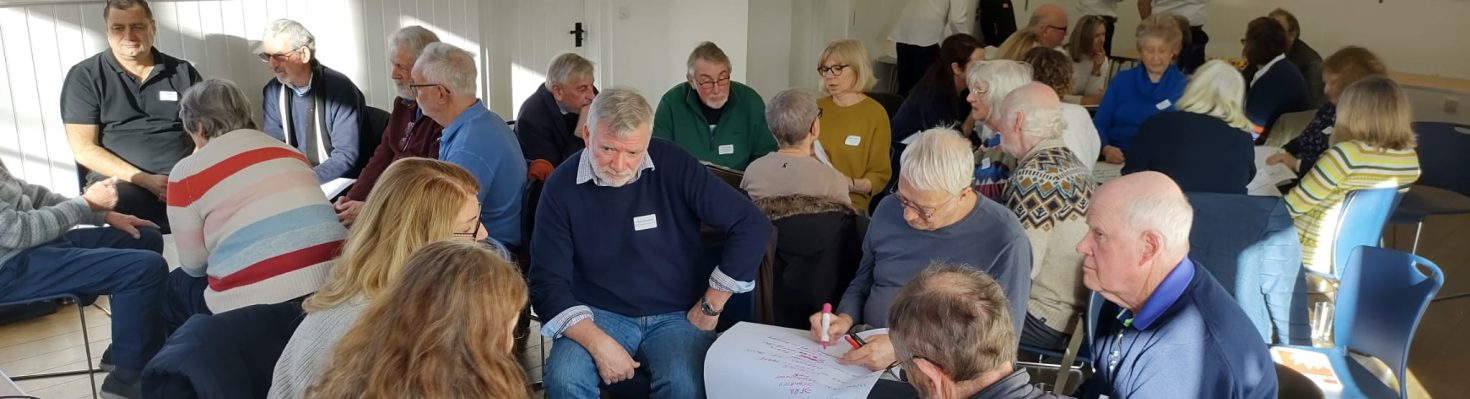
This month (April) our Community Buildings Advisor, Kate Meads, attended Action with Communities in Rural England’s (ACRE) 2023 National Village Halls Conference in Leicestershire.

Together the network of English rural community councils employs village hall advisors who provide guidance, support, and advice to the people and volunteers that run England’s 10,000 + rural community buildings.

Kate said, “This annual conference is a key event in my diary as it provides such a unique opportunity for me to meet face-to-face with my counterparts across England.

We all have our own challenges to overcome, depending on which county we hail from but we all have so much in common that binds us together and makes sharing knowledge so key. It was fantastic to bounce ideas, solutions, challenges, and experiences off each other.

It is invaluable to feel part of a connected group working together for a common cause – supporting those crucial volunteers and people that keep our village halls open, safe, and valuable community assets for all to enjoy.”

The buzz and camaraderie at the event were amazing and allowed all 30 ACRE member delegates the opportunity to brush up on their technical knowledge of things like constitution structures and business plans. The focus was also on sharing good practices, learning about each other’s organisations, and identifying successful projects that can be replicated locally for the benefit of halls.

Apart from providing a fantastic networking opportunity Kate’s other highlights included hearing from Antonia Swinson, CEO of the Ethical Property Foundation about the amazing resources they have available to share.

Kate said, “I was interested, but not shocked, to hear that only 10% of Village Halls have a business plan. It is my ambition to arrange to provide training workshops in Autumn 2023 to help Berkshire’s community buildings create and develop plans for the future.”

“I further really enjoyed hearing from our counterparts in Northumberland – Community Action Northumberland – about the network of Warm Hubs they have successfully worked with volunteers to set up. Warm Hubs were created by CAN as places within the local community where people can be assured of finding a safe, warm and friendly environment in which to enjoy refreshments, social activity, information and advice and the company of other people. It was exciting to learn all about their Warm Hub Toolkit which CCB has now registered for. Together with our Project Development Manager, Maria, and the wider CCB team we will be looking to see if we can help form a network with specialised training and support to implement this in part of rural Berkshire – keep an eye out for more and get in touch for an informal chat.”


Funding Opportunites in May for Community & Voluntary Groups in Berkshire

Thank you to Berkshire’s wonderful CVS’s for the information contained in this article – Wokingham & Bracknell inVOLve, Volunteer Centre West Berkshire, Slough CVS & Reading Voluntary Action.

National Churches Trust – Large Grants Programme

Grants are available to support the conservation and sustainable use of church buildings in the UK, focusing on larger and more complex projects with priority given to urgent structural repairs or the introduction of kitchens and accessible toilets. Application deadline: 4 July 2023. Click here for more info.

Save Our Wild Isles Community Fund (with Crowdfunding)

Grants are available for not-for-profit organisations in the UK that can raise their initial funding through a crowdfunding campaign for projects that protect and restore nature in their local communities. Application deadline : N/A. Click here for further details.

David Brownlow Charitable Trust

The David Brownlow Charitable Foundation is dedicated to enhancing the lives and wellbeing of individuals and communities where there is an element of disadvantage, through personal development such as education, the provision of new equipment, or the improvement and regeneration of their community.
The DBCF is a UK registered charity which supports causes across the UK, predominantly in Berkshire.
To ensure a worthwhile application process, please read through the below criteria before applying to the David Brownlow Charitable Foundation:
• Are you a Registered Charity, Voluntary Organisation, School or Amateur Sports Club?
• Does your organisation support individuals or a community where there is an element of disadvantage?
• We are particularly interested to hear from organisations which are based in Berkshire, UK.
If you fit these criteria, then please feel free to send us a brief outline of your organisation’s work to see if you can apply for a grant from the David Brownlow Charitable Foundation.

https://dbcf.com/who-we-are/
Deadline: The Trustees meet quarterly to consider applications.

The Syder Foundation

Large Grants – The Foundation aims to award around eight grants per year, with a focus on regional charities located in Berkshire and the surrounding counties. Total large grants awarded annually will be between £300,000-400,000 with each grant at around the £50,000 level.
Small Grants – The Foundation sets aside around £100k per year from which small awards may be made, with a focus on regional charities located in Berkshire and specific surrounding counties (see below).
Should you have a project to bring to the Foundation’s attention, applications may be submitted via email (postal applications are accepted if you are unable to access email). Please note that requests for general running costs / core costs (including salaries) are unlikely to be funded. Details on the format for applications are below: please read this web page carefully.
There are no application deadlines; applications are assessed regularly. There is no need to get in touch to ask for the next meeting date.
Applications are accepted from Berkshire, Hampshire, and Wiltshire. Surrey, Oxfordshire and Buckinghamshire charities may also be supported. National charities are unlikely to be funded.
https://www.syderfoundation.org/
Deadline: Rolling

Wokingham United Charities 

Relief in need Grants are available for charities and community groups in our area of benefit, the Borough of Wokingham. We fund projects that provide innovative, sustainable and preventative solutions to issues in the Borough.

We have a particular interest in supporting charities/projects that break the cycle of poverty and relieve financial hardship with a preventative aspect. This work may include but is not limited to, supporting access to employment and further training, money management and debt advice, mental health and wellbeing.

To be eligible the organisation must: be a UK registered charity, not for profit organisation, a voluntary or community group, a social enterprise or community interest company; Provide evidence that the service/support takes place in our area of benefit or service users are predominantly residents of our area of benefit.

Wokingham United Charities – Home Deadline: Rolling

Mobbs Memorial Trust

Grants are available for charitable causes in Buckinghamshire and Berkshire that are within a 35-mile radius of St Giles Church, Stoke Poges .

The original Managing Trustees were Sir Noel Mobbs and his sons Richard, Eric and Gerald. Subsequent Trustees have included Sir Nigel Mobbs, Michael Mobbs and the current Trustees, Sandra Greenslade (Chair), Charles Mobbs, Christopher Mobbs, Alexander Mobbs and Will Greenslade. 

The Trust would prefer to support the following type of applications: One-off capital projects; Projects for the benefit of the public at large.   http://www.mobbsmemorialtrust.com/application-guidelines/  

Deadline: The Trustees meet quarterly to consider applications.

Englefield Charitable Trust

For more than 50 years the Englefield Charitable Trust has supported a broad range of charities and good causes in and around Berkshire, North Hampshire and other areas of interest to the Englefield Estate.

These have included young people, education, community, the arts, social welfare, conservation, heritage and armed forces veterans. It is an independent body, with its own board of Trustees. It receives many requests for help every year and the Trustees must make the difficult decision of selecting which projects to support.

Capital grants are preferred but revenue grants will be considered. Grants are generally between £500 and £5,000, and commitments are generally on a one-off basis rather than spread over a number of years.

https://www.englefieldestate.co.uk/community/englefield-charitable-trust

Gerald Palmer Eling Trust

The Trustees meet three times a year to consider applications for donations to charities.  Applications are generally considered where they meet all of the following criteria:

  • The grant should relate to activities in West Berkshire or neighbouring counties;
  • Grants for projects rather than general running costs are favoured;
  • Grants should fit into one or more of the following categories: The advancement of the Christian religion and particularly the Greek and Russian Orthodox Churches; Medical Research or facilities; Community or Education facilities and provision of support; Social and Welfare support and therapy.

Applications should be made in writing, including a copy of the most recent charity accounts. Send to: The Gerald Palmer Eling Trust, Eling Estate Office, Wellhouse Lane, Hermitage, Newbury, Berkshire, RG18 9UF.

https://www.elingestate.co.uk/charitable-works
  Deadline: Rolling

Shanly Foundation

The main philosophy of Shanly Foundation is to help local good causes. In particular we welcome applicants that are helping to improve the welfare and quality of life of those that are disadvantaged within the community.

Will support registered charities, particularly those that assist the physically and mentally disabled; The elderly and other members of the local communities that may be disadvantaged through no fault of their own; Organisations that help rehabilitate citizens back into local communities; Local sports and social clubs; Outdoor activity centres for young people and several other groups.

We do not make awards to individuals, for research or for core costs. We also do not donate to military charities, single faith charities or animal welfare charities. Finally, we cannot accept your application if your organisation has been in existence for less than 12 months.

In 2021 grants under £1000 represented 7% of the total awards, between £1000 and £10,000 represented 70% and over £10,000 represented 23%.

https://www.shanlyfoundation.com/grants/who-can-apply/

Deadline: Rolling

The Earley Charity

The Earley Charity is one of the largest local grant-making charities in central southern England. Its object is the relief of need among elderly, disabled or poor people living in our area of benefit. The Charity’s terms of reference also make it possible for us to fund community, educational, informational, cultural, sporting, recreational and social initiatives.

The area of benefit of The Earley Charity is limited to Earley (Lower Earley and “old Earley”), the northern part of Shinfield, Winnersh, South Reading (including Whitley), East Reading (including Newtown), central Reading (as far west as the Reading West railway line), Sonning and lower Caversham. The Trustees are only able to consider applications from individuals living in the area of benefit and organisations working within the area.

The Charity makes grants to a wide range of local charitable, voluntary and community organisations working within our area of benefit. Applications should be for one-off non-recurrent funding for a specific purpose. Grants are normally in the range £500-£5,000. Larger grants may be made to organisations which the Trustees know well.

The Earley Charity : About Us Deadline: Rolling

Matthew Good Foundation – Grants for Good, next deadline 15 May 2023

Making a positive difference to communities, people & the environment, Grants for Good is the Foundation’s first fund that invites local charities, voluntary groups, or social enterprises that have an average annual income of less than £50,000 to apply for funding.

Every three months, they will share £10,000 between 5 shortlisted projects that have a positive impact on communities, people, or the environment. John Good Group employees will vote for the five shortlisted projects. These five charities will all receive a share of £10,000 – the more votes a cause receives, the bigger the donation. Following the vote, the project that receives the most votes will receive a grant of  £3,500, second place £2,500, third place £2,000 and fourth and fifth place will both receive £1,000. Further details here. Next deadline 15 May 2023.

Hubbub Community Fridge Grants

Last year the Community Fridge Network redistributed over 16 million meals’ worth of food, but fridges are about even more than sharing good food that would otherwise go to waste. They’re social spaces where anyone can meet their neighbours, learn some new skills or enjoy a community meal.

So far, we’ve supported 64 community fridges to set up food hub activities with thanks to the Rothschild Foundation, Starbucks Foundation and Co-op. Their activities are as varied as the groups themselves and are matched to the needs of local communities. We’ve seen growing workshops, recipe bags, cooking demos mixed with English language classes, budgeting support, and much more.

As well as sharing new skills and building confidence, feedback from groups has shown that food hub activities often have wider benefits too. People of all ages are coming together and connecting. In some cases the food hub activities have also been a way into other community activities like yoga and meetings with local councillors.

Community fridge groups can now apply for grant funds of £7,000 for new activities linked to one of four themes:

1) Skills – to give the community a chance to learn about sustainable, affordable, and heathy living through workshops, events, cookbooks, or how-to-guides.

2) Affordable food - to help increase access to local and affordable food through food cooperatives, food box schemes or food markets.

3) Community connection - to help communities to come together around shared food through community meals, coffee and chats, activities for young people, and recipe sharing.

4) Growing - to support community growing and increase the amount of food grown and shared locally through community gardens, greening projects and seed or plant sharing.   

The funding is available to community fridges that are already open and running. Community fridge groups can apply for funding now.

New funding to expand community fridges into food hubs (hubbub.org.uk) Deadline: Round 1 was launched on the 30th of March 2023. Applications will be accepted until midnight on the 8th of May.

Youth Investment Fund: Refurbishment Grants


Applications close on Friday 12th May. Grants are available to local not-for-profit groups to carry out smaller-scale refurbishments and improvements which will allow them
to expand or improve their youth service provision in England. We have two application routes: one for large, medium and small size buildings, extensions, and renovations over
£150,000 and one for smaller refurbishments below £150,000. Find out more here.

Onward Community Fund

Applications close on Monday 15th May.
Got a great idea for a community project, but need a little help to get it off the ground? The Onward Community Fund aims to support local groups and projects. Underpinned by our mission to make a positive difference in the communities we serve, groups can bid for up to £2,500 for their neighbourhood. Projects should aim to address either work, food, green and/or digital inclusion. For this year’s fund, we are looking for projects that aim to support our people and communities that are facing increased challenges as a direct result of the cost-of-living crisis. Learn more.

Great Western Railway Customer & Community Improvement Fund

Applications close on Thursday 25th May. Grants are available for small and medium not-for-profit projects that have a community benefit or address an area of social need
across the GWR network and can be completed within one year. More info.

Community Business Trade Up Programme

Applications close on Monday 26th June. Do you lead an early-stage organisation which involves local people and meets local needs?
Do you want help and support to grow your organisation’s impact and develop its trading income? The Community Business Trade Up Programme is for early-stage community businesses that are planning to grow their trading. It is a free learning programme, supporting you to develop new skills and get support from other community businesses, plus a Match Trading grant of up to £5,000 which will challenge you to increase your trading. We want to support locally rooted community businesses to become stronger and more sustainable. Find out more.

Aviva Community Fund

The Aviva Community Fund helps local causes build stronger communities across the UK. We believe that by caring more about communities today, we can help them create a better future tomorrow.

And it’s about more than money – we also give causes access to volunteering and professional coaching opportunities, as well as tools and resources to help build their capabilities and achieve long-term sustainable success.

Successful applications will focus on one of our two key funding areas:

  • Financial Wellbeing – helping people take control of their wellbeing by giving them the tools to be more financially independent and ready for anything
  • Climate Action – promoting healthy, thriving communities by preventing, preparing for and protecting against the impacts of climate change.

All beneficiaries must be in the UK.

Homepage | Aviva Community Fund

Older People Grants

Applications accepted on a rolling basis. In this category we wish to fund preventative and early intervention programmes being delivered at the community level which allow older people to stay in their own homes and remain independent. We are particularly interested in seeking out programmes which show some creativity in improving the quality of life of older people.
Grants are valued up to £7,000. Learn more.

Energy Redress Scheme

Applications close on Thursday 25th May. Grants are available to charities in Great Britain for supporting energy consumers in vulnerable situations. There are also grants available to not-for-profit groups for projects that empower householders to reduce their carbon emissions and engage positively with the transition to net zero and for the development of innovative products/services related to energy. More info.

February Foundation

Applications accepted on a rolling basis. We make grants to a range of charities and charitable activities in accordance with our grant making policy which is set out in our annual report and accounts. We support project or core / capital costs. Please send us the details and budget of the proposed project, how many people would benefit, how those benefits might be measured, what the estimated cost of raising funds for the project is, and the full cost of raising voluntary income. Our median award is £5,000 and we are happy to part-fund projects. Find out more.


Adult Education courses in Wokingham Borough, April and May 2023

From brushing up on your maths skills to improving your IT skills for work, Sleep Matters training or Learn with Lego for parents, we have a range of courses on offer this term.

Some courses are free and those courses that have a cost are free for anyone who is in receipt of Universal Credit (work related), Employment Support Allowance, Jobseeker’s Allowance, or are on low income and in receipt of Income Support. Please contact us with any queries around costs or eligibility via adulteducation@wokingham.gov.uk.

Apply Here


Help with your maths

During the sessions you will refresh the basic maths skills which are used in everyday life and work including fractions, percentages and ratios. The course will help you assess your current skill level and identify further courses you could attend if you want to improve your maths skills further. Suitable for learners who have not gained a GCSE grade 4/C or above, or Functional Skills level 2. The sessions are part of the Multiply initiative and are free for learners who have lived in the UK for more than 3 years.


Learn with Lego

  • 20 April, Thursday 10am to 12pm, Ambleside Children’s Centre
  • Free
  • Apply here

Learn how to use Lego with your children for more than building! Explore basic maths and gain confidence in using bricks to help you child count and measure, and explore mathematical problems of symmetry and patterns. This course is aimed at parents / carers of pre-schoolers and infant school aged children as part of the Multiply initiative.


Introduction to being a Teaching Assistant and Working in Schools

  • 20 April to 25 May, Thursdays 12.45pm to 2.45pm, Ambleside Centre, Woodley
  • £45 – free to those on jobseeking benefits or a low income
  • Apply here

Find out more about different roles available in schools and gain an understanding of how to apply for roles. Explore your own strengths and weaknesses in your transferable skills and build your confidence to apply for roles in schools.


IT Skills for Work

  • 27 April to 25 May, Thursdays 10.15am to 12.45pm, Wokingham Library
  • £30 – free to those on jobseeking benefits or a low income
  • Apply here

Refresh or learn new IT skills, including Word, Excel and PowerPoint to help you at work or on your job-seeking journey. Learners will practice file management and by the end of the course you will be able to use simple documents, email attachments and feel more confident with their IT skills.


Excel for Work 

  • 27 April to 25 May, Thursdays 2.00pm to 4.00pm, Wokingham Library
  • £30 – free to those on jobseeking benefits or a low income
  • Apply here

Know how to create everyday formulas. Learn techniques for summarising and sorting data for easier understanding. This course is a progression on from the Excel for Beginners course. 


Sleep Matters

  • 15 May, Monday 9.45am to 2.15pm, Arborfield Green Community Centre
  • Free course
  • Apply here

This workshop is for parents, carers and practitioners with an interest in sleep difficulties in children and young people with SEND. The session will cover sleep issues, triggers and sleep associations as well as sleep strategies, tips and ideas to best support children/young people or family members. The course will be run by ASD Family Help.


English for Speakers of Other Languages

  • Online on Zoom or classroom based – classes run through the week in different locations and different times
  • Free
  • Apply here for an assessment

Improve your English in a small, supportive group, with a choice of online or classroom learning. Build your confidence in speaking, writing, reading and listening and explore helpful topics such as health, work and education. We have a number of classes running, and will assess new learner’s current level of English with an easy online assessment tool, before offering a place in an appropriate class. 


Eligibility

You need to:

Live or work within the Wokingham Borough, or have a child attending a Wokingham school,

  • AND be over 19 years old (as of 31st August 2022)
  • AND have ordinarily been resident in the UK or EEA for at least 3 years. If you are an EEA National, you need to have obtained either pre-settled or settled status under the EU Settlement Scheme.

All Ukrainian adults and their family members supported through the Ukraine Family Scheme and Ukraine Sponsorship Scheme are immediately eligible for courses and are exempt from the 3-year residency requirement.

Hong Kong British National (Overseas) visa holders in the UK, are eligible to apply for courses without having to be a resident for three years for courses ending before 31/05/23.

There are a number of other exemptions including those for some asylum seekers or refugees. Please email us or call 0778 5314 603 if you wish to discuss any exemptions further.