
Energy Crisis threatening Village Halls

Village Hall Charities are becoming increasingly concerned about how they will continue to operate due to the increase in their energy bills. There is currently no energy price cap in place for village halls, meaning many operate under the same “business tariff” guidelines that a large company turning profit does.  In addition, Village Hall Charities are penalised by the Climate Change Levy which results in an added taxation of 20% if they use over their ‘de minimis’ value of energy.

Village Halls are charities whose objects are to provide local provision of facilities for recreation or other leisure time occupation of individuals who have need of such facilities by reason of their youth, age, infirmity or disablement, financial hardship, or social and economic circumstances or for the public at large in the interests of social welfare and with the object of improving the conditions of life of the inhabitants.

At CCB we are receiving stories of Village Hall Charities who are concerned about how they will be able to afford to pay energy bills and keep facilities and local activities going over the next few months. There is a concern that passing on price increases through hire charges to those providing activities and services will ultimately fall at the feet of locals who may not be able to afford to continue using the hall. It will be the most vulnerable, elderly, young families and socially isolated who will be the ultimate victims of this crisis.

 It is interesting that the government have prioritised funding within the Department of Transport for transport in rural areas to limit social isolation, as many of the village halls that would host the events and activities necessary to combat social isolation and loneliness are on the verge of closing. Tackling loneliness with transport fund

Focus and investment are needed to ensure that village halls and charities can continue to operate – starting with a charity tariff on energy bills so charities and village halls are not stung by business tariffs. The current system where charities are regulated by the same terms as businesses is unsustainable.

CCB want to ensure that more is done to protect charity properties from closure as their services are vital for the community – not only in Berkshire but across the country.

We are asking our stakeholders, partners, beneficiaries and influencers to;

•          Support & endorse this issue on social media and within your contacts. Use the hashtag #VillageHallEnergyCrisis

•          Support for CCB (Connecting Communities in Berkshire) to open this conversation with energy providers.

Write to your local MP requesting that they;

•          Help to explore the possibility of a charity tariff for charity premises including village halls.

•          Acknowledgement of the importance of charity premises and Village Halls in your area. 

•          Lobby for grants programmes, to be offered to SMEs and Charities with premises for greener energy solutions. 

If you want to know more about the issues facing village halls, please contact us or our Community Building Advisor Kate on Kate.Meads@ccberks.org.uk


30 percent of rural households could be in fuel poverty this winter

Our national body, Action with Communities in Rural England (ACRE) joins calls for urgent, decisive, and sustained action to tackle the fuel crisis, but insists the specific vulnerabilities and needs of rural households must not be overlooked.

Estimates of the number of people who will find themselves in situations where they cannot afford to heat their home this winter are staggering. The End Fuel Poverty Coalition estimates that following the anticipated Ofcom price cap rise in October, approximately 7 million households in England will meet the official criteria of being in fuel poverty, up from 3.2 million households in 2020.

Rural communities have tended to be forgotten in the debate about fuel poverty. However, recent research suggests that some rural parts of the country such as Cornwall and County Durham are amongst some of the places most affected. Across the country, 607,000 rural households are expected to be fuel poor this winter which is equivalent to 30.3% of the population in the countryside.

Simon Francis, Coordinator of the End Fuel Poverty Coalition said: “The scale of the fuel crisis facing us this winter means that no part of the country will escape this societal blight and should be considered a national emergency. Our data shows that many rural households will find themselves in financial difficulty for the first time this year.”

In response to the findings, Action with Communities in Rural England (ACRE) has published a briefing outlining what it sees as the rural characteristics of fuel poverty and the actions it believes are needed to avert crisis in the countryside this winter.

Speaking of the situation, Richard Quallington, Executive Director of ACRE said, “The fact rural parts of the country are some of the worst affected is no surprise to us. Much of the housing stock in the countryside is older and more difficult to heat and many households still depend on heating oil which is not subject to the price cap. This, combined with typically lower rural incomes and the cost of travelling to access jobs and services is creating the perfect storm in the countryside.

The challenge for policy makers is twofold. They need to find ways of getting more financial support to the people who most need it, and this requires more creative localised responses in rural communities. And there also needs to be a longer-term plan for improving the energy efficiency of homes which is suited to the fabric of older buildings. The needs of rural communities cannot be overlooked”.

Read the full briefing here.


Greenham Trust launches £30K Football for Fitness Fund to help more girls, women and gender inclusive groups get active and healthy.

Following the Lionesses’ inspirational UEFA Women’s Euro 2022 win, Greenham Trust is launching a £30,000 Football for Fitness Fund to help girls and women and people of all ages and abilities play the sport to help them get more active and healthier.

Local schools, sports clubs, community groups, Scouts, Guides, Brownies are invited to apply for up to £1,500 in grants for new initiatives, with funds available to buy equipment or sports kit, pitch hire, coaching costs or qualifications and to cover volunteer costs to organise football sessions.

The fund is specifically to use football as a catalyst to support the improvement in physical and mental health and wellbeing with the well-documented accompanying positive social benefits the game has. 

Every successful grant applicant will also receive a Greenham Trust branded football. 

Launching the Football for Fitness Fund Greenham Trust Chief Executive Chris Boulton said: “We were all so proud to watch the Lionesses win England’s first major football tournament for decades with their ‘can do’ attitude and incredible self-belief which inspired the whole nation. We want to use that momentum to encourage all girls and women, whatever their age or ability, who wouldn’t normally have access to the game, to have the opportunity to get involved in football so they can improve their health and mental wellbeing. What better way to start getting more active than to play football.”

Endorsing the Football for Fitness funding programme, Head of Delivery at Berks & Bucks Football Association Jon Wood added: “After hosting such an inspiring UEFA Women’s Euros, it provides us with an exceptional opportunity to impact lives across West Berkshire via increasing activity levels and reaping all of the benefits that go with this. Female football within our area has grown tremendously over recent seasons, and we hope the success of this unprecedented tournament will accelerate this even further across all areas of the game. The resource that Greenham Trust are investing, offers our clubs and other local organisations the opportunity to develop new provisions, as well as build on existing delivery.”

The Greenham Trust Football for Fitness Fund is now open to applications and will run until March 31, 2023. It is an inclusive fund and will focus on benefitting all disadvantaged, gender inclusive and hard-to-reach groups. If successful there may be more funding available.

The Fund is now open to applications via The Good Exchange funding and fundraising website and for full eligibility criteria and details of how to apply please visit https://greenhamtrust.com/greenham-trust-grant-funding/our-current-funding-opportunities/


Rural off-gas communities in Berkshire offered advice

Our charity has run an oil club for over 10 years now to offer support to those homes in Berkshire that have to heat their homes by oil and do not have a local club to join.

This project has always fit well with our commitment to support rural communities.

The cost of heating buildings to a satisfactory standard is becoming more and more expensive. You only have to watch, listen or read the news to realise how we will ALL be paying more for our energy this winter. In rural areas, there are many off-gas communities. These are leaving residents with more expensive choices for heating fuel – such as oil.

We want to help rural communities cut the cost of heating where they can. The CCB Oil Club can cut the cost of heating to rural communities and it has other benefits. For more information about our club please click here.

Our club administrator, Marion suggests that those that can still try to fill their tanks as soon as possible, even with the high prices;

“This year has been marked by some of the highest fuel prices ever seen and heating oil has been affected like all others.  Buying heating oil when demand is greatest (ie during the coldest months) historically meant paying more so it is always good advice to fill up through the summer and early autumn when suppliers are quieter.  This summer has also seen a slight reduction in the price of crude oil which has, thankfully, seen heating oil prices dropping from the February/March peak.”

Marion Lathar, OFPS

Please find below some other summer top tips for those heating their homes by oil * (source: CPS Fuels)

Fill up your tank in the summer
Leaving tanks partly full in hot weather may see the pocket of air left will form condensation which can damage the internal casing of your tank. The condensed water can oxidise and then rust the casing.

Another issue with a partially empty tank is that bacteria will form on the top of the water and when this bacteria dies, it falls to the bottom of the tank. This creates a buildup of sludgy sediment, potentially leading to a system breakdown.

Secure your tank
Heating oil tanks and the fuel oil itself are expensive and, unfortunately, they are vulnerable to fuel theft. Therefore, it’s a good idea to secure and protect your tank using a variety of security solutions, for example, tank locks, security alarms and lights. If you have a large domestic tank, you could also consider installing a CCTV system.

Regularly inspect your tank
It’s good practice to ensure your heating oil tank is in good condition throughout the entire year, and whilst it’s not in use during the summer, this offers up the perfect opportunity to give it the once over. In fact, you should carry out an inspection every few weeks throughout the summer. You should visually inspect the whole tank for any visible damage and keep your eyes open for leaks and spills. Also, make sure the pipe fittings are secure and not leaking oil.

Get your tank serviced
As you won’t be using your heating oil tank during the summer, this is a good time to call your local heating oil expert to carry out a scheduled maintenance check. Firstly, they’re more likely to be available at a time that suits you, as there is less demand for engineers during the warmer months. Secondly, it will ensure that your home heating system is in tip-top condition for the winter.

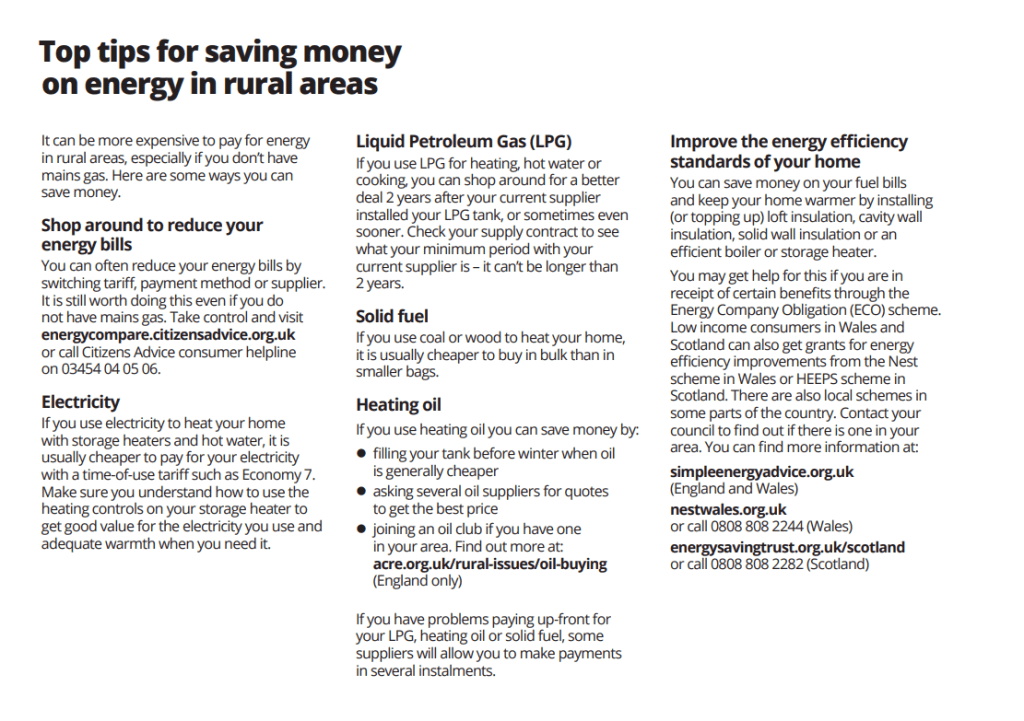
This infographic from Citizens Advice also contains some useful advice for those rural households that are off gas in Berkshire:


Preparation for tricky autumn and winter – what’s going to happen to our energy bills?

Through our Family Fuel and Water Poverty project, we can see firsthand just how low-income families across Berkshire are facing difficult decisions this autumn and winter.

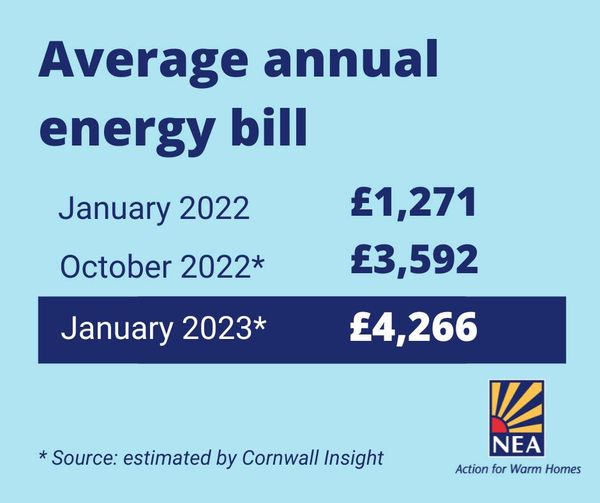
The news out there is bleak with @The Times recently reporting that all households face the biggest income squeeze in generations as average energy bills edge towards £500 a month. The chart below indicates how some of us are going to be paying triple the price on our energy bills over the course of the year

MonthMonthly bill based on medium useShare of disposable income
Feb 2022£1365 %
March 2022£1265 %
April 2022£1335 %
May 2022£1104 %
June 2022£1104 %
July 2022£1104 %
August 2022£1285 %
Sept 2022£1365 %
Oct 2022£2028 %
Nov 2022£40315 %
Dec 2022£41916 %
Jan 2023£51520 %
Energy bill crunch table Source: Uswitch & The Times

There are a few actions we can all take to delay those energy bills shooting up so fast, even delaying turning on the heating for a couple of weeks could save us £5 a day, depending on the property type. Other actions we can take include;

  • Checking your thermostats are not set too high, and if they’re on a timer, check that they go on when necessary.
  • Move furniture away from radiators as this stops hot air circulating and can cause energy efficiency.
  • Turn off radiators in rooms that you do not use
  • Shut doors and close curtains in the evening to help trap in warm air.
  • Put a reminder in your diary to submit a meter reading on September 20th – the day before the price cap increases. By doing this your supplier will know exactly how much you have used on the lower rate

What help is there?

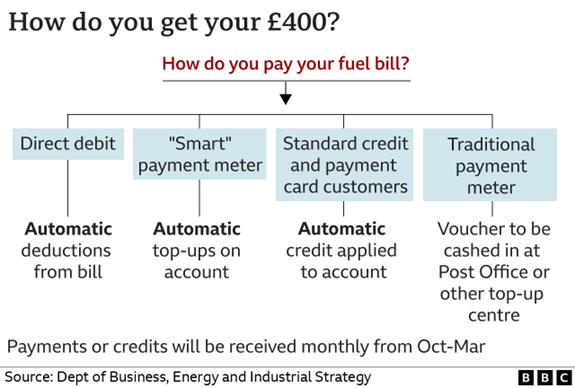
Every household will get a £400 energy rebate spread over six months from October and automatically deducted from your energy bill. The £400 discount, administered by energy suppliers, will be paid to consumers over 6 months with payments starting from October 2022, to ensure households receive financial support throughout the winter months.


A useful image is taken from the BBC to illustrate how to access it can be viewed above.

Households that get means-tested benefits have started receiving the first of two payments totaling £650 to help with the cost of living crisis. Households where one person claims disability benefit get another £150. Pensioner households will get an extra £300, paid with their annual winter fuel payments

More details of how the scheme will run can be found here – https://www.gov.uk/government/news/400-energy-bills-discount-to-support-households-this-winter

Are you a practitioner or volunteer working with low-income households?

If yes you may be interested in a FREE webinar we are running this autumn offering training, information and advice on Energy & Water Bills. For more details please click here.

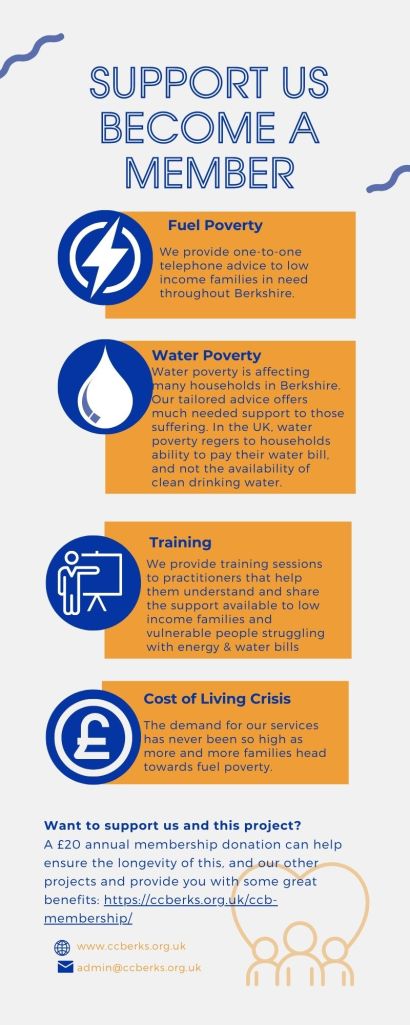
Support us and our work

If you would like to support this project consider making a £20 individual donation and become a member of our charitable organisation. Full details of membership can be found here: https://ccberks.org.uk/ccb-membership/