NEW PROJECT: Rural Hubs – Village Halls for the 21st Century

Today (03/10/2022), we launch an exciting new project thanks to funding from The National Lottery Community Fund (5 years) and The Princes Countryside Fund (1 year.)

This project will support Village Halls across Berkshire through a process of transformation, so they can meet the needs of their communities for the next 100 years.

Village halls come in all shapes and sizes. They represent a living history of community ambition to create spaces where people can meet. They are snapshots in time, reflecting the materials, technology and needs of the community at the time of their creation.

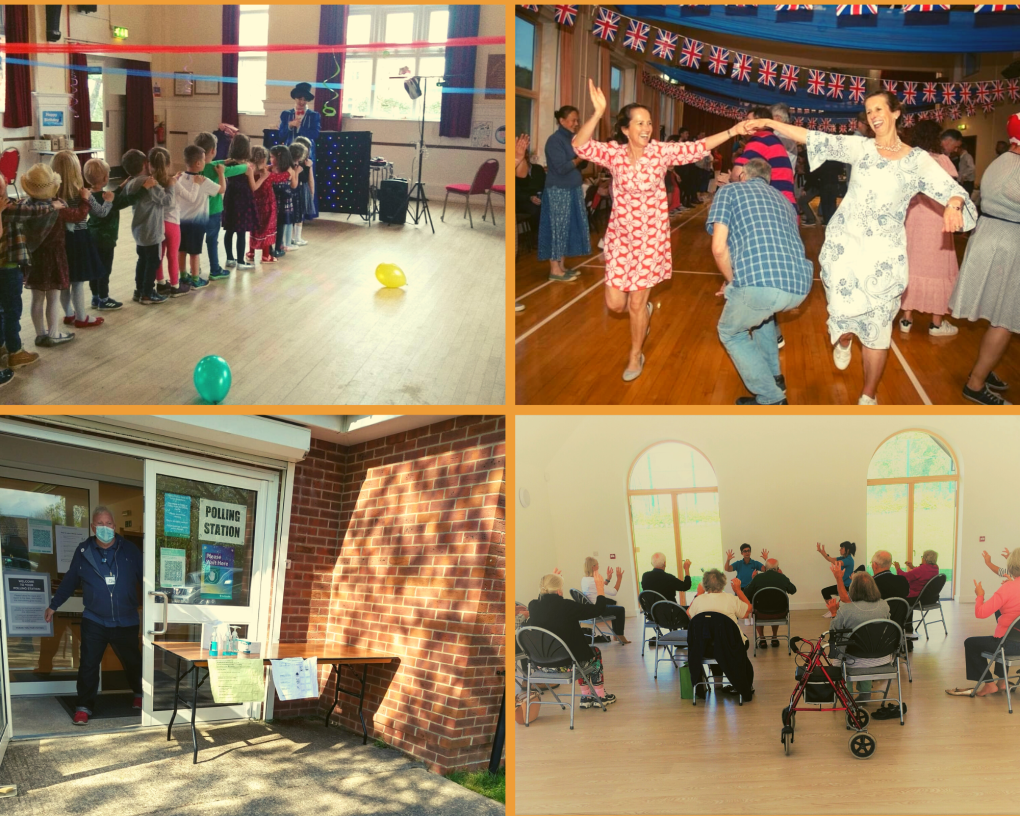
Rural communities rely on their village halls for many things: social events, fitness classes, pre-schools, clubs, polling booths and much more. They are the heart of the community and are run by unpaid, dedicated local people. It can be really hard work, complying with legislation and red tape while running and maintaining often aging buildings that don’t meet the needs of the 21st Century.

This project will enable us to help village hall trustees to identify where they need to make changes to improve their venues, e.g. offering free Wi-Fi, improving insulation, upgrading heating systems, improving accessibility etc. Our role is to support hall volunteers to prioritise the changes they want to make, implement their plans and help them access funding for their upgrades.

As a result of this project, people in rural communities will have access to improved community halls that are warmer, more welcoming, inclusive and vibrant. Rural isolation and loneliness will be reduced and a sense of community enhanced.

Supporting village halls has been at the heart of CCB’s work since the charity was formed nearly 50 years ago. We work closely with the other 38 charities in the ACRE Network to ensure that every village hall in England can access appropriate advice and guidance. 

To find out more about our work and this significant new project, please visit the webpage: https://ccberks.org.uk/our-projects/rural-hubs-village-halls-fit-for-the-21st-century/


Could Rural Warm Hubs be set up in Berkshire?

At CCB we know through our work with rural village halls that they can always be relied upon to offer familiar, safe, and friendly environments which communities can enjoy to get together for a huge variety of events.

We are only too acutely aware through our Energy & Water Advice project of the need to provide local ‘warm hubs’ due to the current cost of living and energy crisis which is having a huge impact on households to effectively heat their homes

‘Warm Hubs’ have been created by our sister rural community council in Northumberland – Community Action Northumberland, they have shown that Warm Hubs can provide a much-needed crucial resource where people can meet in a warm environment to enjoy refreshments, social activity, information, advice, and the company of other people. The short film below outlines how these war hubs can work, though they may work differently depending on the local need.

“The aim of the warm hub is to provide support to those most vulnerable this winter to help mitigate the cost of living crisis.”

“The hubs offer a warm, friendly and inclusive environment with access to hot food, tea and coffee (sometimes lunch); somewhere to socialise, take part in activities and receive information on how to reduce bills, access financial support, and stay healthy and well.”

We know there will be an increased need for this kind of offering in isolated rural areas especially in the coming winter and next year or two due to the cost of fuel and rise in cost of living generally. We are currently scoping possible funding solutions and are actively seeking support so that we can start to set bring Warm Hubs to rural communities in Berkshire.

Village Hall Charity Trustees are telling CCB’s Community Buildings Advisor, Kate, the following:

  • A warm hub may be needed in their area
  • Village Hall Charities are treated as businesses and as such are experiencing energy price hikes which have a big impact as they are not ‘profit’ making businesses – so who will fund the cost of energy for opening a Hub?
  • Warm Hubs would need managing – Trustees usually just hire out the hall to local groups. It would be good to have a county co-ordinator to support the governance issues around Hubs e.g. need for safeguarding? Food hygiene? Risk assessments etc.
  • Warm Hubs could be supported by volunteers – could CCB partner with a CVS to find volunteers?
  • If providing food or hot drinks, this would need funding

Look out for further information soon regarding this and if you are interested in supporting us or partnering with us in this project please contact us on admin@ccberks.org.uk


Funding Opportunities – September

Reading Lions Club ‘Lions Den’ Community Grant Scheme – deadline 7 October 2022

READING LIONS CLUB is once more reaching out to small local community groups and small local charities in the Reading area to offer financial support. Many local community groups do not have access to grant funding or the manpower / resources to invest in significant fundraising and yet they continue to provide a valued service to our community even during these challenging times. Through our own fundraising events we have set aside £10,000.00 to give away in small community grants, each of up to £750.00 to support local community projects. For further details please click here.

#OneSlough Community Fund

Slough CVS is looking to issue grants to support local voluntary and community groups to deliver projects to meet local needs/priorities that will benefit Slough residents to enhance their health and wellbeing. This will be financed by Slough Borough Council and administered by Slough CVS.
Voluntary and Community Sector groups are being asked to complete this funding application form which will be submitted to the funding panel. The funding panel will consist of key representatives from Slough CVS, Integrated Care Board (ICB), Slough Borough Council, Public Health Slough and a member from the Slough Borough Council Co-production Board. For further details please click here.

The Fat Beehive Foundation

Grants up to £2,500 for websites and digital products to UK registered charities, to help them carry out their work in a more efficient and effective way, resulting in positive social benefit.
They fund only charities with an average income of less than £1 million a year, and have specific priority areas:
• Environmental protection or climate change mitigation
• Human rights
• International development
• Equality and Diversity
• Social justice / Refugees / Housing
• Education
• Art & culture
• Health and wellbeing
• Prisoner rehabilitation
Read more

The Thomas Wall Trust

The Trust believes that communication skills are critical capabilities for people who want to improve their employment prospects, self-confidence, resilience, and life chances.

They offer grants up to £5,000 to specific projects or core activities that develop these critical life skills for people from disadvantaged groups. They will fund charities at least three years old with an income between £10,000 and £500,000

The inclusive charity welcomes proposals which target people experiencing multiple deprivation or other groups demonstrably facing major hurdles to employment, especially; women, people with physical, mental, or learning disabilities, refugees and asylum seekers.

Read more

Adint Charitable Trust

Grants are available to UK registered charities for general charitable work.
The Trust does not maintain a website or a standard application form. The Trust requests that applicants ‘make their case in hard copy by post or by e-mail in the manner that they think is best. Their request should show their registered charity number, the name and sort code of their bank and their account number. It will be considered by the Trustees at their next meeting. For further information on how to obtain this fund, please contact the following: Trust Administrator Email:adintct@btinternet.com

Independent Age – Cost of Living Grants Fund
A limited number of grants are available for local charities and community organisations across the UK for projects to help ensure that older people do not have to make the choice between buying food to eat and heating their home this winter.
Application deadline: 16 September 2022. For more information please click here.

National Lottery Community Fund – The People’s Projects
Grants are available to local not-for-profit groups for projects which engage communities and create strong networks across the UK and have been voted for by the public.
Application deadline: 7 October 2022. Further info here.

Aviva Community Fund – Cost of Living Boost (with Crowdfunding)
Grants are available through this match funding scheme to assist local not-for-profit organisations in the UK that are working to help local people in financial need. Further details are here.

Newly Opened: Little Lives UK
 There are a significant number of organisations and businesses that are struggling financially, as a result of Coronavirus. Due to lockdowns, and social distancing children across UK have been unable to access the services they used to. There will no doubt be long-term negative effects because of the pandemic, but Little Lives UK wants to guarantee that children’s services and activities are not one of them. Hence, we are launching our Children’s Community Support Programme. We’re offering to support organisations that work with children, who are in need of support during these challenging times. Further information here.

Screwfix Foundation

We are passionate about making a difference to those in need. We are a grant-making charity with a clear charitable purpose to support projects that improve, fix and repair buildings, homes and facilities specifically used by PEOPLE IN NEED throughout the UK. We donate grants in the region of £5,000 to charities and not for profit organisations. Prioritising those that will create a longer-term difference and where our donation will make an impact and fund the total cost (or the majority) of a project. Click here for more information.

Supporting & Sustaining Safe Community Spaces
Applications close on 16th September.
The National Survivor User Network will be awarding grants of £500-£1000 to user-led organisations and groups facilitating community spaces where people with shared identities and experiences come together in support of one another’s wellbeing. For eligibility criteria and application details, please visit our website.

Financial & Digital Empowerment
Applications close on 23rd September.
Grants are available from Santander to charitable organisations for projects to improve people’s digital confidence, knowledge and skills, enabling them to access financial services and to make more informed decisions about money.
Visit their website for more details.

Empowering Young People
Applications close on 25th September.
The KFC Foundation loves its community, so we support grassroots organisations in the heart of our restaurant’s communities. This includes those focused on empowering young people in the UK to fulfil their potential and build a positive future. By providing mentoring, offering safe spaces and helping to unlock talent, we can help young people to build life skills and improve their chances of gaining meaningful employment.
We make grants of up to £2,000 to groups with a turnover of less than £300,000. Learn more.

Arts For All Funding
Applications close on 30th September.
We believe in arts for everyone and will use our grants to make a positive contribution to people’s lives through the arts. Grants are available for charitable projects and activities that engage young people in the arts, promote skills development in the arts and heritage sector, and support local and regional arts organisations and museums. Click here to learn more.

With thanks to Berkshire’s fantastic CVS’s for the information contained in this article’ West Berkshire Volunteer Centre, Wokingham & Bracknell In VOLve, Slough CVS & Reading Voluntary Action.

Energy Crisis threatening Village Halls

Village Hall Charities are becoming increasingly concerned about how they will continue to operate due to the increase in their energy bills. There is currently no energy price cap in place for village halls, meaning many operate under the same “business tariff” guidelines that a large company turning profit does.  In addition, Village Hall Charities are penalised by the Climate Change Levy which results in an added taxation of 20% if they use over their ‘de minimis’ value of energy.

Village Halls are charities whose objects are to provide local provision of facilities for recreation or other leisure time occupation of individuals who have need of such facilities by reason of their youth, age, infirmity or disablement, financial hardship, or social and economic circumstances or for the public at large in the interests of social welfare and with the object of improving the conditions of life of the inhabitants.

At CCB we are receiving stories of Village Hall Charities who are concerned about how they will be able to afford to pay energy bills and keep facilities and local activities going over the next few months. There is a concern that passing on price increases through hire charges to those providing activities and services will ultimately fall at the feet of locals who may not be able to afford to continue using the hall. It will be the most vulnerable, elderly, young families and socially isolated who will be the ultimate victims of this crisis.

 It is interesting that the government have prioritised funding within the Department of Transport for transport in rural areas to limit social isolation, as many of the village halls that would host the events and activities necessary to combat social isolation and loneliness are on the verge of closing. Tackling loneliness with transport fund

Focus and investment are needed to ensure that village halls and charities can continue to operate – starting with a charity tariff on energy bills so charities and village halls are not stung by business tariffs. The current system where charities are regulated by the same terms as businesses is unsustainable.

CCB want to ensure that more is done to protect charity properties from closure as their services are vital for the community – not only in Berkshire but across the country.

We are asking our stakeholders, partners, beneficiaries and influencers to;

•          Support & endorse this issue on social media and within your contacts. Use the hashtag #VillageHallEnergyCrisis

•          Support for CCB (Connecting Communities in Berkshire) to open this conversation with energy providers.

Write to your local MP requesting that they;

•          Help to explore the possibility of a charity tariff for charity premises including village halls.

•          Acknowledgement of the importance of charity premises and Village Halls in your area. 

•          Lobby for grants programmes, to be offered to SMEs and Charities with premises for greener energy solutions. 

If you want to know more about the issues facing village halls, please contact us or our Community Building Advisor Kate on Kate.Meads@ccberks.org.uk


30 percent of rural households could be in fuel poverty this winter

Our national body, Action with Communities in Rural England (ACRE) joins calls for urgent, decisive, and sustained action to tackle the fuel crisis, but insists the specific vulnerabilities and needs of rural households must not be overlooked.

Estimates of the number of people who will find themselves in situations where they cannot afford to heat their home this winter are staggering. The End Fuel Poverty Coalition estimates that following the anticipated Ofcom price cap rise in October, approximately 7 million households in England will meet the official criteria of being in fuel poverty, up from 3.2 million households in 2020.

Rural communities have tended to be forgotten in the debate about fuel poverty. However, recent research suggests that some rural parts of the country such as Cornwall and County Durham are amongst some of the places most affected. Across the country, 607,000 rural households are expected to be fuel poor this winter which is equivalent to 30.3% of the population in the countryside.

Simon Francis, Coordinator of the End Fuel Poverty Coalition said: “The scale of the fuel crisis facing us this winter means that no part of the country will escape this societal blight and should be considered a national emergency. Our data shows that many rural households will find themselves in financial difficulty for the first time this year.”

In response to the findings, Action with Communities in Rural England (ACRE) has published a briefing outlining what it sees as the rural characteristics of fuel poverty and the actions it believes are needed to avert crisis in the countryside this winter.

Speaking of the situation, Richard Quallington, Executive Director of ACRE said, “The fact rural parts of the country are some of the worst affected is no surprise to us. Much of the housing stock in the countryside is older and more difficult to heat and many households still depend on heating oil which is not subject to the price cap. This, combined with typically lower rural incomes and the cost of travelling to access jobs and services is creating the perfect storm in the countryside.

The challenge for policy makers is twofold. They need to find ways of getting more financial support to the people who most need it, and this requires more creative localised responses in rural communities. And there also needs to be a longer-term plan for improving the energy efficiency of homes which is suited to the fabric of older buildings. The needs of rural communities cannot be overlooked”.

Read the full briefing here.