Opinion Piece: Why Reading needs a Green Belt

Here at CCB we always love to hear from our readers and when Paul Stevens, Chair of Arborfield Village Hall Management Committee, contacted us we were interested to read his opinions and happy to share it with a wider audience. Take a look and if you agree why not get involved by signing Paul’s petition.

Why Reading needs a Green Belt

Reading has some of the highest property prices in the country, making it a prime target for property developers. If we allow this to continue unchecked the resultant urban sprawl is threatening to create one vast housing estate covering most of Berkshire. The idea behind a “Green Belt” is to create a buffer between towns. As pressure for housing increases so does the need to keep some separation between settlements. Yes, we need housing, but do we still need as much office, car parking and shopping space in this increasingly online world? Instead of constantly building on our dwindling green space would it not be better to re-purpose some of our existing urban space? Put simply, use our brownfield sites for housing, not greenfield sites?

If we grew more of our own food rather than importing it we could significantly reduce our carbon footprint. Green spaces, whether being worked for food or simply enjoyed for leisure are a vital part of addressing many of societies current health and mental well-being issues. Our countryside provides a place to escape the stresses of modern life where people can breathe fresh air, get some outdoor exercise and enjoy nature, as well as delivering fresh, locally produced food. Cutting down on emissions from transport and encouraging biodiversity we can start to make a positive difference to the global Climate Emergency.

Reading has ambitions to become a City in 2022. Surely the small towns, villages and communities that surround Reading are a large part of the unique heritage that makes Reading deserving of City status? England’s 14 Green Belts cover more than a tenth (12.4%) of land in the country, and provide a breath of fresh air for 30 million people. Green Belts help prevent urban sprawl, and protect our countryside from encroachment, but did you know they’re home to 19% of all traffic free cycle routes and 34% of Community Forest land? We need more cycle routes and we need more trees, particularly around the proposed “City of Reading”. This is a unique chance to leave a lasting legacy.

Please show your support for this idea by signing the petition here:

www.change.org/greenbelt4Reading

You can also show your support by following our Facebook page here:

https://www.facebook.com/CleanGreenandMean/

Contributed by; Paul Stevens

*In the interests of remaining neutral opinions in this article are Paul’s alone and do not represent Connecting Communities in Berkshire’s as an independent charity.*


Community Practitioners Network (CPN) Launches

The Community Practitioners Network (CPN) brings together community practitioners from across the UK.

An informal space where people come together to listen, reflect, and share their experience and receive both peer mentoring and practice support from the Community Organisers team.

The CPN offers a real diversity of community practice rooted in the principles and practice of community organising.

What to expect from the Community Practitioners Network:
Webinars and mentoring spaces
Shared resources
Guest speakers
Interest-based networks of peer support
Development of new ideas and thinking
A space to test and evaluate practice
Reflective practice
Access to 100s of years of community practice experience and advice
A community, built on trust and respect

The CPN is established through a flexible monthly subscription of £10 (excluding vat). Find out more by clicking here.


Encouraging a Greener, Cleaner Berkshire

We would like to highlight a few things that are happening nationally which we hope communities in Berkshire will get involved with and help support.

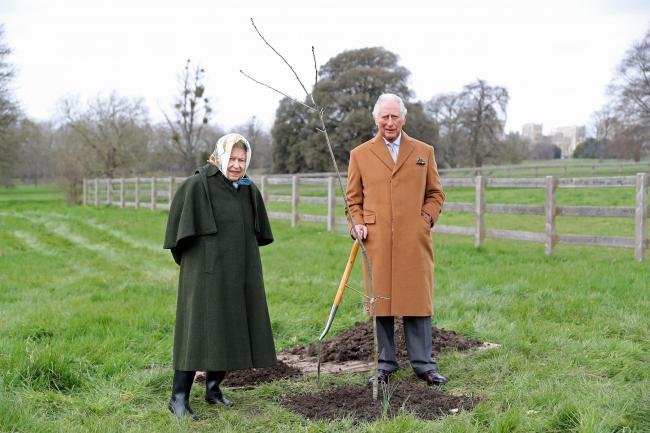
PLANT A TREE FOR JUBILEE
A unique tree planting initiative created to mark Her Majesty’s Platinum Jubilee in 2022 inviting people across the UK to “Plant a Tree for the Jubilee” – running from
October 2021 – December 2022
Encouragement for everyone to be involved – individuals, community groups, schools, councils, businesses. Free saplings available from autumn 2021 from The Woodland Trust.

THE GREAT BIG GREEN WEEK
18 – 26 September 2021
A national week of celebrating action on climate change.

There are a huge range of ways for you to get involved and show up for your world. You can join the event in any way that celebrates the brilliant and unique work that you are doing in your community. For further details please click here.

THE GREENING CAMPAIGN
If we each make small changes to be greener and cleaner, those changes will again add up to make a healthy, richer happier future. We owe it to ourselves, our future children and our planet.
Would you like your Parish to be involved in this campaign?

For more details visit The Greening Campaign – Home (greening-campaign.org)


OPPORTUNITY FOR CREATIVE YOUNG PEOPLE IN BERKSHIRE

Are you 18-27 in the Berkshire/Oxfordshire area, and interested in gaining mentorship from a creative industry professional?

Apply now to Creative Mentor Network’s new programme in partnership with Soho Farmhouse.

Find out further information here: https://docs.google.com/forms/d/e/1FAIpQLSf7AEtXtwa9z8KH5wBUg-eHVIKJoNZPulQkRsBLAZchS3FT8Q/viewform

Deadline for applications has now been extended to Thursday 23rd September with interviews taking place on the 7th/8th October.


‘Keep It Simple’ – Rural councils and service providers call on government to ensure Levelling Up funds are allocated fairly, transparently and based on need

News source; RSN Online

4th August 2021: The way in which the government is allocating funds for its flagship ‘Levelling Up’ programme is failing to properly recognise the needs of rural communities – according to new research published today by the Rural Services Network.

The report, Towards the UK Shared Prosperity Fund, finds that prioritisation of the Levelling Up Fund has favoured non-metropolitan urban locations, especially in northern England’s ‘Red Wall’, while many other areas of similar need are overlooked.

Large swathes of rural central and southern England, (and indeed northern rural areas) including those that received funds through previous EU-backed programmes, are now seen as a low priority.

Only 18 rural districts were placed on the government’s priority list of 123 local authorities for its Levelling Up Fund. This independent research shows that the number should have been as high as 27 if low standards of living in rural communities were properly accounted for.

The report’s authors, economists and researchers from Pragmatix Advisory, argue:

“The Levelling Up Fund is the latest in a line of UK government-funded programmes to disadvantage rural communities – partly the result of Whitehall’s choice of data on which they make their selections.

“Although detailed, the government’s complex algorithms for allocating funds remain partial, judgemental and, too often, confused.

“The Levelling Up Fund prioritisation framework, for example, considers the number of empty commercial properties, but does not account for the quality of schools. It looks at physical connectivity but does not take into account digital connectivity like broadband speeds or availability.”

To read the rest of this article please click here.