Safety At HoME IN BERKSHIRE – safe & well visit from royal berks fire & rescue

Royal Berkshire Fire and Rescue Service’s aim is to reduce deaths and injuries from fires, water, road traffic collisions and other emergencies.

We work with all of the communities we serve by raising awareness of fire, road safety and preventative measures. Our aim is to help everyone to minimise the risk of fire and ensure that you know what to do if a fire should start. A Safe and Well Visit is a free service that we provide to eligible residents. Safe and Well visits are tailored to individual needs, relating to health and wellbeing, as well as fire risk reduction. A Safe and Well visit will take place in the home and can be arranged at a convenient time.
To find out more and book a safe and well visit click here: rbfrs.co.uk/safety-at-home


How village halls can be rearranged so they are safer for everyone

by Phillip Vincent, Action with Communities in Rural England

A new, visual reference guide to help those reopening community centres, including village halls, has been published by IF_DO in partnership with Action with Communities in Rural England (ACRE) and Clarion Futures

This visually attractive guide prepared by IF_DO is an excellent addition to the information already available to village hall committees

Reopening public spaces in compliance with government guidance is a complicated and daunting affair for the uninitiated. No more so than for the 10,000+ voluntary committees who manage village halls across rural England.

How these buildings can be rearranged so they are safe for everyone who uses them is a particularly important consideration. That’s why ACRE has teamed up with architects IF_DO to produce a visually impactive, and easy to use publication that can be referred to alongside specialist support and advice for village halls offered by ACRE Network members.

Covid-19 Safer Community Centres is a free-to-use guide funded by Innovate UK that sets out clear stages of how to safely reopen community centres and village halls across the UK. Visual diagrams illustrate the spatial adaptations required for hiring and other essential services to recommence as safely as possible.

The guide features the measures Hewish and Puxton Village Hall near Weston Super-Mare have taken to prepare for reopening.

Deborah Clarke, ACRE’s Rural Evidence and Village Halls Manager said, “Over the past few months we have been extremely busy interpreting government guidance and providing information to ACRE Network members to make sure village hall committees receive the support they need to safely reopen. This visually attractive guide prepared by IF_DO is an excellent addition to the information already available to village hall committees”.

Thomas Bryans, Director, IF_DO, said “Covid-19 is above all a public health crisis, but it is also one of design. How we occupy and use space have become profound and urgent questions, and design has a vital role to play in helping to answer them. With prolonged or intermittent social distancing likely to be required for the foreseeable future, it is essential that village halls and other public spaces can be adapted to enable their operation in a way that mitigates the risk of transmission. We are delighted to have received funding from Innovate UK to realise this project, and to partner with ACRE and Clarion Futures to develop the Safer Community Centre guide. We are hopeful that it will be of benefit to community groups around the country, and that it will help people to come together again.”

If you help to run a Village Hall or Community Building in Berkshire and are looking for further support please contact our Community Buildings Advisor Kate.Meads@ccberks.org.uk to find out more about our membership service and how we can help.


Supply of affordable homes in the countryside threatened

By Philip Vincent, ACRE

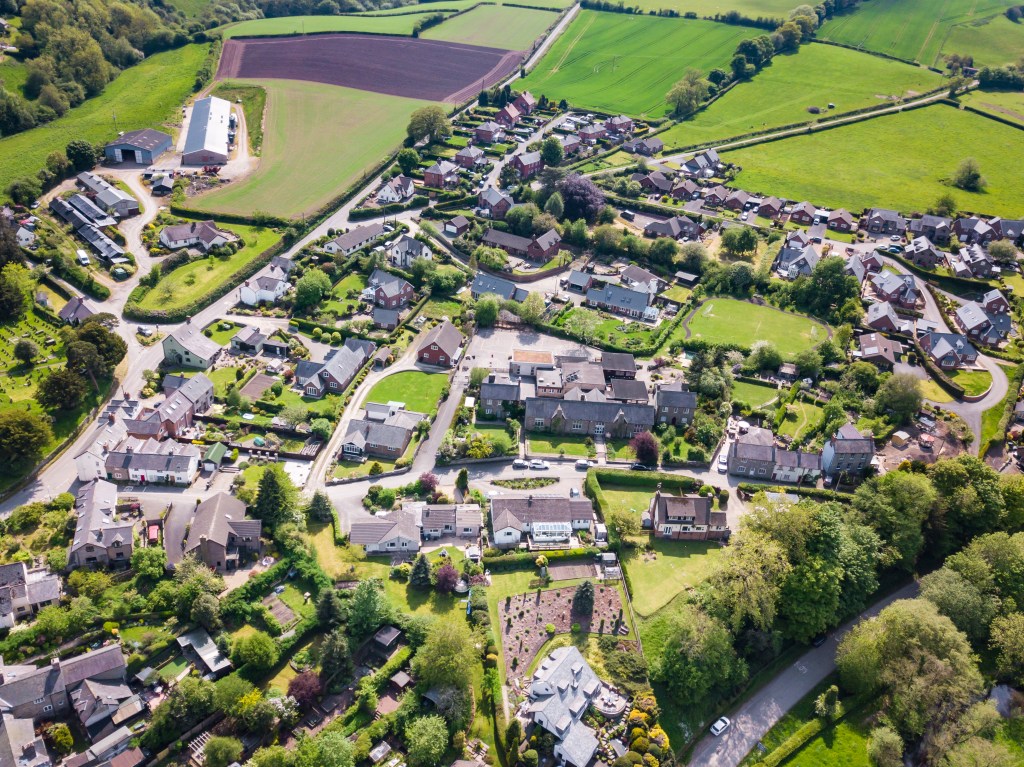
Over two thirds of rural communities in England may not be able to secure any new affordable houses in the future, a coalition of organisations, led by Action with Communities in Rural England (ACRE), has warned.

We are deeply concerned that the government is looking to water down requirements to provide affordable housing – a change that will disproportionately disadvantage many living in the countryside.
For many years, affordable homes could be built in rural communities using two planning policies – as a requirement on open market developments and rural exception sites. However, these mechanisms could be lost because of changes proposed to the current planning system. Such a move would be catastrophic for smaller villages where property prices are already well beyond the reach of many households.

The change is in contradiction to the Prime Minister’s pledge to ‘give the people of this country the homes we need in the places we want to live, at prices we can afford’ as expressed in the Planning White Paper.

ACRE’s Chair, David Emerson CBE said, “We are deeply concerned the government is looking to water down requirements to provide affordable housing – a change that will disproportionately disadvantage many living in the countryside. For communities already struggling to retain the employees and owners of local businesses this is a body blow, quite apart from its impact on the customers and providers of local services and the volunteers who provide the social support for vulnerable residents”.

Warm colours give a homely effect.

Rural communities in England already suffer a chronic and acute shortage of affordable homes to buy and rent. Someone living in the countryside on low earnings needs to spend nine times their income to buy a home in the lower end of the market. Only 8% of the housing stock is social housing, compared with 19% in urban areas. And last year, fewer than 6,000 new affordable homes were built in smaller rural communities – equivalent to less than one new affordable home in each village. To read the rest of this article from ACRE please click here.


Funding News August 2020

Asda Foundation Covid-19 Grants
The Asda Foundation support local grass roots organisations which benefit and involve local communities centred around Asda Food Stores. In response to Covid-19, Asda Foundation have developed 2 new grant streams:

Hygiene Grant: This grant is focused on personal hygiene dignity, supporting residents/patients in facilities, who are struggling and unable to provide their own toiletries either through lack of funds or access to family support. Applications can be made by care homes, hospices, hospitals and homeless shelters.
Healthy Holiday Grant: This grant is designed to support groups that typically would be holding summer holiday activities to ensure children are provided with a hot meal. There are two options and matching criteria that would apply depending on whether social distancing is relaxed before school holidays or not and there are examples in the guidance of what your activities might look like, You can read more here.
Who can apply?
a Charity
a not for profit company
a Community Interest Company (CIC)
an unincorporated Club or Association
How much can you apply for?
Grants are available for up to £500.

Further support
If you need further support, please contact advice@rva.org.uk.

How to apply
You can find out more and apply online here.

British Red Cross – Hardship Fund

The British Red Cross Hardship Fund aims to address acute hardship and suffering to the those who are vulnerable, providing a short-term financial safety net for people most impacted by the pandemic. The fund aims to support up to 13,000 of the most vulnerable over a three-month period.

Who can apply?
Local Authorities and charity partners can contact The British Red Cross to identify potential recipients of the fund. If you are interested in finding out more about the fund to support those most impacted by Covid-19, or to become a referral partner, please visit their website. You can read referral criteria here.

What can you apply for?
The fund is there to provide help to people who are unable to afford essentials including:

  • Food and toiletries
  • Somewhere safe to sleep
  • Access to a telephone and the internet
  • Fuel to keep the lights on, cook and stay warm
    How much can you apply for?
    Funds distributed to those who meet the criteria will receive a pre-paid card. The cash grant will be a maximum of £360, paid in three monthly instalments of £120 each. Families with children or other dependants can apply for up to three grants, for a total of £1,080 over the three-month period

The pre-paid cards can be used online or in shops using chip and pin or contactless. ATM withdrawals are limited to £35 for the lifetime of the card (14 weeks).

Further information
Read more here.

The Yapp Charitable Trust – core funding for small charities

The Yapp Charitable Trust has invited small UK charities affected by the impact of Covid-19 to apply for grants of up to £3,000.
Who can apply?
Registered charities who have been established for a minimum of 3 years, with a total annual expenditure of less than £40,000, who are undertaking work that focuses on one of these priority groups:

  • Elderly people.
  • Children and young people, aged 5 – 25.
  • People with physical impairments, learning difficulties or mental
    health challenges.
  • Social welfare – people trying to overcome life-limiting problems of a social, rather than medical, origin (such as addiction, relationship
    difficulties, abuse, offending).
    What can you use the money for?
    They only make grants for ongoing core funding, which they define as costs associated with regular activities or services that have been ongoing for at least a year. They cannot not fund new projects, extra services or additional delivery costs. This includes creating a paid post for work that is currently undertaken on a voluntary basis or rent for premises that are currently cost free.

Further information
Further guidance available here

RAFT Transition Fund
This will support small charities and social enterprises to: adapt to the post-lockdown world and strengthen their organisations; plan ahead; become more sustainable; and refocus on the new needs of their beneficiaries. Unrestricted grants to £15,000 are open to organisations working with marginalised groups and led by people in the community that may previously have had difficulty accessing funding. Register quickly to apply. This is capped on a first-come basis. You then have 4-6 weeks to submit the project application. thefore.org

UK Community Foundations (UKCF)
UK Community Foundations (UKCF) is making a new infrastructure fund available for organisations that can help even more BAME-led organisations to apply for NET grants through their local Community Foundations. An initial £250,000 has been allocated for this purpose, with more funds anticipated on a rolling basis.

UKCF is seeking applications from BAME-led infrastructure organisations to access the new fund. Grants between £5,000 – £20,000 over a maximum of three months are available. The panel will award grants as applications are received from an open call on a rolling basis.
Read more

Coronavirus Community Support Fund
The Coronavirus Community Support Fund is closing to applications on Monday 17 August 2020 at 12 noon.

If you’re planning to apply for the Government-funded Coronavirus Community Support Fund
You must submit your application by 12 noon on 17 August 2020. You can access your application here. The National Lottery Community Fund should finish awarding these funds by the end of October 2020.

Crowdfunding with the Aviva Community Fund
Open to small charities and constituted community groups with innovative ideas that benefit their community; or which have projects that will ensure
they can adapt or maintain critical services & infrastructure in response to the impacts of COVID-19. Funding of up to £50,000 is available. Applications are now open till 13th October. For details see avivacommunityfund.co.uk.

ESFA Community Training Grants
Education and Skills Funding Agency (ESFA) Community Training Grants, which are available to apply for on a rolling basis, are grants of between £5,000 and £20,000 for projects that will support unemployed and economically inactive people on their journey towards paid employment. In light of the economic impact of the pandemic, funding such as this, is important for both businesses that have been affected, as well as the many people that have lost their jobs. Applicants must be from third sector organisations or small businesses with less than 49 members of staff, and have annual turnover of less than €10 million. The deadline for the next round of applications is 9am Monday 24th August. Follow the link below for more information: groundwork.org.uk/apply-for-a-grant

Funds for Leisure & Recreation, Biodiversity & Buildings
The Trust provides funds to not-for-profit organisations for physical site improvements to:
• Provide, maintain or improve an amenity used primarily for leisure and recreation.
• Conserve biodiversity by the provision, conservation, restoration or enhancement of a
natural habitat or the maintenance or recovery of a species in its natural habitat.
• Maintain, repair or restore a building, other structure or a site of
archaeological interest which is open to the public.
Smaller projects grants are available to £20,000 and Primary
fund grants are available to £50,000. Use their Postcode
Checker for site eligibility. For details, post code check &
CTP payment info and to apply see suezcommunitiestrust.org.uk.

The Pheonix Fund
The Phoenix Fund (with funds from the NTL) supports Black, Asian, and Minority Ethnic (BAME) charities and groups that are working in the heart of their communities, providing essential and emergency services, support, and education tailored to the BAME community; and in particular, those communities affected by Covid-19. It will provide grants of up to £20,000 to small not for profits led by BAME representatives. There are 4 rounds. Closing date for round 1 is 21st August 2020. See globalfundforchildren.org/the-phoenix-fund for details.

The Theatres Reopening Fund
The Theatres Trust has repurposed their small grants scheme to support theatres run by charities and NFPs to cover the additional costs of reopening after several months’ closure.
This can include:

  • alterations to circulation spaces to enable social distancing
  • changes to ventilation systems
  • purchase and installation of Perspex screens and sanitisation stations
  • any other equipment and building improvements that support reopening
    See theatrestrust.org.uk, call and to discuss before applying, decisions
    within 4 weeks made on rolling basis through 2020.

Chapman Charitable Trust
Deadline: 31st August 2020
Grants are available for charities that support wellbeing, the natural environment and the arts through activities located in North Wales, London or South East England.

With thanks to Reading Voluntary Action, Slough CVS, Wokingahm & Bracknell InVOLve and West Berkshire Volunteer Centre for information contained in this article.


Information to help village halls reopen updated from Action with Communities in Rural England

by Phillip Vincent, ACRE


National charity, Action with Communities in Rural England (ACRE) has published updated information to help village halls reopen in light of new government guidance.

Since 4 July, England’s 10,000+ village halls have been allowed to reopen. But government rules on social distancing, as well as the activities that are permitted to take place in these community buildings are complicated and frequently changing.

Many village halls are run by local volunteers, most of whom are not familiar with interpreting complex legal guidance. Thankfully, help has been on hand from a network of county-based village halls advisers, including our CBAS Advisor Kate, who have been able to explain the new rules using information sheets prepared by ACRE.

The charity first published information to help village halls reopen in June and was met with an overwhelmingly appreciative response. However, at the time it was not clear what sports and performances would be allowed by the government, as well as requirements relating to the numbers of people that could gather in these premises. ACRE sought clarity on many of the questions raised by village halls committees with government officials.

Version 4 of the Re-opening Information Sheet for Village Halls has been issued 20.07.20, to reflect the Government information at 20th July and anticipates changes at 25th July and 1st August. The changes mainly reflect the Government guidance around the opening of performance and sport venues, which are reflected in revision of Appendix D (Management of Social Distancing – a risk based Approach) and new appendices J and K, which summarise key points as they are most likely to affect village halls and similar facilities, such as allowing yoga, keep fit, rehearsals and live performances.

Social distancing has been a common cause of confusion and updated Government guidance for individuals was released on 18th July, including specific guidance that seated wedding receptions for up to 30 are permitted from 1st August. Further guidance about social distancing is given at the end of Appendix D, rather than in Section 2.2, and we hope this clarifies where responsibility lies. There are consequential tweaks to the Special Conditions of Hire (i.e. to the reference on social distancing, to remove the ban on performances, add an optional condition on compliance with any governing sport guidance). Other changes to Appendix D answer common queries e.g. about hiring for children’s parties, children’s entertainers, toddler groups, games. ACRE’s aim is that as further easing of lockdown takes place further changes to the Information Sheet are likely to primarily be in Appendix D, which should be easier for everyone to keep up with.

Download the guidance

Information Sheet – Re-opening Village and Community Halls post COVID-19 closure Updated 20.07.20

Sample COVID-19 Risk Assessment for re-opening Village and Community Halls Updated 20.07.20

Sample Risk Assessment for Hirers Updated 20.07.20