Big Energy Saving Week 2020

It’s Big Energy Saving Week starts on Monday 20 January 2020. It’s an opportunity for organisations like CCB to give local people skills and knowledge to save money and find further help and advice on their energy bills and usage.

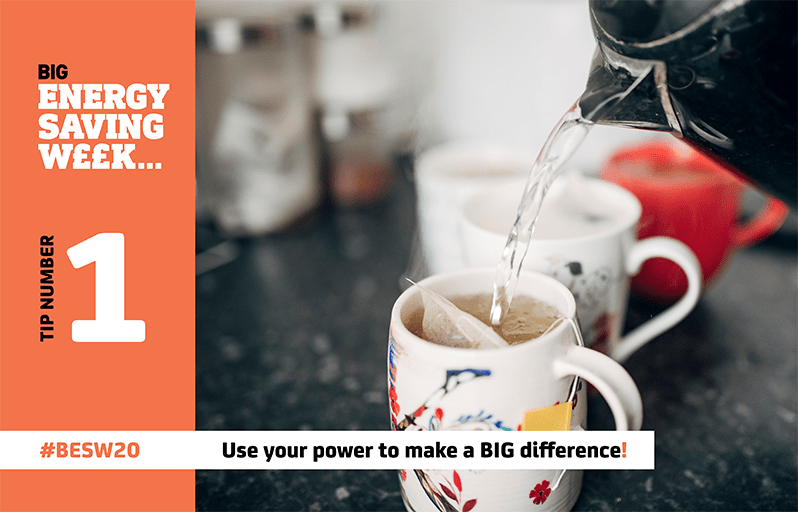
Tip 1 of the week is:

You could save around £36 a year by
✔ using a bowl when washing-up
✔ cutting your washing machine use by one cycle a week
Big Energy Saving Week 2020 6
✔only filling the kettle with the water you need
Learn more about how to use your power to make a BIG difference here: BESW20 bit.ly/2EoXzBL

On Wednesday 22nd Janaury our Energy Expert Helen Dean will be the Lambourn parent and toddler group at the Royal British Legion from 9am to 11am, run by Hungerford Children’s Centre. There’s also a health visitor clinic and baby weigh-in happening at the same time so if you’re going to be there do stop and have a chat with Helen and see how she can help you save money oin Big Energy Saving Week #BESW20


Recruitment: Development Officer at the Five a Day project

Five a Day Market are recruiting a Development Officer to manage the Five a Day project 

Five A Day Market Garden is a not for profit community gardening project.  The project runs from a two acre garden, which is situated in the beautiful and tranquil hamlet of Englefield, approximately seven miles west of Reading, Berkshire.

This is an exciting opportunity to work with volunteers, enjoy the fruits and vegetables of the Five a Day garden, and develop new ideas to help more people of all ages discover and enjoy Five a Day. Download the  Development Officer JD and apply before 27th January 2020.


CCB is now on Easyfundraising – feel good shopping

Did you know that whenever you buy anything online – from your weekly shop to your annual holiday – you could be raising free donations for Connecting Communities in Berkshire with easyfundraising?

There are over 4,000 shops and sites on board ready to make a donation – including eBay, Argos, John Lewis, ASOS, Booking.com and M&S – and it won’t cost you a penny extra to help us raise funds.

All you need to do is:

  1. Go to https://www.easyfundraising.org.uk/causes/connectingcommunitiesinberkshire/?utm_campaign=raise-more and join for free.
  2. Every time you shop online, go to easyfundraising first to find the site you want and start shopping.
  3. After you’ve checked out, the retailer will make a donation to Connecting Communities in Berkshire at no extra cost to you whatsoever!

There are no catches or hidden charges and Connecting Communities in Berkshire will be really grateful for your donations.

Thank you for your support.


7 top home improvements to warm up your home

Gary Hartley is Energy Saving Trust’s expert blogger. He has extensive experience researching and writing on a number of topics, with particular expertise in sustainable energy, policy, literature and sport. As well as providing regular blog content, Gary has also been published in numerous magazines and journals.

We recommend getting at least three quotes from different reputable installers before carrying out any improvements.

1. Draught proof your home

Energy Saving Trust research has found that 46% of people still need to draught-proof their windows and doors.

Cost: A good DIY draught-proofing job could costs between £85 and £275 for materials and professional installation for your whole house.

Saving: Draught-proofing windows and doors can make your home a more comfortable place to live and could save you £20 a year on heating bills.

2. Insulate your pipes

Insulating your hot water pipes is a quick and easy way to save energy. As well as reducing heat loss from your system, pipe lagging will also prevent pipes from getting too cold in winter, and therefore prevents pipes bursting.

Pipe insulation is an easy DIY install – you can buy foam insulation tubes online or from a DIY store and slip them over your pipes. In a typical 3-bed semi-detached house, materials will cost around £20, and you will save around £3 a year on your energy bills, as well as reducing the possibility of expensive repair bills from burst pipes.

3. Upgrade heating controls

Room thermostats allow households to set and maintain the temperature at home. A programmer sets the heating to turn on and off at certain times of the day to suit your lifestyle. Thermostatic radiator valves (TRVs) let householders control the temperature of each radiator.

Cost: Costs can vary significantly due to the variety of heating systems types and sizes and controls available. We recommended comparing quotes from professional installers.

Saving: Installing and using a full set of heating controls means that you can be warm exactly when and where you want in your home. You could also save around £80 a year if you currently don’t have any of these heating controls.

4. Get a new boiler

Modern boilers are more efficient than older models. If your boiler is more than 10 years old it will be far less efficient than a newer model, consider replacing it with a more efficient condensing boiler.

Costs and savings vary depending on your current boiler’s efficiency, fuel type and your house type but fuel bill savings can be significant.

5. Top-up your hot water cylinder insulation

Nearly all UK hot water cylinders have some insulation, however those with a hot water tank jacket under 25mm thick could benefit from top-up insulation.

Cost: A hot water cylinder jacket costs around £16.

Saving: Topping up your hot water cylinder insulation from 25mm to a 80mm jacket could save around £20 a year.

6. Top-up your loft insulation

The majority of homes have some loft insulation but many don’t have enough. The recommended depth is 270mm.

Cost: Topping up your loft insulation from 120mm to 270mm could cost around £240.

Saving: Topping up your loft insulation from 120mm to 270mm will help stop warmth escaping through the roof and could save around £12 a year.

7. Insulate your walls

Although wall insulation is a bigger investment, and costs vary, it can keep your home warm and cosy and result in a large saving.

Most homes built after 1920 have cavity walls. If your home’s cavity walls are uninsulated, adding cavity wall insulation could save up to £150 a year off your energy bills (based on a typical 3-bedroom semi-detached house).

Most homes built before 1920 have solid walls. Solid wall insulation can save around £260 a year off your energy bills (based on a typical 3-bedroom semi-detached house).

More on this…


New £35 million European Funding Call now open to boost rural productivity and create local jobs

Rural businesses across the country are set to benefit from a guaranteed £35 million in government funding to create new jobs, boost tourism, and unlock growth in rural areas.

The government’s Growth Programme provides grants for rural start-ups and businesses to purchase state-of-art equipment and machinery to grow their business or open up opportunities for tourism. The scheme has already granted £99 million to 546 local businesses across England, creating 3,771 new jobs in rural areas.

Farming Minister George Eustice said “Our dedicated fund for rural businesses has created more than 3,700 jobs and supported a diverse group of businesses, tourism operations and start-ups to unlock their full potential. This next round of funding will help more businesses to grow and local areas to prosper – and I would urge any rural enterprise to look into what this scheme could do for them. I would also encourage farmers to consider how they might use this funding to branch out and diversify their businesses, making the most of emerging trends and tastes and looking ahead to new opportunities.”

For this funding round of the Growth programme, the threshold for minimum grants has come down from £35,000 to £20,000, meaning that more small or micro-businesses can be eligible for a grant for their projects.

Paul Caldwell, Chief Executive of the Rural Payments Agency added, “The Growth programme provides funding to the 98% of the rural economy in England that isn’t directly engaged in farming. From heritage railways to creameries and vineyards, small and micro-businesses have benefitted from the investment available under the Growth programme in recent years. We are looking to support applications from businesses with ambitious plans to grow their business and provide wider benefits to their local community. I would urge all interested applicants to submit their expressions of interest as soon as possible to ensure they have plenty of time to complete a full application if their project is assessed to be eligible.”

If you’re a business in a rural area of Berkshire and has the potential to create new jobs, increase business turnover, and improve productivity, then click here for more information and complete the Express of Interest Form.   

If the Rural Payments Agency considers the project to be eligible, the applicant will then be invited to submit a full application. The deadline for all Expressions of Interest is Sunday 16 February 2020.