

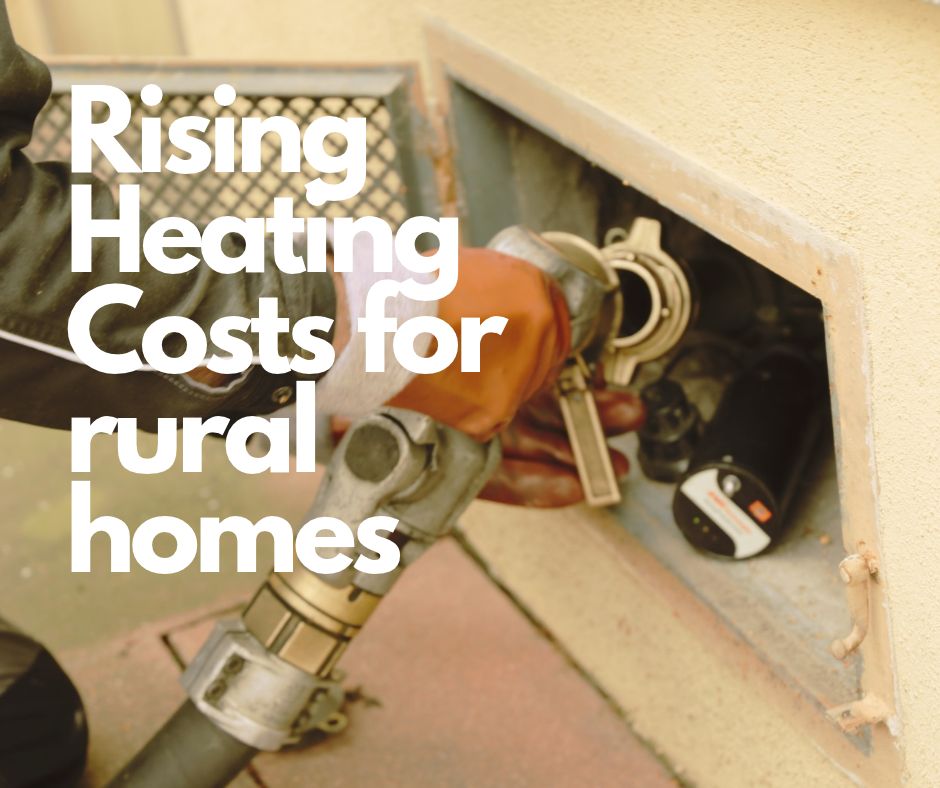
Rural Households Must Not Be Forgotten as Energy Costs Continue to Rise

Thousands of rural households across England, including many in Berkshire, continue to face significant pressure from rising energy costs, particularly those who rely on heating oil or liquefied petroleum gas (LPG) to heat their homes.

While households connected to the mains gas network are protected by the energy price cap, many rural residents who live off the gas grid are not. As a result, they are experiencing substantially higher increases in their heating costs as winter approaches.

According to our national body Action with Communities in Rural England (ACRE), the cost of heating oil has risen dramatically, with the price of a standard 1,000-litre delivery increasing by more than £400 compared to earlier in the year. Prices have remained highly volatile, making it difficult for households to plan and budget for essential energy costs.

More than 900,000 homes across England rely on heating oil, while a further 150,000 use LPG. Most of these properties are located in rural towns and villages, where fuel poverty is already a significant concern. Research shows that fuel poverty levels are higher among off-grid households, and the rural fuel poverty gap is around double that found in urban areas.

As Berkshire’s member of the ACRE Network, Connecting Communities in Berkshire (CCB) supports calls for rural communities to receive fair and targeted assistance as the Government considers future cost-of-living measures.

ACRE has written to the Treasury ahead of the Budget, urging ministers to introduce dedicated support for households that rely on heating oil and LPG. One proposal is a six-month VAT holiday on both fuels, which could save households around £50 on a typical 1,000-litre heating oil purchase.

Corinne Pluchino, Chief Executive of ACRE, said:

“The 1.5 million households that use heating oil, most of which are in rural areas, are facing much larger price rises of nearly 75 per cent as we approach the winter.

At a time when budgets are already stretched, these unsustainable price rises are causing huge worry and anxiety for many rural families.”

CCB recognises the unique challenges faced by rural residents and will continue to support efforts to ensure the needs of rural communities are heard at both regional and national levels.

For more information about ACRE and its work supporting rural communities across England, visit www.acre.org.uk.
Rural families need more targeted support against rising heating oil prices

Rural households across Berkshire are facing increasing pressure from rising heating oil costs, prompting Connecting Communities in Berkshire (CCB) to join calls for targeted government support ahead of the winter months.

Many homes in rural areas are not connected to the mains gas network and instead rely on heating oil or liquefied petroleum gas (LPG) to keep warm. Unlike gas and electricity, these fuels are not covered by Ofgem’s energy price cap, leaving households particularly vulnerable to fluctuations in global energy markets.

Heating oil prices have risen significantly throughout 2026, with costs increasing sharply following unrest in global oil markets earlier this year. On 2 September 2026, the average price of heating oil stood at 94p per litre, around 82% higher than on the same date in 2025. This means a typical 1,000-litre delivery now costs almost £940.

The increase comes at a time when many households are already struggling with the wider cost of living. While the Government has pledged further financial support for families this winter, CCB is urging ministers to ensure that households relying on alternative fuels are not overlooked.

Tim Parry, our CEO, said:

“We are facing a rural cost of living crisis for energy, and it’s one that is having a very real and measurable impact on many households in Berkshire.

With the approach of colder weather, there is now a pressing need for the government to make meaningful decisions and reassure rural people that they have not been forgotten.

Living off the gas grid is already a challenge, with fuel needing to be purchased in advance and in bulk, before being physically delivered to each address. The sustained volatility of the heating oil market since March has only added to the stress, worry and anxiety felt by off-grid energy users.”

CCB is supporting the campaign being led by Action with Communities in Rural England (ACRE), the national charity for rural communities and umbrella body for the ACRE Network. The organisation has written to Government ministers outlining a number of measures that could help reduce the financial burden on rural households.

One proposal is the removal of the 5% VAT currently charged on heating oil purchases. At today’s prices, this would save the average household around £45 on a 1,000-litre delivery.

Corinne Pluchino, Chief Executive of Action with Communities in Rural England (ACRE), said:

“We are grateful that our network of 37 member charities is backing our call to get more targeted support for those off the gas grid delivered in time for winter.

We remain keen to work with the government on any initiatives that can help these rural families keep energy costs down and hope that a positive announcement will be made very soon, before the real cold weather sets in.”

As winter approaches, CCB will continue supporting rural communities across Berkshire and advocating for fair access to energy support for households that rely on heating oil and LPG.

For information about the national campaign, visit http://www.acre.org.uk


Environmental Spotlight: Solar Panels in Village Halls

 by Kate Meads, Community Buildings Advisor

In 2025 solar panels are becoming a more common feature of many Village Halls.

We estimate that by the end of 2026 more than 20% of our member halls will have installed them.

Members cite multiple reasons for installing Solar Photovoltaic Panels. The most common ones are:

1. Reduce Energy Costs – Solar energy is free!

2. Environmental Sustainability – Solar energy is clean and renewable, helping reduce the hall’s carbon footprint. Supports local climate action goals and demonstrates environmental leadership.

3. Access to Grants and Funding – There are a number of grant makers who prioritise funding for environmental efficiencies

4. Energy Independence – Solar panels with battery storage allow halls to generate and store their own electricity. Reduce reliance on the national grid, and protect
against energy price volatility.

5. Community Engagement and Education – Installing solar panels can raise community awareness about renewable energy. It encourages other local buildings and residents to consider sustainable options. Both Chieveley and Beech Hill Village Halls see this as important.

6. Long-Term Investment Solar panels typically last 25–30 years, offering long- term savings. They increase the value and appeal of the hall for future generations.
As energy costs increase, the return on investment can be shorter and attractive.

7. Monitoring and Transparency- Many systems come with apps or dashboards that show real-time energy generation and usage. Which help committees manage energy more efficiently.

The staff at CCB would like to applaud all our forward thinking Management Committees!

Among the early adopters of solar panels were Sulhampsead and Ufton Nervett Village Hall, Padworth Village Hall, The Cornerstone (Wokingham), Basildon Village Hall, Burghfield Scouts Hut and East Garston Village Hall.

Halls who have installed Solar Panels since the start of CCB’s 21st Century Community Halls Project are: California Ratepayers Hall, Finchampstead Memorial Hall, and Beech Hill Village Hall.

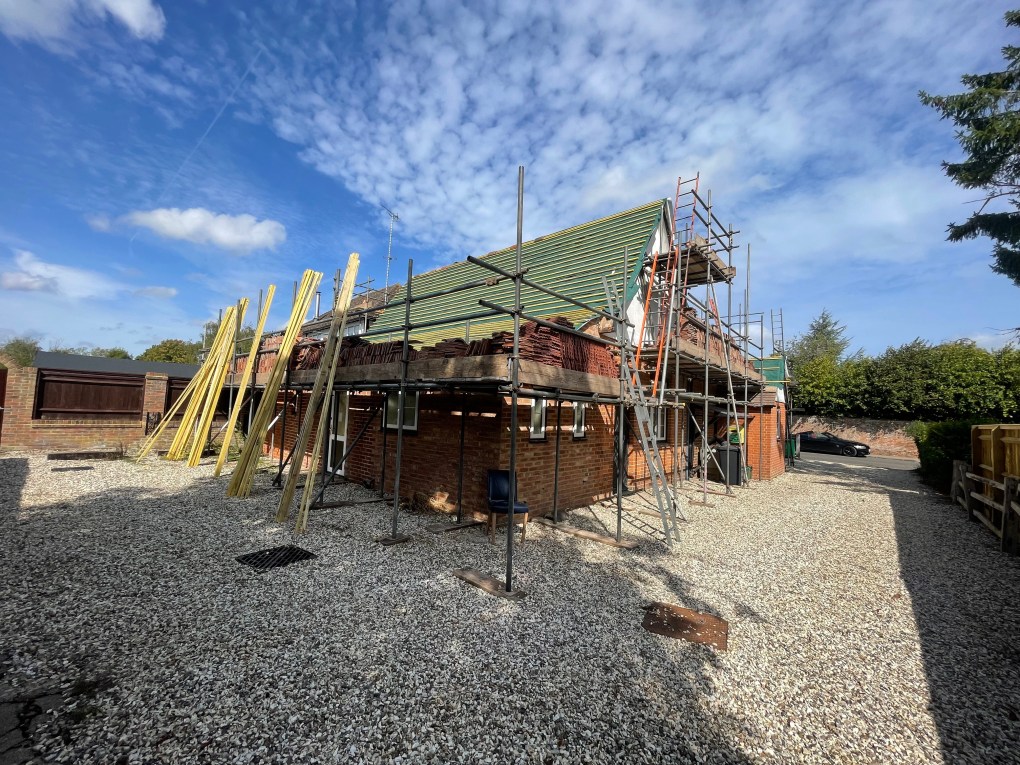
This summer sees Chieveley Village Hall, Arborfield Village Hall (pictured above), Bradfield Village Hall and West Ilsley Village Halls making their installations.

More Halls have plans to install solar soon, among these are St John’s Crowthorne, Hampstead Norreys Village Hall and Bucklebury Village Hall.

Any questions?Email: kate.meads@ccberks.org.uk