
Workshop Helps Trustees Build Stronger Committees for Community Halls

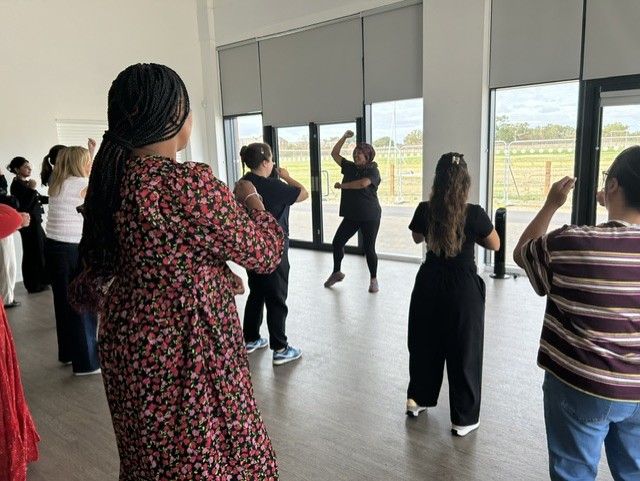
Volunteer trustees from across Berkshire and west Oxfordshire gathered last month, braving the hottest day of the year so far, at Hermitage Village Hall for a practical training session focused on building effective management committees for community buildings and village halls.

The session was led by Kate Meads, Community Buildings Advisor at Connecting Communities in Berkshire, with support from Tessa Hall of sister organisation Community First Oxfordshire and Louise Beaton OBE, co-author of Halls for All: A History of Village Halls.

During the workshop, participants explored the essential ingredients of a successful management committee, including clearly defined roles, positive values and behaviours, effective governance, well-run meetings, and the importance of keeping community spaces safe, legal and welcoming.

Those attending described the event as a valuable opportunity to strengthen their understanding of hall management while also networking with others involved in running local venues.

The training session was interactive and thought-provoking, generating discussion and practical ideas that trustees could take back to their own organisations. It also highlighted one of the biggest challenges currently facing many community buildings: recruiting and attracting new trustees to help sustain these important local assets into the future.

Volunteers who support village halls and community buildings contribute time, experience and practical skills every week. From maintaining premises and organising events to overseeing bookings and finances, much of their work happens behind the scenes, but it remains essential to keeping these spaces open and active.  As Volunteers Week comes to a close we would like to say a massive THANK YOU to them on behalf of their local communities.

Community buildings and village halls continue to play a vital role in local life, providing welcoming places where residents can connect, take part in activities and support one another.

CCB’s role is to support community buildings and village halls by providing advice and guidance where needed, as well as visiting halls to carry out consultations that help ensure they remain fit, vibrant and sustainable well into the 21st century and beyond. Our next training event takes place later this month and will focus on Martyn’s Law – what the legislation is, why it matters, and how it may apply in community settings.

Book your place here: https://www.eventbrite.co.uk/e/1985703839638?aff=oddtdtcreator

Thanks to West Berkshire Council Adult Community Learning Team for supporting these training sessions.


June Funding Opportunities

Cash for Kids’ Impact Grants

About Us: The Cash for Kids Impact Grants scheme supports children and young people up to and including 18 years old living in the UK who are affected by poverty, abuse, neglect or those with additional support needs.
Criteria: Registered charities with an annual turnover less than £1 million, schools, community organisations and other grassroots groups based across the UK are eligible to apply.
The programme addresses the following themes:

Poverty.
Mental health and wellbeing.
Sport and physical wellbeing.
Disability or life-limiting illness.
Education and essential skills.
Diversity and inclusion.
Grant Size: up to £3,000
Deadline for applications: When all funds are allocated.

Cash for Kids’ Holiday Hunger Grants

About Us: The Cash for Kids Holiday Hunger Grants scheme supports children and young people (up to 18 years old) facing food insecurity during the school holidays.
Criteria: Registered charities with an annual turnover less than £1 million, schools, and community, voluntary, youth group or sports groups with a formal governance document (eg constitution, articles of association, club rules and regulations) can apply. Projects must focus on outcomes that encourage children to eat more healthily and be more active during the school holidays.
Grant Size: up to £3,000
Deadline for applications: When all funds are allocated.

Concertina

About Us: The Concertina Charitable Trust makes grants to charities that provide musical activities for the elderly community in need.
Criteria: Grants to charitable bodies that provide musical entertainment and related activities for the elderly.
Grant Size: up to £250
Deadline for applications: 31st October 2026

Tesco Fruit & Veg Grants

About Us: Our funding is aimed at making a positive difference to children and improve their access to free fruit and veg to support a healthy, nutritious diet.
Criteria: For schools, registered charities and not-for-profit organisations supporting children to apply for grants to improve access to fruit and veg. Examples of eligible projects include:
Breakfast and after-school clubs that provide fruit and vegetables for pupils
Sports clubs that offer healthy food as part of their activities, or provide a much-needed half-time boost
Growing projects where children can grow their own fruit and vegetables
Cooking classes that help children and families learn how to prepare healthy meals
Holiday clubs that provide healthy meals and snacks
Projects supporting children and young people with SEND by providing healthy snacks or meals
Youth clubs that provide healthy meals or snacks
Projects that help tackle holiday hunger when children are not at school
Healthy eating projects that support families to cook nutritious meals on a budget
Foodbanks that provide food support to families
Grant Size: up to £1,500
Deadline for applications: Rolling programme

Network Rail Community Tree Planting Fund

Grants are available for community groups, charities, community interest companies, schools, and other organisations to support tree-planting projects across England, Scotland, and Wales.

The deadline for applications is 19 July 2026 (midnight).

Hall & Woodhouse Community Chest

About Us: The Community Chest is now in its 25th year of giving a helping hand to local people in supporting and strengthening their community, by encouraging volunteer led charities to apply for a grant to go towards improving their local area.
Criteria: Applications are welcome from any voluntary or community organisation that is based, or works in, our trading area across the south of England, from Devon to Sussex and in the north from Bristol to Twickenham.
Grants or funds raised could be used to support the following:

Youth work and activities
Sports and social clubs
Elderly and people with disabilities
Health and social care
Local arts and culture
Conservation and the environment
Grant Size: Typically £300–£3,000
Deadline for applications: 12th July 2026

Tree Council Branching Out Fund

About Us: Small grants to support a new season of community tree planting.
Criteria: For schools, constituted community groups and charities, community interest companies, Tree Warden networks, and other organisations across the UK to deliver tree-planting projects during the 2026/27 Winter planting season.
Grant Size: up to £2,500
Deadline for applications: 19th July 2026

Dan Maskell Tennis Trust

About Us: Raising funds for disabled people who play tennis.
Criteria: Disabled individuals, disability groups, tennis clubs, schools, and associations across the UK that work with people with disabilities can apply for grants from the Dan Maskell Tennis Trust to support participation in tennis.
Grant Size: up to £1,600
Deadline for applications: 3rd August 2026

Screwfix Foundation

About Us: The funding is being made available through Screwfix Foundations, and the grants are available for a wide range of projects, from repairing buildings and improving facilities in deprived areas to decorating the homes of people living with sickness and disabilities.
Criteria: To local charities and not-for-profit organisations (including specialist not-for-profit schools) to fund projects that will fix, repair, maintain and improve properties and community facilities for those in need in the UK.
Grant Size: up to £5,000
Deadline for applications: 10th August 2026

Warburtons Community Grants


About Us: Our financial aid programme is aimed at supporting projects, activities, and organisations through community care grants and other initiatives.
Criteria: Not-for-profit organisations with charitable purposes that are based and working in England, Scotland or Wales can apply as long as their projects are addressing one of Warburtons’ priority areas:
Health – supporting families to care for each other and lead healthier lives:
Improving physical health
Improving wellbeing
Place – supporting families to flourish in communities that are safer, greener and more inclusive:
Making spaces safe and inclusive
Connecting communities with the environment
Skills – supporting families to gain useful skills for life and work:
Developing useful life skills
Developing useful skills for employment.
Grant Size: up to £400
Deadline for applications: 17th August 2026

The Sasha Foundation

About Us: Supports charitable organisations working with young people experiencing depression, mental health issues, or drug abuse challenges.
Criteria: Established charitable organisations only (no individuals). Priority for grassroots and small‑to‑medium‑sized voluntary groups.
Grant Size: Up to £10,000
Deadline for applications: 1st October 2026

Heritage Revival Fund – the Architectural Heritage Fund

The Heritage Revival Fund has been created to help communities across England rescue and repurpose neglected historic buildings. It will do this by supporting community organisations to take ownership of, adapt and reuse the local heritage assets that matter to them, transforming them into thriving spaces that meet their needs.

This new programme is being delivered by the Architectural Heritage Fund in partnership with the Department for Culture, Media and Sport (DCMS) and Historic England. A range of loans are available and grants including the following:

Project Viability Grants. Grants of up to £20,000 are available to support early-stage work on historic building projects. These grants should help you to establish whether a project is viable.
Project Development Grants. These grants, up to £100,000, aim to support development work on historic building projects. Project Development Grants can contribute towards the costs of developing and co-ordinating your project and taking it towards the start of work on site. To qualify, an organisation must have established that the end use of the project is likely to be viable and have decided to take the project forward.
Applications for development grants of between £75,000 and £100,000 must be submitted by quarterly application deadlines. For 2026-2027, these are as follows: 13 July 2026, 12 October 2026, and 18 January 2027

Capital Grants. Grants of up to £500,000 are available to support work to restore and reuse historic buildings in town centre locations.
Full Capital Grant applications must be submitted by quarterly application deadlines. For 2026-2027, these are as follows: 22 June 2026, 21 September 2026, and 14 December 2026.

Community Tree Planting Fund – Network Rail

The Tree Council and Network Rail are once again working in partnership to support a new season of community tree planting.

For the 2026/27 planting season, grants of between £2,500 and £10,000 are available per application. They are looking to support well-planned tree planting projects that will directly benefit people, communities and wildlife.

The following organisations can apply:

Local authorities
Charities & other NGOs
Community groups
Education institutions
Individual landowners
The deadline for applications in round one is 19 July 2026

Stanley Smith (UK) Horticultural Trust grants

Grants are available to individuals, organisations and institutions carrying out projects of significance to horticulture, gardening or botany with a strong horticultural element.

The following is a non-exhaustive list of typical projects.

restoring gardens of historic interest;
developing new gardens, or new garden areas within existing gardens, for public access and enjoyment;
exhibitions, book publications, research and educational programmes relating to horticulture;
expeditions and travel to study, collect and protect plants of scientific and horticultural value;
study-visits by horticulturists or botanists with strong horticultural links, and
gardeners’ training schemes run by appropriate organisations (but not to individuals, see Training and Traineeships).
Grants are normally awarded twice a year, in April and September (following application deadlines of 15 February and 15 August). The maximum grant is £5,000 but some organisations only require modest sums and applicants are welcome to apply for grants of less than £500. Typical grants are usually in the range of £3,500- £5,000.

Grants for physical activity providers – Parkinson’s UK

In 2026, the charity is offering grants of up to £3,000 to support physical activity projects for people with Parkinson’s across the UK.

This year, funding is focused on people who are currently inactive, helping them begin to engage in physical activity and sustain their participation.

To make activities more accessible, they are also supporting ‘gateway activities’. These are movement?based sessions that build confidence and encourage interest in becoming more active.

The fund opened on 2 March and applications will be accepted until all of the funding has been allocated.

Thanks to Wokingham & Bracknell Involve, West Berkshire Volunteer Centre and Rural Services Network Partnership.


Retaining Rural Affordable Homes: Exploring a Regeneration Approach

by Maria Kelly, Rural Housing Enabler

A recent report on the social housing stock in an east Berkshire parish concluded that factors including the age of stock, along with regulatory and financial pressures, could lead the Registered Provider (RP) to dispose of up to 40% of its current homes in the parish by 2035. That amounts to 14 homes.

This particular RP is actively engaged in seeking sites for new affordable homes in the parish and working closely with our Rural Housing Enabler. Despite this, it will be a huge challenge to build enough new homes to replace those lost, let alone to meet the increasing need for affordable housing in the parish.

CCB recognises that housing associations managing large numbers of older properties, particularly those built before the 1980s, face challenges in making them more comfortable and affordable to live in (warmer and more energy efficient). In rural areas, however, we strongly believe that simply selling older stock on the open market once it becomes vacant is not the answer.

Once a socially rented home is sold to a private buyer, the land is effectively lost to the sector. In rural areas, it is extremely difficult to find land for new affordable housing in the same community. There are many reasons for this, but the result is that as these homes are sold off, the supply of affordable housing dwindles—sometimes to just one remaining property, and eventually none at all. This trend has serious consequences for rural communities.

So what can be done?

One potential solution is for RPs to regenerate their rural sites, rather than relying solely on retrofitting (e.g. adding insulation or heat pumps) or disposal. New provision within the Homes England Social and Affordable Homes Programme (SAHP) offers increased grant funding for housing providers who need to demolish older homes and replace them, on the same site, with new, higher-quality homes.

Regeneration is often associated with urban areas, but what might it look like in a rural setting where affordable homes are dispersed across a village and interspersed with privately owned and rented properties? How would communities be involved? And could registered providers afford to do it?

We cannot answer these questions alone, so we want to work with Altair Social Housing Consultants to explore whether rural regeneration is a viable option in our region. There is a cost to this work, and we need to raise at least £5,000 – ideally more – in order to undertake it.

We are grateful that one of our Rural Thames Valley partners, SOHA, has already agreed to contribute £1,250. Other local organisations involved in affordable housing are also considering whether they can support this piece of work.

This project will give us a much clearer understanding of what rural regeneration might look like in practice, including the costs, practicalities and potential benefits.

If you would like to find out more about this, or anything else relating to rural housing in Berkshire, please contact Maria.Kelly@ccberks.org.uk.


May Funding Opportunities

The Joanies Fund

Funder: The Joanies Fund (via Herefordshire Community Foundation). Grant size: Typically £500–£5,000

Focus: Children and young people facing disadvantage. Eligible organisations: Small, grassroots charities and community groups. Deadline: Opens Monday 13th April closes July 31st

The Joanies Fund is open to applications from projects across England and Wales. It supports a wide range of community projects working solely with young people aged 0 to 25. The fund has a particular interest in projects that are innovative or entrepreneurial and lead to employment, accreditation, further education or training. Projects need to show integration into their local communities and ensure that the project is open to all young people, regardless of ethnicity or religion. The fund will not consider applications from religious groups and organisations.

Michael Tippett Musical Foundation

Deadline: 30 September each year(Projects must start no earlier than January of the following year)

Who can apply: UK‑based charities, community groups, schools, colleges, universities, and other constituted organisations

Focus:

  • Group music‑making
  • Youth participation in creative music activities
  • Projects where composition is a key element
  • Performances or recordings of Michael Tippett’s works, especially lesser‑performed pieces
  • Community or educational music projects with strong creative outcomes

Grant size: Typically £500–£3,000 (average around £2,000), One‑off grants (no multi‑year funding)

Eligible area: UK‑wide

The Michael Tippett Musical Foundation supports creative, group‑based music projects across the UK, with a strong emphasis on involving young people and placing composing at the heart of the activity. Grants of £500 to £3,000 are awarded annually to projects that encourage musical creativity, participation, and performance.

The Foundation also funds performances and recordings of Michael Tippett’s works, prioritising those that are less frequently heard or require additional support to proceed. Applications close on 30 September each year, with funded projects beginning no earlier than January. Funding is strictly for creative activity rather than equipment, and proposals must be concise, clearly costed, and focused on artistic development and participation.

The Hedley Foundation – Grants for Small Charities Supporting People in Need

Deadline: Rolling – applications accepted all year, reviewed quarterly (If you do not hear back within 4 months, the application is considered unsuccessful)

Who can apply: Small UK‑registered charities with annual income below £1 million

Focus:

  • Raising aspirations of disadvantaged young people
  • Support for disabled people (physical, mental, sensory, learning disabilities)
  • Improving quality of life for older people and those with terminal illness
  • Social welfare projects supporting carers, homeless people, ex‑offenders, and others facing hardship
  • Education, arts, sport, training, adventurous activities, and wellbeing initiatives

Grant size: Typically £250–£5,000

Eligible area: UK‑wide

The Hedley Foundation provides small grants to UK charities working to improve the quality of life for people facing disadvantage, disability, illness, or social hardship. Grants usually range from £250 to £5,000 and support specific, well‑defined projects that deliver measurable outcomes—particularly those benefiting young people, disabled people, older people, and carers.

The Foundation does not fund core salaries, building construction, general running costs, transport, financial deficits, or overseas work. Applications are accepted throughout the year and reviewed quarterly, with decisions typically made within four months. The Foundation prioritises clear, concise applications that demonstrate strong impact and value for money.

The National Lottery Community Fund – The Solidarity Fund

Grant size: Awards large, long‑term grants ranging from £1 million to £5 million, to be delivered over 5 to 10 years.

Eligible applicants: Constituted voluntary and community organisations, registered charities, charitable incorporated organisations (CIOs), not‑for‑profit companies limited by guarantee, community interest companies (CICs), co‑operative and community benefit societies, and partnerships with strong track records in addressing inequality.

Focus areas: Organisations in England that tackle the root causes of inequality, such as poverty, discrimination and disadvantage.

Application process: Decisions take approximately 3 months for Stage 1, and up to 5 months after progressing to Stage 2, making the total process around 8 months.

Deadline: The programme is open on a rolling basis, meaning there is no fixed application deadline.

Crucially, applicant organisations must ensure their work is led or shaped by people with lived experience, demonstrate community‑led governance, and show capacity to manage large, long‑term systems‑change projects. The fund prioritises initiatives that strengthen community power, shift decision‑making structures, and create sustainable, long‑term impact.

D’Oyly Carte Charitable Trust

About Us: Increasing access to opportunity through the arts, creative health and heritage crafts.
Criteria: Provides funding to UK charities for arts, creative health, and heritage crafts projects that benefit disadvantaged people. Supports a wide range of activities including community arts, therapy programmes, and skills development.
Grant Size: £500 – £8,000
Deadline for applications:
8th May 2026 (first-stage for large charities)
1st June 2026 (small charities and shortlisted large charities)

Wise Music Foundation

About Us: Providing financial support for people experiencing hardship, distress and illness, with a focus on children, the homeless and people living in poverty.
Criteria: Supports small UK charities helping vulnerable people, including children, the elderly, homeless individuals, and those with disabilities. Also funds education, arts, health, and community initiatives.
Grant Size: £500 – £5,000 (average £1,500)
Deadline for applications: 31st May 2026

The Grocers’ Charity

About Us: The Grocers’ Charity awards around £1 million annually to UK-registered charities through its open grants programme. It typically provides one-off grants to support a wide range of charitable activities. The charity receives over 1,000 applications each year and funds around 14% of applicants.
Criteria: Applications must be submitted online, with support available for those unable to apply digitally. Funding is restricted to smaller charities (generally under £500,000 turnover, with higher limits for medical charities) and excludes individuals, non-UK charities, educational institutions, places of worship, and overseas beneficiaries.
Grant Size: Up to £5,000
Deadline for applications: 1st September 2026

Asda Foundation – community spaces grant

Programme Structure – Capital‑focused grant supporting the creation, improvement or repair of local community spaces.

Application Process – Applications submitted via your local Asda Community Champion; store‑level review followed by Foundation approval

Eligibility – UK community groups, charities, CICs and community benefit societies with a physical community space open to the public

What They Fund – Building repairs, room refurbishments, kitchen upgrades, accessibility improvements, outdoor community areas and essential equipment

Grant Size – Typically £10,000–£25,000 for major improvements; smaller awards available for minor works

Funding Priorities – Spaces that reduce isolation, improve community cohesion, support vulnerable groups and provide long‑term community benefit

Application Deadlines – 28th April

The Asda Foundation’s Community Spaces Grant supports the creation, improvement or refurbishment of community spaces that bring people together and strengthen local resilience. Eligible organisations include charities, CICs and community groups with a publicly accessible building or outdoor area. Grants typically range from £10,000 to £25,000 and fund capital works such as repairs, refurbishments, accessibility upgrades and essential equipment. Applications must be developed with a local Asda Community Champion, and the programme operates one main annual deadline, usually in late spring. Due to the scale of funding available, competition is strong, with priority given to projects that clearly demonstrate long‑term community impact and support for vulnerable or isolated group.

The Wildlife Trust- Green Community Grant

Programme Structure – One‑year flexible funding for not‑for‑profit groups in England, Scotland and Wales with annual income between £10,000 and £1 million

Application Process – Online application via Wildlife Trusts portal; guidance notes and application questions provided for preparation

Eligibility – Organisations operating for at least 12 months; core purpose must align with nature recovery, climate action, or improving nature‑rich spaces and access

What They Fund – Nature recovery, climate action, improving nature‑rich spaces, access to green areas, and wider sustainability activities such as recycling, litter picking and sustainable transport

Grant Size – Up to £25,000, capped at no more than 25% of the organisation’s most recent annual income

Funding Priorities – Organisations with income under £250,000; groups in the top 15% most deprived areas; organisations supporting marginalised communities (e.g., disabled people, racialised communities, LGBT+ groups)

Application Deadlines – Three annual windows for 2026: 25 March–22 April, 24 June–15 July, and 30 September–21 October; current window closes 22 April 2026

The Wildlife Trusts’ Green Community Grants Programme provides one‑year flexible funding of up to £25,000 for not‑for‑profit groups across England, Scotland and Wales whose core purpose aligns with nature recovery, climate action or improving access to nature‑rich spaces. Eligible organisations must have been operating for at least 12 months and have an annual income between £10,000 and £1 million. Funding can support a wide range of environmental and sustainability activities, from habitat restoration to community recycling initiatives. Priority is given to smaller organisations, groups working in highly deprived areas and those supporting marginalised communities. The programme runs three application windows in 2026, with high demand expected due to oversubscription in previous years.

Berkshire Community Foundation- Pargiter Trust Funds for Older People

Status: Open for applications

Opens: Thursday 23 April

Deadline: 10am, Thursday 21 May

Grant size: Up to £5,000

Beneficiaries: Adults aged 65+

Decision notification: August

Eligible Project Areas
Improving health and wellbeing

Reducing social isolation (including befriending schemes)

Improving access to facilities, advice and training

Providing respite for carers

Improving access to information and IT, especially intergenerational work

Supporting people facing illness, injury, disability, bereavement or financial difficulty

Summary
The Funds for Older People programme is now open, offering grants of up to £5,000 for initiatives that improve the lives of adults aged 65 and over. Managed by BCF, the fund supports projects that enhance wellbeing, reduce isolation, expand access to services and training, provide carer respite, and help older people overcome challenges such as illness, disability or financial hardship. Applications are open until 10am on Thursday 21 May, with funding decisions communicated in August.

The National Archives Project Grants programme

About Us: The National Archives Project Grants programme supports partnerships between GLAM (galleries, libraries, archives and museums) or heritage organisations and a community groups. The programme aims to strengthen relationships between communities and heritage organisations by supporting research, skills development, and resources that reflect diverse voices and experiences.
Criteria: Community groups and heritage organisations across the UK can appy for grants to deliver heritage projects. Projects must be community-led and co-designed, and may support new work or build on earlier Seed Corn activity.
Grant Size: up to £30,000
Deadline for applications: 12th June 2026

The Baily Thomas General grants programme

About Us: The Baily Thomas Charitable Fund is a grant making registered charity which was established primarily to aid the research into learning disability and to aid the care and relief of those affected by learning disability, by making grants to voluntary organisations working in this field.
Criteria: UK charities, voluntary organisations, and schools can apply for grants to support children and adults with severe learning difficulties, including autism.
Grant Size: The main programme for grants of £5,000 or more, and a small grants programme for appeals below £5,000.
Deadline for applications: 31st August 2026

King Charles III – Small Grants

About Us: The King Charles III Charitable Fund (KCCF) Small Grants Programme supports small UK non‑profits delivering meaningful community impact across six core themes: environment, countryside, education, heritage and conservation, social inclusion, and health and wellbeing.
Criteria: UK‑registered non‑profit organisations (charities, CIOs, CICs, CLGs, excepted charities, unincorporated groups with clear social purpose).
Grant Size: Up to £3,000 per year, for up to 3 years
Deadline for applications: 7th May 2026

The Fat Beehive

About Us: Digital funding for small charities.
Criteria: The funding is available to charities with an average annual income of less than £1,000,000 to support digital expenditures that other funders may not cover. The funding will help organisations build websites and apps, digitise services, and purchase digital products.
Grant Size: up to £2,500
Deadline for applications: 30th September 2026

Grassroots Grants is open for applications – apply for unrestricted funding of up to £2,000

In partnership with Postcode Lottery, Groundworks are offering this flexible funding to organisations across England. If your turnover is less than £25,000 and you’re making a positive difference in your community, you can apply for funding of up to £2,000.

Funding is unrestricted and flexible. This means it can be used to cover core organisational costs, equipment, staff training, wellbeing activities, and even community initiatives.

Applications are open to individuals, registered charities, CIC’s, and more.

Priority will be shown to:

Funding for communities that rank as being within the top 15% on the English Indices of Deprivation

Organisations that work with and support communities classed as marginalised or vulnerable

Applications are open until September 2026, and you will receive a decision within 10 weeks of applying. Successful organisations awarded up to £2,000 will have 12 months to spend the grant.

Applications are reviewed on a rolling basis.

With thanks to our local CVS’s for the information contained within this article – Involve, West Berkshire Volunteer Centre and Slough CVS


Government Funding to Help Vulnerable Households with Rising Heating Oil Prices

On 16 March 2026, the Government announced £53 million of financial support to be allocated across the nations of the UK to address the rising cost of heating oil. In England, £27 million is being made available, targeted at areas with higher reliance on oil heating, to support people in crisis facing sharp increases in oil heating prices. This support is being delivered through the Crisis and Resilience Fund (CRF). Not every local authority will receive additional funding, but all local authorities are expected to support vulnerable households who use heating oil through their CRF

Vulnerable households in England who heat their homes with oil may be able to get support from their local authority through the CRF. The CRF helps low-income households facing financial difficulties due to a sudden or unexpected cost, including rising heating oil prices. Not every household using heating oil will be eligible – support is targeted at those most in need and eligibility will vary by local authority.

The Crisis and Resilience Fund can be used to support households reliant on alternative fuel sources other than heating oil, such as LPG. Guidance to Authorities is clear that Crisis Payments can be used to support energy costs for any form of fuel used for domestic heating, cooking or lighting, including oil or portable gas cylinders. It is for Authorities to determine individual need and the most appropriate form of support, using a person-centred, needs based approach in line with the Fund’s guidance.

Visit your local authority’s website (latest links below) or contact them directly if you think you may be eligible for support.

West Berkshire Council: https://www.westberks.gov.uk/article/45533/Crisis-and-Resilience-Fund
Royal Borough of Windsor & Maidenhead: https://www.rbwm.gov.uk/community-and-living/community-support/here-help
Wokingham Borough households: https://www.wokingham.gov.uk/cost-living/crisis-and-resilience-fund
Latest from Slough Borough: https://democracy.slough.gov.uk/mgIssueHistoryHome.aspx?IId=50951&Opt=0
Latest from Reading Borough: https://www.reading.gov.uk/benefits-and-financial-support/money-matters/crisis-and-resilience-fund/
Latest from Bracknell Forest Council: https://www.bracknell-forest.gov.uk/benefits-and-support/crisis-payment-scheme