Funding Opportunities in October

One Stop Community Partnership Programme

We are extremely proud to be part of the local communities we serve and that’s why we are even more excited to welcome applications for the One Stop Community Partnership programme.
Local Community Groups are able to apply for funding to support their group and to develop an ongoing partnership with your store. Successful applicants will receive an initial grant of up to £1,000 and begin a partnership with their local One Stop store.
This programme is designed to support community groups or organisations operating within two miles of a One Stop store and which are;

  • Tackling food poverty
  • Supporting the vulnerable
  • Supporting the elderly
  • Supporting low-income families
  • Supporting a healthier lifestyle, such as Youth sports teams
    If you have a local community group you would like to support encourage them to apply today!

Once funding has been agreed, alongside a grant of up to £1,000, a long-term tailored programme of support is created for successful applicants by the One Stop Community team and One Stop Store team. Grant recipients then work in partnership with the One Stop Store team at their local shop to deliver this programme.
The tailored support from the store teams will help community causes to increase or improve their service by assisting in areas such as, volunteering support & additional fundraising

To be eligible to apply, your organisation or project location address must be within two miles of a One Stop store. Each store is able to create a partnership with one group only. Before you start your application, please use the below Store Locator to check the distance from your local store and whether funding is currently available there.

Deadline: 25th October

Marsh Charitable Trust

The Trust focuses on providing funding which could help small organisations pay for various running costs, such as volunteer expenses, training days, equipment maintenance and other core outgoings.
Our funding strategy is to provide long-term core funding for such costs, as we understand that many of the organisations we support depend on unrestricted income in order to meet their operating needs.
Grants are unrestricted and range from £300-£2,000. Successful new applicants can expect to receive a grant at the lower end of this scale.
Applications are considered on the basis of the organisation’s financial position, performance against charitable aims and objectives and the ratio of voluntary income against fundraising expenses
The Trust aims to build long-standing relationships with successful applicants and, subject to an annual review, continue its support over time.

Applicants must be a registered charity with the Charity Commission for England and Wales, the Office of the Scottish Charity Regulator or the Charity Commission for Northern Ireland. This does not include Community Interest Companies (CICs).
Charities must have been established for more than one financial year and able to provide a full set of their most recent Annual Report and Accounts, or the equivalent financial information if their annual income is under £25,000. Deadline: Rolling

Laughology Happiness Grant

Funding is available for grassroots, neighbourhood-based community projects that build happy, strong, resilient communities across the UK.
Small, not-for-profit businesses can apply for funding to set up new groups and activities that improve:
• mental health and wellbeing
• inclusion
• learning and skills development
To be successful, applicants will need to indicate how the activity/group can become self-sustainable or be able to attract funding from other sources for the longer term.
The funding is made available through Laughology’s Happiness Fund, which will make one award of £5,000 twice a year, allowing up to two different projects per year to be supported.

Funding Criteria: Organisations that have received less than £50,000 funding, from any other sources, in the last 12 months.

Deadline: The next closing date for applications is the 4th October 2024.

National Open Garden Scheme: Community Garden Grants

Grants will only be made to bodies in England, Wales and Northern Ireland. The following bodies are not eligible:
• Local authorities (including parish councils)
• Schools
Applications from any such bodies will not be considered. Applications from groups that were successful in securing a National Garden Scheme Community Garden Grant in the prior year will also not be considered.

Applicants must be a fully set up community group, registered charity or Community Interest Company (CIC) with a functioning non-personal bank account. An application must relate to an existing or proposed community garden or similar site. There must be no query over access to the space (such as restrictions imposed by ownership by another body). Applications from groups that were successful in the prior year will not be considered.

Individual grants are between minimum £1000 and maximum £5000. Each application must itemise the details of the costs they are planning to cover.

Deadline: The 2025 Community Garden Grants scheme is open for applications from Monday 9th September until noon on 28th October 2024. Eligible community garden projects from England, Wales and Northern Ireland are welcome to apply for grants of between £1,000 and £5,000. All applications will be assessed on their merits and the successful groups will be notified in March 2025.

The Naturesave Trust

The environmental charity funded by Naturesave Insurance
The September – October 2024 funding window is now OPEN. The deadline is 12 noon on 31st October 2024.

Our funding focuses on small environmental projects for charities, social enterprises and grassroots community groups whose activities are based within the UK. The theme of this funding window is energy efficiency. We are looking for grant applications up to £5,000 from organisations who are working to promote a more sustainable approach to energy efficiency through insulation, solar panels, lighting initiatives, cooking solutions, new equipment, energy audits, heating projects, workshops, etc. The theme of this funding window is energy.

Our buildings are responsible for contributing 20% of the UK’s total emissions, the majority of which come from heating. In order to reach the Government’s decarbonisation targets, the volume of energy efficiency projects needs to increase from 150,000 installs per year in 2021, to 500,000 in 2025 and one million per year by 2030.

Over 90% of our buildings are heated by fossil fuels, accounting for a third of UK total gas use. Improving energy efficiency can lower greenhouse gas (GHG) emissions and other pollutants, as well as decrease water use. It can also lower individual utility bills, create jobs, and help stabilise electricity prices.

The Morrisons Foundation

The Morrisons Foundation supports registered charities making a positive difference in local communities across England, Scotland, and Wales.
Grants are available for up to £10,000 for capital spend or direct project delivery.
The Morrisons Foundation prioritises applications from small charities, those with an income of less than £1m, but applications from larger charities are welcome.
Before submitting an application, please read our Grant Funding Policy in full. If you are still unsure whether your application is what we’re looking for, please get in touch.
Applications should deliver on (at least) one of three objectives to be considered for support, these are:

  1. Tackling poverty and social deprivation;
  2. Enhancing community spaces, facilities and services;
  3. Improving health and wellbeing.

The Toy Trust

Funding from the the Toy Trust helps disadvantaged children and their families to alleviate suffering.

The Trust offer small grants of up to £5,000 to small registered charities to fund equipment and services to support disabled and disadvantaged children under the age of 13 across the UK.
The Trust exists to raise money predominantly from the toy industry, its suppliers and friends and it aims to help disadvantaged children and families to:
• support children through awful experiences
• encourage achievement through adversity
• purchase vital equipment
• provide care
• bolster existing initiatives
• initiate brand new projects
• satisfy basic needs.
Groups that have carried out some form of effective fundraising by themselves are particularly encouraged to apply.
Trustees meet four times a year and state the following application deadlines:
• mid February (for March meeting)
• mid-June (for July meeting)
• mid-August (for September meeting)
• mid-November (for December meeting)

The Beaverbrooks Foundation

One of Beaverbrook’s greatest legacies, the Beaverbrook Foundation was set up under his direction as a grant-making organisation structured to monitor and continue gifts after his death. Funds are distributed to many areas, often focusing on charities and causes that reflect Beaverbrook’s own interests. Over 870 different charitable organisations have received grants over the last 60 years.
• Donations can be made for capital expenditure, i.e. to acquire or upgrade physical assets such as buildings, fixtures and fittings, machinery, furniture and other equipment; for revenue/running costs; and for special projects.
• The trustees will not normally consider grants to cover expenditure that has already been incurred or committed.
• The Trustees promote the concept of match funding, and may make a payment conditional upon the applicant obtaining the remaining funding from other sources.
• The Trustees are able to make grants to all faith organisations, and are not willing to discriminate against any charity due to its focus on race, nationality, sexual orientation or age.
• Grants are made, at the discretion of the Trustees, for charitable purposes including those that would have reflected the interests of the first Lord Beaverbrook.
• We only accept applications for donations from registered charities.
The Beaverbrook Foundation makes grants of up to £5,000 to UK registered charities.

Turners Court Youth Trust

Applications are considered from registered charities and small community groups whose work is based around the Buckinghamshire, Berkshire and Oxfordshire region and is focused on the needs of vulnerable and disaffected children and young people up to the age of 23.

It should be noted that the Trust can only make grants available for projects or groups that exist for charitable purposes.

Projects will be assessed as to the positive difference they will make to children and young people with regard to one or more of the following:

  • Early life experiences, particularly for those whose personal circumstances are challenging and difficult.
  • Emotional, social and physical safety and/or well-being.
  • Personal safety and protection from harm and neglect.
  • Involvement in activities that help them overcome barriers to education and employment and to achieve their full potential in life.
  • Development of independent life and work skills.
  • Prevention from entering the judicial system.

Ordinarily one-off grants of between £250 and £5,000 are awarded for appropriate projects which can demonstrate that they will make a difference to children and young people. However, depending on the circumstances and subject to approval of Trustees larger grants may be considered.

The Cumber Family Charitable Trust

The Trust was founded in 1985 by a Berkshire farming family; the current trustees are all family members. The specific interests and areas that we support are:
• OVERSEAS. Charitable works in countries in need, in particular projects involving agriculture or empowerment of women.
• ENVIRONMENT. Environment, agriculture and conservation; both locally (Oxfordshire/Berkshire) and further afield in the UK, and developing countries.
• EDUCATION. Educational needs, in particular those involving disadvantaged children and young people, locally (Oxfordshire/Berkshire).
• WELFARE. Welfare and housing, locally (Oxfordshire/Berkshire).
• DISABILITY. Support for the disabled and disease research, locally (Oxfordshire/Berkshire).
We prefer to fund long-term projects with measurable outcomes, and we particularly like to support smaller organisations that may not have a wide reach, and projects that may not necessarily appeal to the general public.
We receive many applications that do not meet our criteria. Please take time to consider whether your project falls into the areas of particular interest as outlined above.
Your charity must have a UK bank account and you must include bank details with your application. In 2023, grants ranged from £1,000-5,000.

Warm Homes: Social Housing Fund Wave 3

Grants for social housing landlords to improve the energy performance of social homes in England.

Application deadline: 25th November 2024 (midday)


National Lottery Awards for All – England

Grants are available for charities, voluntary groups, schools and local authorities in England to carry out projects that will improve their local community.

Berkshire Community Foundation – Surviving Winter Fund

About Us: With the cost of living crisis a stark reality, we understand that charities and organisations need more help than ever before to keep going through the winter months.
Criteria: For groups to fund their essential resources in order to secure services for their beneficiaries through the winter. Resources such as energy bills, heating costs and increased rent prices will be considered.
Priority will be given to those groups who are supporting the very vulnerable, including:
• Babies
• Children
• Young people
• Elderly people
• Those with disabilities and life limiting illnesses
Grant Size: up to £2,500
Deadline for applications: 10am on 31 October 2024

Home Instead Charity

About Us: Money raised from our dedicated network of Home Instead Offices and external supporters fund groups who support the mental, physical, and emotional wellbeing of ageing adults.
Criteria: Grants to support local community events that enhance and enrich the lives of people over the age of 55, to combat loneliness and sometimes isolation ensuring they stay fit, active, healthy and connected and contributing to their local communities.
Grant Size: There are two levels of funding:
• Grants of up to £500 for small grass roots organisations.
• Grants of up to £1,500 for small local registered charities.
Deadline for applications: 31 October 2024

Parkinsons UK – Physical Activity Grants

About Us: Our grant scheme helps fund activity providers to give people with Parkinson’s more opportunities to get and stay active.
Criteria: To fund activity providers giving people with Parkinson’s more opportunities to get and stay active.
Grant Size: up to £3,000
Deadline for applications: Fund will close when it’s all spent.

Binfield Community Grants

Applications close on Sun 27th October.
Binfield Parish Council has a number of funds available to groups, community organisations and projects in the parish. Community grants are given to groups and organisations supporting life in the parish. For this financial year 2024-2025, the fund is £12,500. Find out more information from their most recent grants fund policy, or to apply, complete their form.

Community Fridge Setup Fund

Can you imagine a community fridge in your neighbourhood?
Hubbub with the support of Co-op is excited to launch a new grant fund round for setting up community fridge projects across the UK.

Food waste is a huge problem, but a community fridge can make a difference by sharing surplus food and bringing people together. If you’re passionate about reducing food waste and getting together with your neighbours, we want to help you bring your vision to life!

Tesco Stronger Starts grant

Tesco Stronger Starts is open to charities and community organisation to apply for a grant of up to £1,500.

The programme is open to all schools, registered charities and not-for-profit organisations, with priority given to projects that provide food and support to young people.

Thank you to Berkshire’s Council for Voluntary Service for the information contained in this article – Volunteer Centre West Berkshire, Slough CVS and Wokingham & Bracknell InVOLve.


Funding Opportunities in September

Austin & Hope Pilkington Trust

Applications close on Mon 30th September.
We are committed to awarding grants to those most in need. For this round of funding, we are focusing on projects which provide food education and/or cooking skills. The maximum amount available is £5,000. To be eligible to apply you must be a registered charity with an income and expenditure which meets our requirements and your project must not be on the list of what we don’t fund. Only one application form per charity will be considered.

Christmas Connections Funding

Applications close on Friday 11th October.
Grants of up to £750 are available for small charities and community groups bringing together people over 65 at Christmas. These grants are for organisations connecting older people between 9th December until 2nd January. Priority will be given to organisations working in deprived areas and where activities are taking place over the Christmas holiday period. Please review the grant guidance before applying. Examples of activities funded include the provision of a meal on Christmas Day, group social events, and/or support for day centres providing services over the festive period, etc.

Local Nature Grants

Applications close on Tues 24th October.
This scheme is designed to provide young people with an opportunity to take the lead on projects that involve their local nature and natural spaces, to aid young people in realising their influence to affect positive change, to have their voices heard, and see their ideas come to life. We therefore fund innovative projects that are designed and led by young people in the UK. Adult applicants should develop their proposal alongside young people and the projects should seek to empower local young people to enact changes they want to see, such as increasing access to natural spaces and improving understanding of their local biodiversity. This grant is purposefully broad and welcomes novel ideas, with a maximum award of £1,000 per proposal.

The Naturesave Trust

Applications close Thurs 31st October.
Our funding focuses on small environmental projects for charities, social enterprises and grassroots community groups whose activities are based within the UK. The theme of this funding window is energy efficiency. We are looking for grant applications up to £5,000 from organisations who are working to promote a more sustainable approach to energy efficiency through insulation, solar panels, lighting initiatives, cooking solutions, new equipment, energy audits, heating projects, workshops, etc.

Barchesters Charitable Foundation

Applications are accepted on a rolling basis. Our funding focus is on connecting or re-connecting people with others in their local community. We support applications that combat loneliness and enable people to be active and engaged. We help small community groups and local charities with activity projects, equipment/materials for use by members, member transport, and/or day trips, outings, activities/group holidays in the UK. Our grants for groups range from £100 up to £2,000.

The Earley Charity – Capital Projects Programme

30 September 2024. The Earley Charity’s Capital Projects Programme has reopened for a second round of funding. By Capital we mean bricks and mortar such as new builds, extensions and large-scale refurbishments. The programme has a budget of £105,000 and is open to local organisations that work in or predominately serve the Earley Charity’s area of benefit. The Trustees intend to support several projects through the programme and are happy to accept bids for either full or part funding. They are particularly interested to hear from organisations that have not received funding from the Earley Charity before.

Eligibility criteria: In the first instance Trustees are seeking Expressions of Interest from local organisations that have well-developed plans for a distinctive capital project which may be supported through this programme.

To be eligible you must be able to demonstrate the following:

  • your organisation works in or predominantly serves the Earley Charity’s area of benefit*;
  • you have confirmed planning permissions in place;
  • your project is due to start and/or complete between now and the end of 2025.

Area of Benefit: In practice, this means all of Earley (Lower Earley and “old Earley”), the northern part of Shinfield, Winnersh, south Reading (including Whitley), east Reading (including Newtown), central Reading (as far west as the Reading West railway line), Sonning and lower Caversham. Please see our website for a detailed map http://www.earleycharity.org.uk/Map.aspx

The Wakeham Trust

We usually make VERY SMALL grants to VERY SMALL projects. We don’t have formal grant criteria, but we are normally looking for leverage (in the sense that we make small contributions to projects nobody else will touch, in the hope that they can sometimes turn into something big).

So about 50 years ago we started backing pregnancy advisory services, women’s shelters and rape crisis centres, because they were new and unpopular with other funders (indeed, we had a run-in with the Charity Commission at that stage, which did not like pregnancy advisory services); now, we seldom back them, because they have become mainstream. If things are new in a particular area then they can still meet our criteria – a lot of community action is intensely local, and the fact that something has been done elsewhere does not mean it is well-established in the places that apply to us.


Some projects that were mainstream back then have become unpopular with big funders right now – often because they can’t tick the right number of boxes (in terms of criteria like diversity and or impact statements). These criteria can make sense when evaluating big organisations, but they can be impossible for small ones to meet. So we also try to fill that gap.
Our original objective when the Trust was set ups to help projects that encourage Community Service by young people to their own neighbourhoods (along the lines pioneered by Dr Alec Dickson, who founded Community Service Volunteers).

In 2023 we are still supporting many of the same sorts of micro-scale community projects, though we have added education (in its broadest sense) to our list of priorities. Our core goal is to help small groups of people who are getting together to make a difference for others. We don’t support self-help groups, however useful they are to their members.
Where we do make quite large grants, mostly in the field of education, we usually seek to get match-funding from other organisations, so that our grants can release much bigger funding streams than we could provide by ourselves. Our goal when we support education projects is to support excellence in teaching – at all levels, from universities to primary schools. We focus on things that can give students a broader experience – getting away from the examination treadmill.

We normally give grants to projects where an initial £125 to £2,500 can make a real difference. In general, we look at what it is costing per-head to reach the people the project is helping.

W.G. Edwards Charitable Foundation

Registered charities, from large institutions to small community-run organisations, providing care for older people (65+ years) in the UK. Capital projects, refurbishment and for equipment, in addition to innovative schemes for ongoing care and projects, such as IT for the elderly, fitness classes, lunch clubs, gardening projects, etc. Grants £1000 to £3000. Deadlines 10 Mar, 10 Jun, 10 Sep and 10 Dec. Spend in year ending Apr 23 was £130k.

Awards for All

About Us: The National Lottery Awards for All England programme supports amazing community-led projects.
Criteria: They can fund projects that’ll do at least one of these things:
• bring people together to build strong relationships in and across communities
• improve the places and spaces that matter to communities
• help more people to reach their potential, by supporting them at the earliest possible stage
• support people, communities and organisations facing more demands and challenges because of the cost-of-living crisis.
Grant Size: £300 to £20,000, for up to two years
Deadline for applications: Ongoing. Apply at least 16 weeks before you want to start the activities or spend any of the money.

Thank you to Volunteer Centre West Berkshire, Wokingham & Bracknell InVOLve, Slough CVS & Reading Voluntary Action for the information contained in this article.


Meet our newest team member!

David Jennings joined our team at the beginning of the month (July 24) as our new Project Development Officer (taking over from Maria who recently switched roles to Rural Housing Enabler).

David’s work will focus on developing new projects and initiatives that support implementing action plans created through the 21st Century Community Halls programme. Here we ask David to introduce himself and tell us more about his background.

Can you tell us what made you interested in the role of Project Development Officer at CCB?

I admire the purpose of CCB to inspire community action and to deliver projects and services to improve rural health and wellbeing, reduce rural poverty and disadvantage and increase rural digital inclusion and social connectedness. I am already one of the recipients of these as a member of CCB for both Chaddleworth and Great Shefford village halls. As a customer, I have benefited from the 21st Century Community Halls programme so I was excited to be able to use my own professional skills to support and develop the project for CCB.

What are you hoping to achieve in your first six months in the post?
That’s what I’m working out at the moment…only in day three of the role!

What are you most excited about in your new position?
I am passionate about improving quality in local Berkshire communities: to improve our communication, resolve the issues we are facing, increase our collaboration and to get stuff done.

What do you enjoying doing outside of work?
I like to walk the dog, cycle and garden. I have also recently started paragliding again. I am a trustee for four Berkshire charities as their treasurer (Chaddleworth Village Hall, GreatShefford Village Hall, Chaddleworth and Shefford Schools PTFA, The Bakers Trustcovering fuel poverty), I edit the Chaddleworth News parish newsletter and I am the Clerk and Responsible Finance Office for Chaddleworth Parish Council.

If you could have any superpower, what would it be and why?
I would like to provoke and reward people’s empathy towards each other and for our ‘pale blue dot’ (Carl Sagan). ‘When we have the wisdom to use mercy and compassion instead of force…we human creatures will finally be on the right path’ (Leslie Thompkins, DC Comics).


Funding Opportunities in July

Lloyds Bank Foundation – Deaf and Disabled People’s Organisations

This programme is for small and local charities and CICs with an income between £25,000 to £500,000 that are led by and working with Deaf and Disabled people who are experiencing poverty. Organisations can apply for a three-year unrestricted grant of £75,000.We support a wide and diverse range of health charities. In partnership with our grant holders, we contribute to lasting positive change in our society.
This programme is aimed at registered charities and CICs which are led by and working for Deaf and Disabled people. Your organisation will work directly with Deaf and Disabled people over the long term to support them to have more choice and control over their lives, access their rights and entitlements and challenge the barriers they face.

Your work will be based on a social model of disability and you will be able to show how this understanding shapes the work that you do, and enables people to have their voices heard.

Successful applicants will receive a grant of £75,000, over three years (£25,000 per year). The grant will be unrestricted, so organisations awarded funding will be able to use the grant to support any costs that further your organisation’s social purpose.

Deadline: The deadline for applications is 5pm on Wednesday, 28 August 2024.

Motability Community Transport Grants

We launched this grant programme in April 2022, which aims to help charities and organisations to make an immediate impact for disabled people, by awarding funding to develop, expand and improve community transport options. We are focussing our grant making for this programme on:
• Funding support for staff or volunteer training and costs.
• Funding to increase the number of vehicles available in the community to help organisations support disabled people.
• Funding local, regional, or national initiatives to increase awareness of community transport and influence its inclusion in transport strategy and policy.
• Funding to schemes, programmes and initiatives that already exist, and which provide best practice solutions, but need further support to remain operational or scale up the service they can provide to help more disabled people.
If any of the above are relevant to your charity or organisation, please take some time to read this information and review the documents included within our guidance for applicants.

Using a wide range of research including insight from Motability Foundation grantees, other disabled people and representative organisations, community transport has been identified as a priority area for support.

Disabled people make 38% fewer journeys than non-disabled people every year – a figure that has not changed in a decade.

To help address this problem now, charities and organisations working in the Community Transport sector can apply for grants from £100,000 to £4 million at any point before March 2025 to improve the impact of community transport for disabled people.

Deadline: March 2025.

Money Saving Expert (MSE) Charity

About Us: The MSE Charity gives grants to UK not for profit organisations that deliver activities which make a lasting impact on how people think, behave and manage their money.
Criteria: UK not for profit organisations
Grant Size: up to £10,000
Deadline for applications: A new two-stage application process is being introduced with outline proposals accepted from 19 June up to 31 July 2024, or sooner depending on the number of proposals received.

Warm Spaces in Slough

If you run a Warm Space in Slough, where people are welcome to come for a chat and a cuppa, you may be able to get new supplies. SSE has donated £500 for items such as tea bags, coffee, sugar, biscuits, squash and hot chocolate for visitors to enjoy.

Those in charge of operating a Warm Space can contact Mark Clements at office@communitycafe.uk to request items and he can also supply Warm Space posters if needed for display purposes.

The Screwfix Foundation

Grants are available to UK-registered charities and not-for-profit organisations for projects that improve, fix, and repair buildings, homes and facilities specifically used by people in need across the UK.

Matthew Good Foundation – Grants for Good Fund

A small number of grants are available for local community groups, charities, voluntary groups and social enterprises in the UK for projects that have a positive impact on communities, people, or the environment.

Application deadline: 15th September 2024

2024 Platinum Jubilee Village Halls Fund (Main Grants)

Capital grants are available for village halls in rural areas across England to enhance, upgrade, extend, improve, and construct halls so that, as a result, new activities can take place bringing communities together.

Application deadline: N/A

Sport England – Movement Fund (with crowdfunding)

Grants are available for formally constituted not-for-profit organisations in England who can raise their initial funding through a crowdfunding campaign for projects that improve physical activity for people and communities who need it most with particular interest in opportunities for groups facing barriers to activity.

Application deadline: N/A

The True Colours Trust

The True Colours Trust provides grants to help support families, children and young people in the UK with complex disabilities and/or life-limiting and life-threatening conditions. The Trust seeks to bring about better lives for children and their families through a broad mix of research, advocacy, service delivery and innovation.

Their grant-making is focused on the following areas:

Improving service delivery and support offered to children with complex disabilities, their families and siblings in the UK.
Strengthening palliative care services for children and their families in the UK.

National Lottery Heritage Grants

Applications accepted on a rolling basis.
Heritage can be anything from the past that you value and want to pass on to future generations. We fund projects that connect people and communities to the national, regional and local heritage of the UK. Grants between £10,000 to £250,000 are available for non-profit organisations looking to care for and sustain heritage with projects which will run for no more than five years. Our priorities are promoting inclusion, boosting local economies, encouraging
skills development / job creation, supporting wellbeing, creating better places to live, work and visit, and/or improving heritage organisation’s resilience / sustainability.

The Archer Trust

Applications accepted on a rolling basis.
We are a UK charitable grant-making trust based on Christian values, which give funding to a small UK charities. If your organisation, in one way or another, provides aid or support to a defined group of disadvantaged or marginalised people, and if a grant of between £1,000 and £5,000 will make a big difference to support your work, you may meet our funding criteria. We prefer to support organisations working in areas of high unemployment and deprivation and we favour charities which make good use of volunteers. Find out more and how to apply.

Music & Heritage Funding

Applications close on Weds 31st July.
Funding is available for UK charities, not-for-profit and exempt organisations working in the areas of music, especially chamber music, composition and music education, or in heritage and crafts. The application form will request information about your organisation, the project and your finances, so please ensure that you have gathered this information in sufficient time to submit the application before the deadline.

Baily Thomas Charitable Fund

Applications close on Thursday 1st August.
Grants are available to voluntary organisations, charities and schools in the UK to assist with the care and relief of children, young people and adults with learning disabilities. We also support those undertaking research into learning disability. We offer small grants below £9000 and general grants above this.


Electricals Recycling Fund

Applications are accepted on a rolling basis.
This fund aims to grow existing methods or test new creative and practical ones for recycling small household electricals. We fund two types of projects; those seeking to grow or develop existing household collection services for small household electricals (up to £100,000), and those seeking to innovate new collection methods (up to £50,000). If you have a project that would make it easier for the public to repair, reuse or recycle their electricals, apply for funding.

West Berkshire Veolia’s Sustainability Fund

is back this year offering up to £1,000 worth of funding to help support people across West Berkshire to improve the environment!
Veolia’s Sustainability Fund will support inspirational ideas that aim to make a positive change towards their local communities.
The purpose of the fund is to support non-profit organisations, community groups or individuals that help transform their local community through enhancing biodiversity, promoting sustainable waste behaviours, protecting or preserving resources and the environment, or using recycled, reused or reclaimed materials.
If you have an idea to help improve your local community, apply before 30 September. Find out how you can bring your ideas to life by clicking on the title above.

Newly Opened: Morrisons Foundation – Community Spaces Fund

In celebration of Morrisons 125th Anniversary, the Foundation is delighted to have created the ‘Community Spaces Fund’.

This exciting new fund will see 125 charities receive a share of £1 million with grants of up to £8,000 each to enhance their community space facilities, making a difference for many more years to come.

We know how important it is for communities to have a place to meet, socialise, learn and provide care to others. We also know that funding new equipment, making renovations or creating new spaces can be difficult for local charities.

That’s why we’ve created this new fund and are asking Community Champions in all of our stores to look for opportunities to help charities who provide a community space and will be able to make a real difference with a cash boost of from the Morrisons Foundation.
1. From 17th June to 14th July, Morrisons Community Champions will identify charities that provide a community space that benefits their local area
2. Recommended charities will receive an invite from their Community Champion to complete an online form which must be completed no later than 14th July 2024. The form is for recommendation purposes only and does not guarantee that a grant can or will be awarded
3. Recommendations are verified and reviewed by the Morrisons Foundation from 15th to 31st July 2024
4. Throughout August 2024, together, Morrisons colleagues, Community Champions and the Morrisons Foundation will choose up to 125 charities to receive a grant
5. Successful charities will be notified via email. At this point charities should provide a recent bank statement and letter to confirm the bank details via email to the Morrisons Foundation within 14 days to enable payment by BACS
6. A presentation of the grant will take place at the Morrisons store/site that recommended the successful charity
To be considered, organisations must:
– Be recommended by their local Community Champion
– Be registered with the Charity Commission in England and Wales (CCEW) or the Office of Scottish Charity Regulator in Scotland (OSCR)
– Have submitted their accounts on time to the CCEW or OSCR within the past three years
– Be applying for a grant of no more than £8,000 to fund a project which enhances a space that will have a lasting impact in the local community
– Submit the online recommendation form provided by their local Community Champion by 14th July 2024
– Be applying for a project that will be completed by the end of 2024

Deadline: 14th July

Abri Community Fund

We believe the best ideas often come from the people who know and live in our communities. And we’re committed to supporting and investing in our communities. Which is why we have a £90,000 Community Fund available to help make your community a better place to live.
You can apply for up to £3,000 to support a project in one of our communities across the south of England (find out more about where we operate here). The rising cost of living is having a big impact on our customers and communities, so we will be prioritising applications that consider the health and wellbeing of our communities.
Although we are keen to support projects that help everyone in the community, it’s important for applicants to demonstrate how you’ll specifically be able to support customers living in Abri homes.
We recommend you submit your application as early as possible along with all the supporting documents.
Applications will be considered by our funding panel, which is made up of customers and those living in our communities. And we’ll share whether you’ve been successful within four weeks of the window closing. For successful applicants we will aim to make payment eight weeks after the window closes, subject to all supporting documentation being received and due diligence checks being completed.

Community Funding (abri.co.uk)

Deadline: Opening1st-21st July

Leeds Building Society Foundation

About Us: Our focus is to support those in need of a safe and secure home.
Criteria: Grants are only for capital expenditure. Grants to registered charities with a turnover of less than £1 million for projects which address one or more of the following themes:
• Financial stress – projects that help with bills or debt stress.
• Security and refuge – projects that support emergency accommodation.
• Quality and suitability of housing.
• Health and wellbeing support for those experiencing homelessness.
Grant Size: Between £250 and £1,000
Deadline for applications: 9 September 2024

Greenham Trust’s Planting Programme 2024

Local schools, councils, charities and community organisations are invited to apply for free trees and hedging plants for planting in the autumn.

Applications are now open for Greenham Trust’s Planting Project, and will close on 31st July 2024.

Click below for full details of the project and how to apply.

Activity for All

Grants of £1,000 are available to help children stay healthy and active this summer.

Applicants must be a sports or holiday club with a priority on supporting children with access to physical activity, providing more equipment and opportunities and/or providing healthy, nutritious food to keep active.

Tesco Stronger Starts

If you are a school, registered charity or not-for-profit organisation, you can apply for up to £1,500 to fund projects that provide food and support to young people across the UK.

Every three months, three local good causes are selected to be in the blue token customer vote in Tesco stores throughout the UK.

Thank you to Wokingham & Bracknell InVOLve, West Berkshire Volunteer Centre and Slough CVS for the information contained in this article.

50 Ways we have Supported Communities in Berkshire in the last 50 years.

In September 1973 our charity was born at an inaugural meeting and the decision was taken to establish Berkshire Community Service Council. In 1974 a submission to Berkshire County Council for grant aid was agreed and we were able to appoint our first member of staff – a Countryside Liaison Officer. The past 50 years have seen us change office locations, CEOs, Chairs, our name, and areas of project delivery/specialism a variety of times but the heart of our work has always focused on community development and providing help, advice, and guidance to rural communities in Berkshire.

Here we will take a very brief look back at the highlights of our 50 years and what we have been most proud of achieving for the county of Royal Berkshire in this time. So, in no particular order here we go….

1. Supporting Flood Resilience in Swallowfield – working with the Swallowfield Flood Resilience Group in 2016/17 we produced and shared a guide to help communities form and operate a flood resilience group. This work, and groups like it, will be needed more and more as we operate under a climate of intense weather patterns in the next 50 years.

2. Setting up an Oil Buying Group – Over 10 years ago the CCB Oil Group was set up to help individuals who rely on heating oil (usually in our more rural areas) to access the discounts and support of a collective buying group and continues to support rural households today. In the last 5 years, we have saved our oil club members over £56,000* (*compared to standard heating oil pence per litre prices)


3. Berkshire Association of Local Council Service – For two lengthy periods over the last five decades CCB employed a Berkshire Association of Local Councils Executive Officer to provide first-class support, advice, practical help, and training to members of BALC – Berkshire’s parish and town councils.

Community Conference


4. Village Halls Conference

We have regularly run an annual Village Halls Conference offering training and workshops on relevant information to trustees, volunteers and committees that run our fantastic community buildings. Below is a montage of our previous conferences over the years.

5. Annual Conferences for Parish Plans

Our annual ‘All You Need to Know’ conferences brought together parish planning and community groups from across the county to share knowledge and experiences.

Sarah Ward, Parish Planning with Scout Cubs


6. Community Action West Berkshire

From 2003 – 2009 we ran the West Berkshire Council for Voluntary Service – providing expertise and support to volunteers alongside our rural community development work in this geographical area.

7. Trailblazing the need for affordable, green energy

Back in 2007/8 we ran two conferences in Berkshire focusing on green energy stating that ‘the era of cheap energy is behind us and the implications are still not understood by many people.’ How true that statement feels in 2024!


8. Asian Women’s Project in Thatcham

In the mid-noughties, we ran an Asian Women’s Project – open to Asian women of all backgrounds and their preschool children and aimed at providing family learning opportunities.

9. Parish Planning Throughout West Berkshire

Parish Planners may remember our fantastic connector of people Sarah Ward who worked with volunteers to give local people the chance to develop a 5-year action plan for the community. These plans covered a range of issues from transport to youth activities, safety to improvements to the local environment. During the lifetime of this project 48 Parish Plans were launched in communities from Lambourn to Beech Hill in the west of our county. This project helped ensure that our rural communities thrived and helped establish many assets that are still enjoyed in 2024 – play parks, village markets, village hall improvements, youth projects, environmental improvements and more.

Asian Women’s Project


10. Home Safety – In the Royal Borough of Windsor & Maidenhead we led a campaign to make the homes of 1,000 vulnerable residents safe and burglar proof. The project saw us working in partnership with a range of other organisations including Neighbourhood Watch Groups, Thames Valley Police, local housing associations and Age Concern.

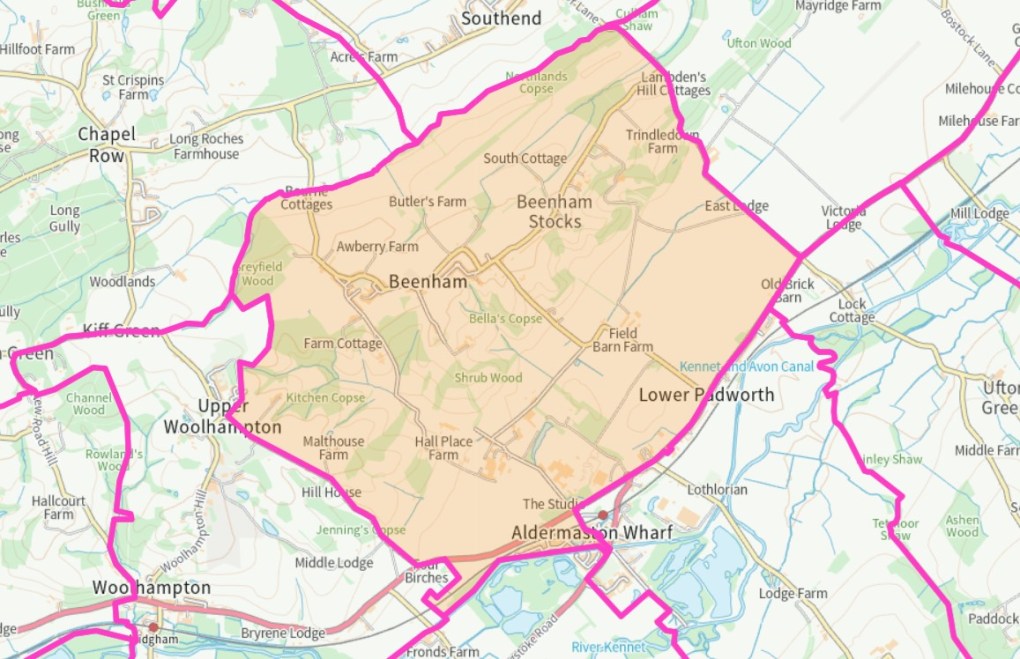
11. Affordable Homes Built in Woolhampton – In 2015 eight affordable homes were officially opened on a rural exception site in Woolhampton (Hill Place) – affordable homes for local people in perpetuity. This was the result of eight long years of work partnering with local landowners, the borough and parish council and a social housing provider. It was all worth it though as one of the families that moved into a house highlighted at the time; “We are so thrilled to be able to return to the village that my husband grew up in. We are now surrounded by family support, friends and lovely new neighbours. The stress has gone from our lives.”


12. Cookery Courses for Dads/male carers and children – In 2010 we enlisted three top local chefs to run some tasty cookery courses over in John O’Gaunt School in Hungerford with learners going away with some new techniques, information on nutrition and menu planning on a budget.

13. Big Society – It may be a buzzword that we no longer hear so much but back in 2010 it was a key political tagline, and we are proud of running a conference attended by 100 + delegates at Reading Uni that was packed full of workshops that empowered communities and provided opportunities for us all to build our social capital.

Cookery Courses for Dad


14. Growing Community Cinemas in Berkshire – Before the age of online streaming we helped Berkshire villages and rural areas set up community cinemas in the past, some of which still run very successfully in 2024. Many are/were run in their local village hall and offered residents the chance to enjoy a movie/night out without having to commute anywhere. “The club offers local residents and those in outlying villages a chance to see popular films at an affordable price.” Photos?

15. Warm in West Berkshire – Delivered alongside key partner organisations this project in the early twenty-tens increased access to NHS health advice on staying healthy in winter, and energy efficiency with the legacy of the project seeing the launch of the CCB Oil Club and In Case of Emergency (ICED) 4×4 Drivers to help provide transport during extreme weather conditions.

16. Focused support for children and young people in the Gypsy, Roma & Traveller Community – in the mid noughties we provided basic skills training in literacy, numeracy and IT for adults and young children at two GRT sites in West Berkshire.

17. Unpaid Carers Project – We were able to engage with 1600 unpaid carers from across Berkshire and provide a wealth of opportunities to access learning and wider support which left a legacy of new community groups and organizations to continue to support programmes of activities in the county.

18. West Berkshire Vibrant Villages – Provided support for eleven communities to develop projects ranging from essential repairs and renovations to village halls to the provision of play equipment for toddlers. In total, £70,000 was awarded to our rural West Berkshire villages through the delivery of this project.

19. Berkshire Rural Towns Project – this project allowed funding to support projects in Berkshire with an economic focus many of which can still be enjoyed by our communities today – the development of the community centre in Stratfield Mortimer and the revitalization of recreation areas in Eton & Eton Wick to name a couple.

Art Classes for Unpaid Carers


20. Community Development Work – Always at the heart of our work! CCB was able to employ two Community Development Workers in the late 90’s thanks to National Lottery funding. Their work focused on supporting the most disadvantaged groups living in rural Berkshire.

21. Bringing Funding Support to Rural Areas – In the mid-90s we administered funding for the Berkshire Rural Action Network which assisted groups in rural areas to improve their environment and their community’s appreciation of it.

22. Community Care Forum – In 1994 we coordinated and administered the Berks Community Care Forum which amongst other outcomes ensured that voluntary sector representation was on the Hospital Discharge Policy Groups for both East and West Berkshire.

23. Digital Switchover – When the analogue TV signal was being switched off in 2012 it was an event that all communities in the county needed to be prepared for. With a team of community volunteers, CCB ensured that the word was spread through shopkeepers, churches, newsletters and face-to-face events at our libraries so that no one was left with a blank television.

24. Webinars – online training delivery – Before Covid made the world of online learning/meeting the norm CCB was ahead of the curve delivering regular funding workshops with the Big Lottery’s South East Awards for All Programme Manager to communities across Berkshire. In 2011-12 alone we delivered training to 160 adults piloting this new type of training delivery. “The response we received in feedback showed a very high level of appreciation for the workshops, especially with regards to the cost savings of webinar delivery.”

25. Helping Our Village Shops – In 2001 we were able to support rural retail outlets by providing free visits from an expert retail advisor to support improvements alongside helping them to apply for improvement grants. An outcome of this project was helping South Ascot Village Stores to successfully obtain a grant to combine the village shop with the post office.

26. Increasing Adult Community Learning Opportunities – Since 2010 we have delivered training opportunities for adults in West Berkshire, Bracknell Forest, Slough and Wokingham Borough. We continue to deliver these strengthening communities sessions today in West Berkshire on a variety of topics from Data Protection to Food Hygiene, from First Aid to Community Organising and many, many topics in between.

27. Seated Exercise Classes – After Covid and lockdowns affected us all mentally and physically we worked in rural communities to set up local gentle exercise and social interaction opportunities. We helped village halls set up, market, and offer these subsidized free opportunities to their local communities. We continue to support some of these classes in 2024 though many now continue without our help as they are self-sufficient and popular.

Englefield Village Hall


28. Community Buildings – Thanks to the work of our Village Hall/Community Buildings Advisors over the years we have helped support the creation of both new village halls (Englefield) and the upgrades to many village halls so that they remain vibrant, safe, and well used (recent examples Bucklebury, Beech Hill and Spencers Wood)

29. Enabling Local Orchards to Thrive – At the start of the twenty tens we successfully bid for a National Lottery Fund (at the time called Big Lottery) to establish community orchards in parishes of Twyford, Wargrave, Swallowfield, Shinfield and at Dinto Pastures. These orchards continue to flourish to this day.

30. Supporting Neighbourhood Plans in East Berkshire – In 2011 Neighbourhood Planning was introduced in the Localism Act 2011 and our Rural Housing Enabler at the time, Arlene Kersley, stepped up to immerse herself in the new framework to fully understand the evidence base required to get a neighbourhood plan through examination and stand-up to scrutiny. She shared her knowledge with groups that came forward in the Royal Borough of Windsor & Maidenhead

31. Supporting the Rural Economy in Berkshire – Our current CEO Tim has always been passionate about working with and representing the rural communities in Berkshire to identify local economic priorities. Tim has worked closely with the Thames Vallery Berkshire Local Enterprise partnership supporting rural economic development.

32. Transforming Local Infrastructure Projects – along with partners in the voluntary and community sector in West Berks we helped build capacity in the sector by delivering a programme of PTLLS (Preparing to Teach in the Lifelong Learning Sector) to 33 people helping them to develop their skills and increase their delivery activities.

33. Funding Rural Communities in Berkshire

Throughout our life as a charity we have helped fund and administer many grants including ;
• Berkshire Rural Action – funding for rural projects which help people appreciate and improve their local community.
• Countrywork – promoting employment opportunities in the countryside.
• Voluntary Sector Development Fund – to assist other voluntary organization with training or consultancy.

34. Friendship clubs – In the noughties we developed five friendships clubs in West Berks for people who had become isolated or lonely due to physical and mental health issues.

Energy bill advice to a mother and baby group in Slough


35. English Speakers of Other Languages (ESOL) Project – In 2003 we secured funding to establish an ESOL Basic Skills in the workplace project which supported 184 learners to access skills development at local colleges and in community settings.

36. Berkshire Calor Village of the Year competition – In the early noughties we helped administer and organized presentation evenings for the Village of the Year competitions. This competition was judged on ‘a well-balanced, pro-active, caring community which has made the best of local opportunities to maintain and enhance the quality of life for all residents.”

37. Fuel Poverty Outreach work – Our Fuel Poverty work has been an integral part of our project delivery for over a decade now. Outreach work has helped create new opportunities to advise low-income families on how they can reduce their home energy costs with advice drop-in sessions, one-to-one telephone advice and practitioner training workshops.

38. Country wide delivery (PHOTO IMAGE FROM 1996 below) illustrating our delivery outcomes across six local authorities.


39. Village Initiatives Fund – In 1988 we launched this fund to encourage and stimulate voluntary self-help initiatives in rural Berkshire. Grants of up to £100 were distributed to village projects that benefitted the local community – the fund was sponsored by Shell UK, Digital, Marley Roof Tiles and Newbury Building Society – except for Shell UK how many still operate today?

40. Entering the computer age – In 1988 it was such an event that we acquired a second Apricot computer we mentioned in our Annual Report! This helped us develop a variety of databases including Parish Council information, membership and mailing lists.

41. Taking care of our environment – photo from 1980’s annual review


42. Adult Community Learning partnerships – Over the years we have partnered with a number of other organisations to ensure that our training to rural communities in Berkshire is varied and useful. These included Tutors/experts from other organisations like Heartstart, Community Organisers, BALC, Royal Berks Fire & rescue, Volunteer Centre West Berkshire, Happiness Hub, Love Food Hate Waste, British Red Cross, Volunteer Centre West Berkshire, Databasix UK, social media and marketing experts, grant providers and many more! Thank you for sharing your wisdom and expertise.


43. Rural Access to Services Programme (RASP) – Between 2008 and 2011 CCB worked with other Rural Community Councils in the South East on a programme to invest in projects to improve access to services. A total of £171,000 in funding from the South East England Development Agency was invested in projects in Berkshire to improve access to healthcare, access to skills and advice, and improved community transport and accessibility projects from parish plan action plans.

44. Transport West Berkshire – In partnership with the West Berkshire Library Service, CCB raised funds to introduce the Community Learning and Information Vehicle: CLIVe. The converted lorry became a mobile hub for outreach community learning across the District, supporting our Traveler Education project, promoting the uptake of broadband internet with the Connected Berkshire Partnership and taking information on CCB’s services out into the community, including at the Newbury Show.

45. Transport East Berkshire – With funds from the Countryside Agency to increase sustainable travel, CCB implemented a project to install cycle lockers at several sites across Wokingham and West Berkshire. With a focus on railway stations, the project encouraged people to cycle and leave their bikes secured at the station.

46. West Berkshire Funding Fair at Newbury Racecourse in September 2009. We planned and delivered a variety of workshops centred on helping community groups and voluntary organisations find funding. The outcome of this successful networking day was empowering West Berkshire charities to access new funding streams for their community projects and receive information, support, and advice on fundraising for their charity/community building.

47. In 2001 CCB took over the administration of the Environmental Trust for Berkshire. The Trust oversaw a £600,000 investment in environmental projects and worked with the newly-formed Waste Recycling Environmental Ltd (WREN) to advise on applications received by this new fund for Berkshire. Projects supported by the ETB cover all six unitary authorities in Berkshire and include the renovation of churches and historical monuments, improvement of local parks, nature reserves and other amenity areas and education on recycling and sustainable waste management.

48. In 1977 our ‘Your Village – What Future’ Conference heralds a year of activity and self-help in Berkshire villages. Declining rural services and growing rural populations are recognised as an increasing issue for rural communities as Central and West Berkshire are designated growth areas for new housing. A parish survey, interviewing Parish Clerks, provides basic information on settlement in rural Berkshire.

49. In the early 80’s unemployment is a serious problem within Berkshire and CCB supported employment initiatives with Berkshire County Council. Berkshire Youth Action (now Berkshire Youth) is established and we help search out projects which can be undertaken by youth teams across Berkshire. CCB sets up the Newbury Resources Centre for the Unemployed to assist the rural unemployed get access to information and advice.

50. In the late 1990’s (1998) Berkshire County Council was no longer and our charity had to develop to reflect these changes so our delivery adapted to a project-focused approach. We launched ‘Rural Areas: People and their issues’ and a review of Youth Homelessness in ‘Young People Living in Our Community’. Seven Neighbourhood Forums are developed and new initiatives in supporting local mental health groups and users of housing association-supported accommodation begin.