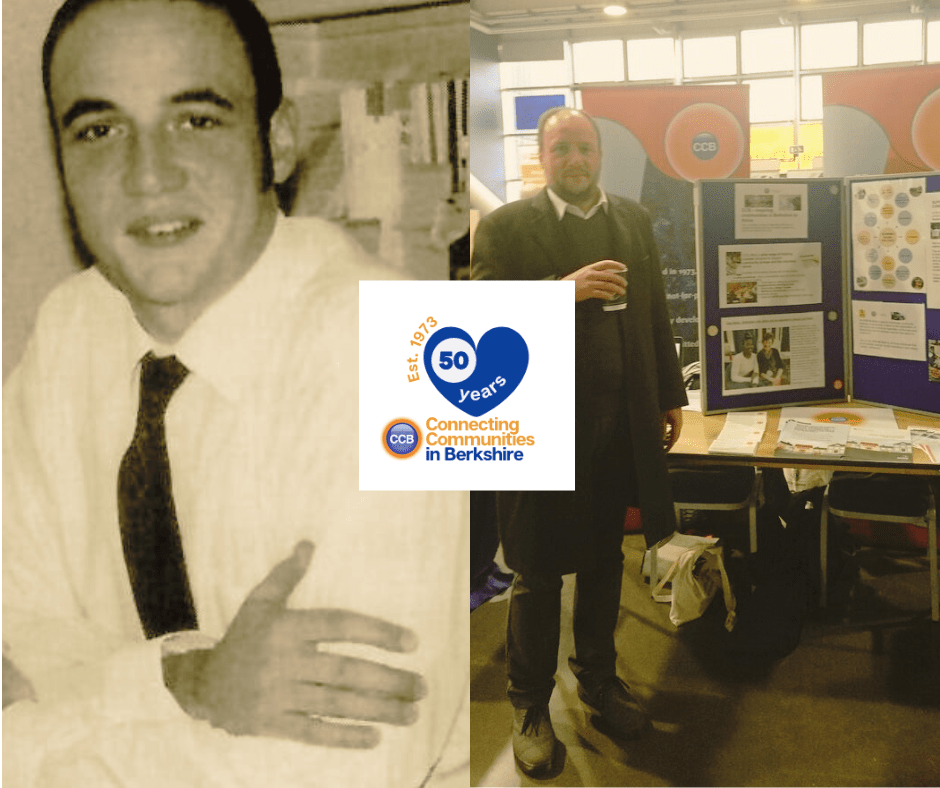
As we enter our 50th year as a charity our Chief Exec Tim Parry takes a look back and all the changes he has seen in the last 21 years of his career.
If CCB were a marriage, 2023 would be its golden wedding anniversary. Reflecting on this milestone leads me to consider my own personal milestone relating to CCB: I joined the charity 21 years ago. I can barely remember being that young man in his early thirties, still pondering the question of what he wanted to be when he grew up.
The passage of time leaves me thinking that 2002 was, perhaps appropriately, a golden age for the charity. The Countryside Agency was in its infancy and was busy investing heavily in rural communities, tasked with improving the quality of the rural environment and the lives of those that lived there. Funding was available to Rural Community Councils like CCB to support rural transport, advice to village shops, consultation projects such as parish plans and village design statements to name but a few.
CCB was already supporting a wide range of projects such as friendship clubs, support for town and parish councils and village halls advice as these new opportunities came our way. We took on research projects including landscape character assessments, created community orchards and established a new rural housing partnership: a project that ran for 10 years and led to over 40 affordable homes being built for local people. Investment from the Government Office of the South East (GOSE) and SEEDA the local Economic Development Agency in various themes not least education and Information, advice & Guidance saw the CCB team grow from 7 to 25 in a relatively short period of time.
The financial crisis in 2008 and the ensuing change of Government in 2010 led to a significant change in fortunes for CCB. The bonfire of the quangos and the rapid decisions made by Government cutting funding from Local Area Agreements and many other social programmes meant that charities like CCB lost great swathes of their funding.
The CCB Board of Trustees had seen change coming, and had bravely decided to invest reserves into a programme of diversification, developing new products and services to sustain income streams. In spite of some early successes, public sector funding cuts saw the market for many of our new ideas dry up. Promised partnerships in support of new initiatives such as DWP investments in job readiness did not materialise.
As projects came to an end and staff moved on to other things, the CCB team shrunk from three teams to a single team of 7. Being the only remaining manager left in the charity, 2012 saw me take on the role of Chief Officer.
The last 10 years or so have been a challenge. However, the energy and dedication of a small but perfectly-formed team of staff and Trustees has brought about a slow but determined transformation in CCB’s fortunes. We have weathered the lean years and are busy securing our renaissance with new investment from the National Lottery Community Fund and a series of new projects in development.
That young man in his early thirties probably wouldn’t have arrived at Charity CEO as a likely answer to his question, but I’m both grateful and fortunate that that’s how things turned out.
 Connecting Communities in Berkshire