by Phillip Vincent, Action with Communities in Rural England
National charity, Action with Communities in Rural England (ACRE) says the government must fully consider how it’s plans for levelling up will address disadvantage faced by rural communities.
Today, the government announced cursory details of its centre-piece policy commitment to levelling-up. But ACRE says that far from instilling confidence, the white paper leaves more questions than it answers.
Jeremy Leggett, ACRE’s Policy Adviser said: “It is not clear whether the government’s 12 missions of levelling-up will counter the long-standing disadvantages faced by rural communities.
Whilst we await further details, we have questions about whether the policy proposals will be subject to a comprehensive rural proofing exercise and if additional resources and investment will be made available to non-metropolitan areas in the remaining term of this administration.
We are particularly concerned the government appears to have watered down its 2019 election commitment to achieve 100% coverage of high-quality broadband by 2025. This would represent a levelling-down, not levelling-up for rural communities”.
ACRE represents a network of 38 member organisations that work in support of rural communities in every county of England. Its members know full well that many people living in rural areas face multiple disadvantages, often obscured by a bucolic imagination of the countryside and official statistics on deprivation that do not account for geographically dispersed poverty. Rural communities suffer from poor infrastructure, limited access to services and affordability of housing compounded by a lack of job opportunities.
The rural charity will be providing further commentary on the government plans for levelling up once full details of the white paper are known. Along with rural proofing, it will be hoping there are genuine commitments to subsidiarity of decision making, community involvement, and a fair distribution of resources and investment to rural communities.
Today’s news (03/02/22) that “more than one in four UK households will be in fuel poverty once Ofgem’s latest energy price cap rise comes into effect”* will no doubt cause alarm to households across West Berkshire.
Local charity Connecting Communities in Berkshire (CCB) wants people to know that help is available. They have been running a project tackling fuel poverty for 10 years and can provide expertise in supporting low-income families that are struggling with their energy bills.
Helen Dean runs the Family Fuel & Water Poverty project in Berkshire and provides support and advice to low-income families to save money on their bills.
Helen says; “The increase in the price cap is devastating for families, particularly those on low incomes when they are already struggling to pay their bills. The worry this causes should not be underestimated, affecting families’ mental health, with some families having to choose between heating and eating.”
Helen works throughout Berkshire providing bespoke telephone advice, and attending targeted groups for young families. Through the project, she also provides training to practitioners who then cascade the information and advice to the vulnerable families they support.
Tim Parry, Chief Executive of CCB said; “With today’s announcement that energy bills will rise by almost £700 a year for a typical household we believe that more families in the region are likely to be pushed into fuel poverty so we are expecting to receive an increase in demand for this service. Our project can provide real support and results to families in need in the area”
Like Lisa, who saved £260 per year after receiving telephone advice from Helen. Lisa said “I thought I was ok sorting out my bills before but I was unaware of how much I could save by tweaking just a few simple things. The advice from Helen was brilliant and she made it easy to understand instead of just having lots of information thrown at you to work out. Having the advice eased my mind to know that I could be saving instead of worrying so much.”
In the past five months, Helen has supported 65 families through telephone advice, saving a total of £9,351.
Thank you to Berkshire’s wonderful CVS’s for the information contained in this article – Volunteer Centre West Berkshire, Slough CVS and Wokingham & Bracknell InVOLve.
Awards for All Jubilee Activities
Awards for All programme is now accepting applications that celebrate the Platinum Jubilee
The usual criteria apply (grants of £300 – £10,000), but they are keen to see projects that promote relationships across generations or develop the skills and experience of communities or encourage the care of/action in the natural world as part of the celebrations.
Sport EnglandQueen’s Platinum Jubilee Activity Fund
Grants of £300 – £10,000 can support projects that bring a community together and provide opportunities for people who may be less physically active. They will prioritise disadvantaged communities – there’s a postcode checker to see if you fit that.
Funds are available for project costs such as facility hire and coaching, as well as for small capital improvements. No deadline is given.
Vital for Berkshire Fund The Spring 2022 round of Vital for Berkshire funding is open to support charities and groups tackling vital needs in Berkshire such as support for young and vulnerable people, poverty and isolation, physical and mental health, and much more. Applications are invited from charities, community groups and projects that support vital needs in Berkshire, such as physical and mental health, supporting young and vulnerable people or groups, combating isolation, tackling poverty and disadvantage, and/or offering equal opportunities for all, and more. The grants up to a maximum of £5,000 will be considered, subject to funding availability. Next deadline is Thursday 10th February 2022. Click here to learn more.
Youth Investment Fund
Grants of £5,000 – £50,000 for small-scale capital projects which create or expand youth provision services in left-behind areas across England will open shortly, administered by Children in Need
Groups should be undertaking work with children and young people, where the majority are aged 11 to 19 years. Where young people have a special educational need, are leaving care, or are considered ‘at risk’ or vulnerable, funding may be granted up to the age of 25 years.
All items must be purchased and paid for by 31 March 2022.
Phase 1 will be open from 31 January 2022 until 25 February 2022, or when all funds are allocated. Read more
Arts Council England Grassroots Music Project Fund
Grants of £1,000 – £40,000 for up to three years are available to grassroots music venues and promoters in England to present live music programming, and for activities that put them in a better position to deliver their work in the long term.
The programme particularly seeks to support those venues and promoters who work in the grassroots part of the sector (ie those working with new, developing talent in small to mid-size venues).Deadline for applications is 1 March 2022 Read more
Alec Dickson Trust
The Trust is passionate about volunteering and about young people making a difference. Grants of up to £500 are available for projects in the applicant’s local area that involve local people and can demonstrate that through volunteering or community service they can enhance the lives of others, particularly those most marginalised by society.
Grants are available to community groups in the UK to a make playing football more accessible at the grassroots level, and in particular encourage girls and young people from lower socio-economic and under-represented groups, including culturally diverse communities, young people with disabilities, and young people from the LGBTQ+ community to take part. Further details can be found here: https://sported.org.uk/barclays-community-football-fund/
Community Housing Fund Revenue Programme 2021/22 Deadline: N/A Grants are available for community organisations to help cover the revenue costs of project-specific activities that will support the development of community led housing proposals across England (excluding London) up to March 2022.
Majonzi Fund Deadline: 28 February 2022 Grants are available to local not-for-profit groups for events and activities which commemorate those whose lives have been lost during the COVID-19 pandemic in the UK. Funding is intended to provide bereavement and grief support to members of the Black, Asian and Minority Ethnic (BAME) community affected by loss due to COVID-19.
McCarthy Stone Foundation – Small Grants Programme Deadline: N/A Support available to charities for community projects that focus on the health and wellbeing of older people, intergenerational projects and regeneration of the local community.
National Heritage Memorial Fund Deadline: N/A Funding for charities, not-for-profit organisations and public bodies to help with the cost of acquiring historic land, buildings, works of fine and decorative art and other objects of interest which are important to national heritage.
Sport England – Queen’s Platinum Jubilee Activity Fund Deadline: N/A Grants are available to local not-for-profit groups across England in celebration of the Queen’s Platinum Jubilee for projects which bring communities together and provide opportunities for people who may be less physically active.
Friends of the Elderly – Grants for Older People Deadline: N/A Friends of the Elderly – Grants for Older People Small grants are available to support older people living on low incomes in England and Wales with the costs of home essentials, unexpected large bills, living costs and getting connected online.
KFC Foundation Community Grants Programme Deadline: N/A Grants are available to support grassroots organisations providing safe social spaces, mentoring, work, or social skills for young people aged 11 to 25 years old in the UK.
Morrisons Foundation Deadline: N/A Grants are available to registered charities for new projects which directly improve the lives of local people or communities, especially those that are vulnerable or disadvantaged, in England, Scotland or Wales.
England Woodland Creation Partnerships (WCP) Grants Deadline: N/A Grants, incentives and other support are available for woodland creation by farmers, landowners/managers and community groups, as part of the England Woodland Creation Partnerships.
True Colours Trust – UK Small Grants Deadline: N/A Small grants are available to UK registered charities and community interest companies that are working to make a difference to the lives of disabled children and their families in the UK.
Artemis Charitable Foundation Deadline: N/A Grants are available for UK-registered charities operating in the UK and internationally to support projects in the areas of health, poverty, education, and the environment.
Lush Charity Pot Deadline: N/A Grants are available to small grass-roots organisations working in environment, animal protection and human rights, with priority for less popular causes that aim to create long-term change and struggle to find funding.
Arts Council England – Let’s Create Jubilee Fund Deadline: N/A Grants are available to local not-for-profit groups in England delivering creative and cultural activities as part of the Queen’s Platinum Jubilee Celebrations in June 2022.
Mental Health Sustainability Programme Helplines Fund Deadline: N/A Grants are available for small grassroots mental health voluntary, community, and social enterprise organisations across England that offer helpline services to support sustainability and the continued delivery of services in response to the pandemic.
Garfield Weston Foundation Deadline: N/A The Garfield Weston Foundation is one of the largest grant-making trusts in the UK. They provide grants to UK Registered Charities and Schools for Capital Costs, Revenue/Core Costs and Project Costs. Eligible organisations are invited to apply for projects in the following areas: Welfare, Youth, Community, Arts, Faith, Environment, Education, Health, Museums Heritage.
The BlueSpark Foundation Deadline: N/A Grants to schools, community groups, clubs, societies and not-for-project organisations which support the education and development of children and young people. The majority of grants awarded will be up to £2,000 but a handful of grants up to £5,000 may be considered.
Green Heat Network Fund (GHNF) Deadline: N/A Public, private and third sector organisations in England can access capital funding to help new and existing heat networks move to low and zero carbon technologies, such as heat pumps, solar and geothermal energy.
Shanly Foundation COVID Deadline: N/A Registered charities, sports and social clubs and community organisations that help individuals and benefit the local community, including support for young people from disadvantaged backgrounds, the homeless, those with mental health issues and people with physical disabilities, injury or life limiting illness in Bucks, Herts, Surrey and Berks.
Betsy Foundation Deadline: N/A Grants of up to £30,000 to UK registered charities, with income under £0.75m pa, that operate in London and the South-East, to help them overcome poverty, abuse and homelessness for the younger members of our society.
Community Housing Fund Revenue Programme 2021/22 Deadline: N/A Grants are available for community organisations to help cover the revenue costs of project-specific activities that will support the development of community led housing proposals across England (excluding London) up to March 2022.
RHS Flourish Fund Deadline: N/A Grants for voluntary, community and social enterprise sector organisations across the UK that are helping people acquire horticultural skills, with particular focus on promoting diversity and inclusion in horticulture.
Nationwide Building Society Mutual Respect Grant Fund Deadline: N/A Grants are available to grassroot football clubs in the UK whose activities have increased mutual respect on or off the pitch, to support costs including replacing equipment or completing repair work.
Football Foundation – Return to Disability Football Fund Deadline: N/A Grants are available to enable football clubs and organisations in England to restart or deliver new disability football activities following the period of COVID-19 restrictions.
McCarthy Stone Foundation – Small Grants Programme Deadline: N/A Support available to charities for community projects that focus on the health and wellbeing of older people, intergenerational projects and regeneration of the local community.
National Heritage Memorial Fund Deadline: N/A Funding for charities, not-for-profit organisations and public bodies to help with the cost of acquiring historic land, buildings, works of fine and decorative art and other objects of interest which are important to national heritage.
Visit Britain – Domestic Support Fund Deadline: N/A Grants are available for UK not-for-profit organisations, including associations and charities, to hold business events and to showcase that the UK has adapted to new ways of meeting in a COVID-19 secure environment.
Peter Harrison Foundation Deadline: N/A UK registered charities and CASCs running sports projects for people who are disabled or otherwise disadvantaged to fulfil their potential and develop personal and life skills. Opportunities through Sport, Special Needs and Care for Children and Young People and Opportunities through Education. Preference for SE England. Will fund capital projects.
Princess Royal Respite Fund for Carers Deadline: N/A Grants are available for unpaid carers for respite breaks and associated replacement care across the UK.
Let’s Get Active Fund Deadline: N/A A fund to improve access to physical activities in West Berkshire is now open to applications as part of the district’s recovery from COVID-19. West Berkshire Council have partnered with Greenham Trust to offer the Let’s Get Active Fund (LGAF). The £33,660.00 LGAF pot is available to community groups, organisations, social enterprises, charities, profit-with-purpose businesses and schools in West Berkshire.
Poundland Foundation Deadline: N/A Grants are available for local charities and organisations across the UK working to make a difference in their communities.
Moto in the Community Trust Deadline: N/A Grants are available for community organisations and schools operating within a 15-mile radius of a Moto site for projects and activities that deliver benefits to local communities.
Pets at Home Foundation – Pets Through People Grants Deadline: N/A Grants are available for charities who provide temporary or ongoing assistance to ensure pets can remain with their owners, and/or change the lives of adults and children through the provision of animal-based activities.
Victoria Wood Foundation Deadline: N/A Grants are available for arts projects and initiatives in the UK.
Ashley Family Foundation Deadline: N/A Grants are available for projects in England and Wales that fit with the Foundation’s ethos of protecting rural communities and encouraging participation in the arts.
Family Action – Welfare Grants Programme Deadline: N/A Grants to support families and individuals for essential personal and household needs to assist families and individuals with low incomes, particularly those living on benefits.
Lloyds Bank Foundation for England and Wales – Grants Programme Deadline: N/A Unrestricted grants to support small and medium-sized local charities, with a proven track record of helping people in England and Wales with complex social issues, to recover and renew beyond the COVID-19 crisis
Grocers’ Charity – Memorial Grants Deadline: N/A One-off grants are available to small UK registered charities for work in the specific areas of: relief of youth poverty, the disabled, the elderly, health, military, and the arts and heritage.
The Prospectory – Idea Fund Deadline: N/A Grants are available to individuals or small groups or organisations based in the United Kingdom who have a novel technical idea which they want to try out.
National Lottery Community Fund – Bringing People Together Deadline: N/A Large grants are available to voluntary and community organisations in the United Kingdom for projects that will build stronger connections across communities, and improve the infrastructure and conditions that are needed to strengthen these connections.
National Lottery Community Fund UK Portfolio Growing Great Ideas Programme Deadline: N/A Funding for not-for-profit organisations working together to test new ideas, new approaches that experiment with how to do things differently with a focus on supporting transformational and longer-term change.
Bromley Trust Deadline: N/A Grants are available for UK registered charities that are working in the areas of human rights and prison reform at a national or regional level within the UK.
Matthew Good Foundation – Grants for Good Fund Deadline: N/A Grants are available for local community groups, charities, voluntary groups and social enterprises in the UK for projects that have a positive impact on communities, people, or the environment.
National Lottery Awards for All – England Deadline: N/A Grants are available for charities, voluntary groups, schools and local authorities in England to carry out projects that will improve their local community
National Lottery Community Fund – Partnerships Deadline: N/A Grants are available to voluntary and community organisations in England which work together with a shared set of goals and values to help their community thrive.
National Lottery Grants for Heritage Deadline: N/A Grants for organisations working with heritage to adapt and respond to the changing environment they are now operating in due to the coronavirus/COVID-19 crisis.
NESTA Cultural Impact Development Fund Deadline: N/A Loan and grant finance package for arts and culture organisations in England working with the people and communities in greatest need.
Trusthouse Charitable Foundation Deadline: N/A Grants are available to smaller charitable and not-for-profit organisations in the UK to fund community and family support projects in areas of extreme urban deprivation or deprived rural areas.
Tudor Trust Deadline: N/A Grants are available to smaller community-led groups that support people at the margins of society in the UK, encouraging independence, inclusion and integration.
Reading Community Energy Society Community Grants
The Reading Community Energy Society (RCES) Community Grants Fund is open for applications
Reading Community Energy Society comprises members from the local community, Reading Council and Energy 4 All, all of whom are passionate about increasing the amount of renewable energy in Reading. An important strand of their work is their Community Grants Programme. As a Community Benefit Society, they are committed to supporting sustainability locally, and offer grant funding between £100 and £5,000 to organisations to support a wide range of initiatives that deliver this aim.
Reading Community Energy Society made a number of grants last year through its Community Grants Fund, including to True Foods Coop in Emmer Green. Click here for the full article on the RCES website.
The RCES Community Grants Fund is open for applications and the next deadline is on Tuesday 1 March 2022
Grant funding applications are invited for schemes which meet the following criteria:
It will improve energy efficiency, reduce carbon emissions or support sustainability in the local community.
It is based within or near to the Greater Reading area – within an approximate 15 mile radius of Reading Town Hall.
Your organisation is not-for-profit, a charity, or an SME (Small or Medium Sized Enterprise).
The grant is between £100 – £5,000, although the majority of grants made will be up to £1,000.
For more information about the grants programme, the application form and guidance notes – plus examples of previously funded projects, click here to access the RCES website.
RCES works with RVA to deliver its grants programme and any organisation wanting support with its application or with queries about the grants programme should email RVA at grants@rva.org.uk.
Village Halls Week 2022 set out to challenge England’s 10,000 + rural community buildings to do something different.
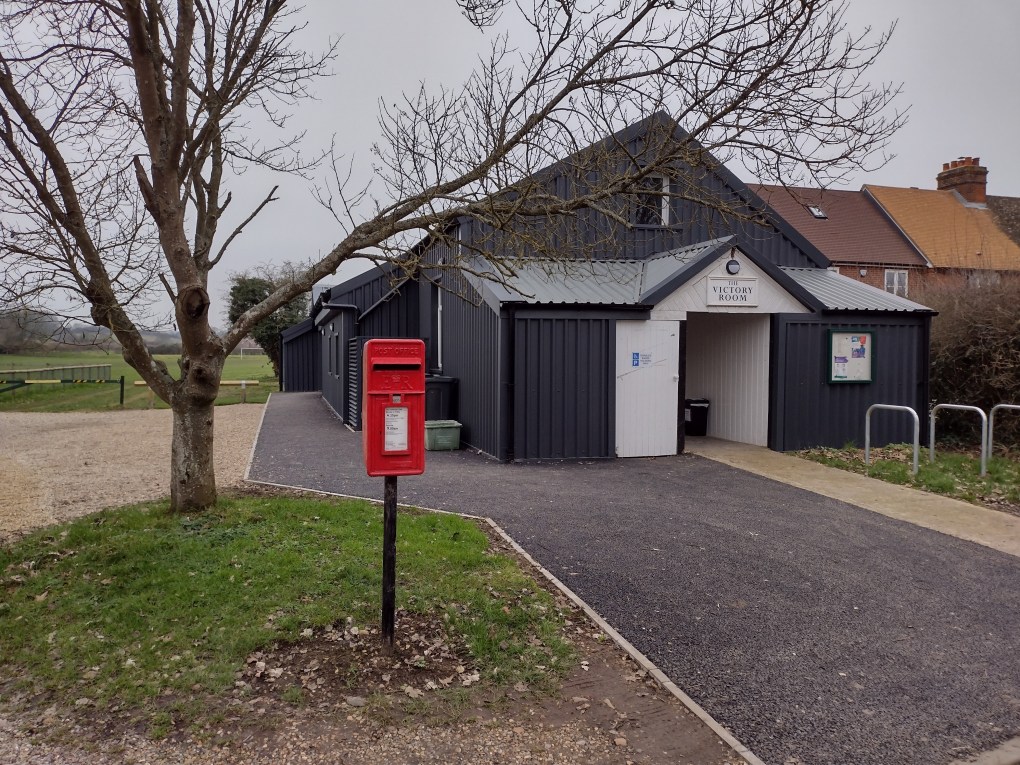
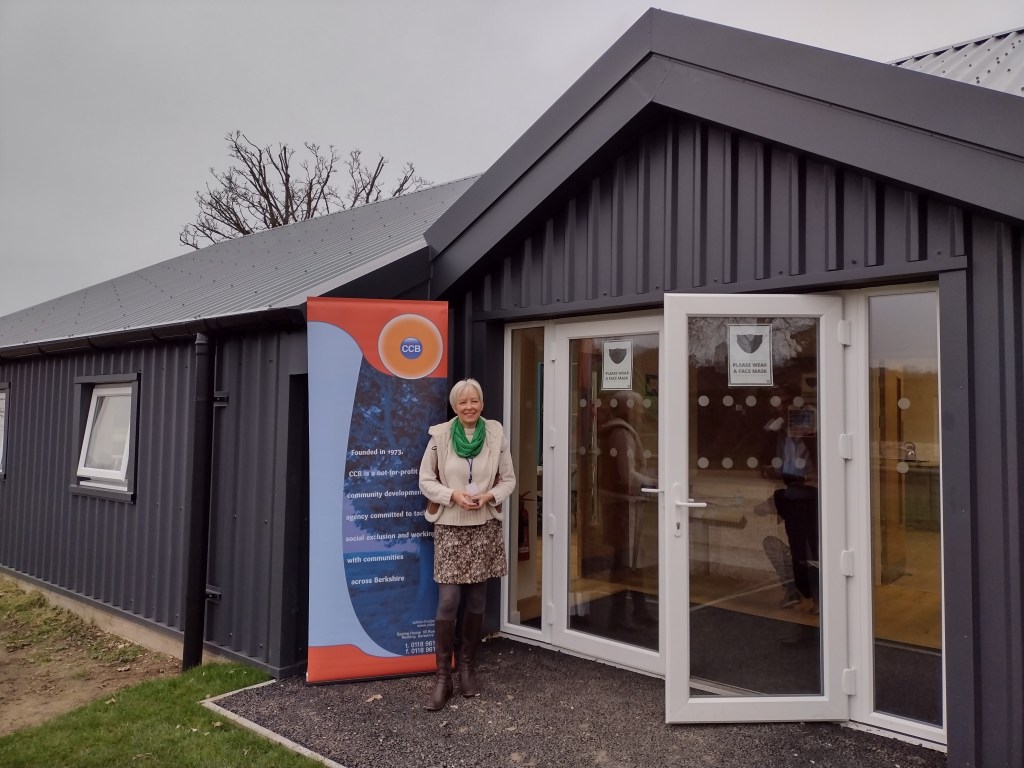
Connecting Communities in Berkshire (CCB), alongside national charity Action with Communities in Rural England (ACRE), launched Village Hall’s Week from the newly renovated and extended Victory Room in Bucklebury on Monday 24th January 2022. CCB’s President and undersecretary of state at the Department for Environment, Food & Rural Affairs (DEFRA), The Right Honourable Lord Benyon, made a visit to meet the Trustees of the Victory Room and officially opened Village Halls Week.
#VillageHallsWeek is in its fifth year and took place from Monday 24th January to Sunday 30th January 2022. The week helped raise awareness of the contribution village halls make to rural communities as well as inspire volunteers who run them to get more creative and improve their offer to their community.
CCB is part of the ACRE Network, England’s largest rural grouping of community support charities that provide year-round support and advice to village halls.
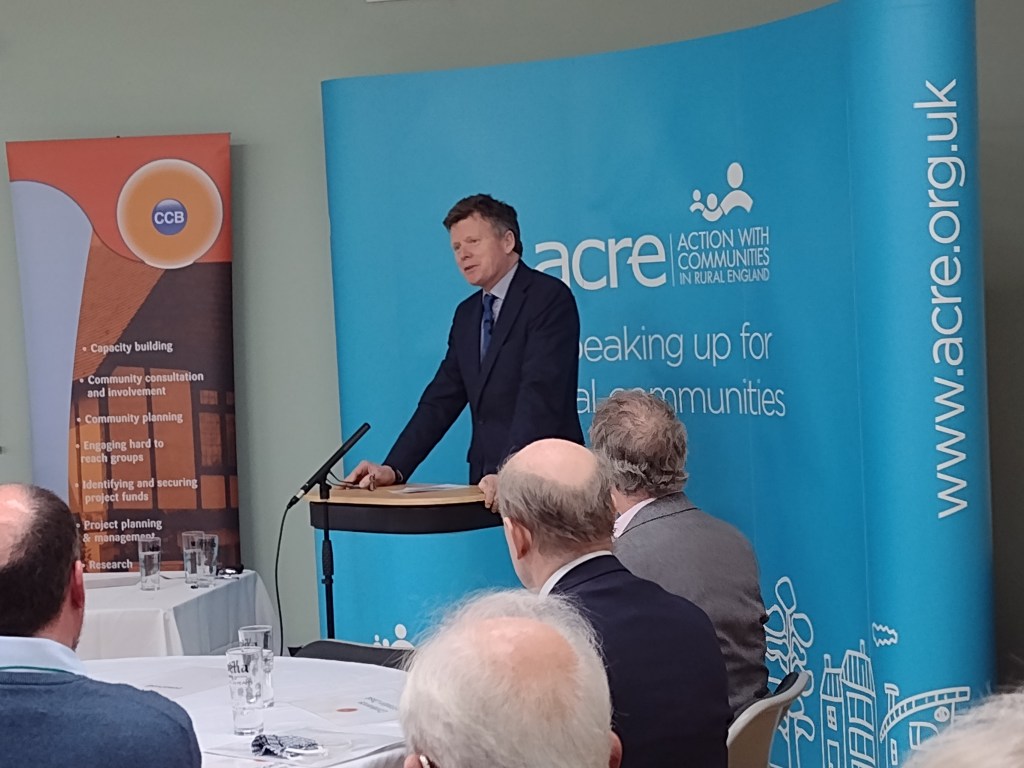
Richard Quallington, Executive Director at ACRE welcomed everyone that attended the meeting in person and via an online live stream.
Kate Meads, Community Buildings Advisor welcoming guests to the event
Richard said: ““This is the fifth year of Villages Halls Week; our campaign which aims to recognise the huge contributions village halls make to their local communities. The tens of thousands of volunteers who run them and the many services they offer deserve a special thank you this year. Many provided a lifeline during the pandemic and as society opens up again we are focusing this campaign on looking to the future – at innovation and encouraging village halls to do something different to benefit their community.”
Tim Parry, Chief Executive at CCB said it was an honour to hold the launch event in Berkshire; “Village Halls Week is a celebration of many things, but most importantly it draws attention to the dedication of the many hundreds of volunteers in West Berkshire who give their time free-of-charge to keep village halls open, safe and welcoming to the whole community. The event at the Victory Room, live-streamed to halls across England, launched Village Halls Week and our celebration of the many activities we attend at village halls and the hard work of everyone taking responsibility for our welfare while we are there. Activities at halls are a lifeline for many people, which is why CCB is dedicated to providing all the support that village hall management committees need to ensure they are always open and available to their community.”
John Brims, Chair of Trustees at Victory Room spoke about the importance of saving a hall that dated back to its first meeting on 7th July 1920 and from the outset had a sense of being a hall for the community. With the renovation taking place he stressed the importance of continuing the life of the hall and thus ensuring that it would go on being an important resource to the local community. It is currently used by children, youths, sports events, wellbeing functions as well as key community events like quiz nights, wine tasting, and family fun days.
Kate Meads CCB’s Community Buildings Adviser said “We estimate that in Berkshire alone there are over 900 volunteer Trustees running Village Halls and Community Buildings in their spare time. These facilities are often the only community-owned assets in an area and may often be the last meeting place in a rural community. The hub holds a community together at times of celebration, crisis and for regular affordable recreation and social activities. CCB’s Community Buildings Advice Service supports Trustees with information, training, and guidance. It is an absolute pleasure to work with such community-spirited volunteers.”
Lord Benyon giving his thoughts on the important role village halls play in community life
Lord Benyon, Minister for Rural Affairs said:
“I was delighted to visit the Victory Room, Bucklebury, to mark the launch of Village Halls week – an initiative which celebrates the important role village halls play in bringing rural communities closer together.”
“Defra works alongside Action with Communities in Rural England and its network of councils, to support the growth and upkeep of these vital institutions for the communities they represent”.
If you were unable to join on the day but would like to view a recording of the event you can find them on the links below.
More farmers are being actively encouraged to open their gates and welcome members of the public during the industry’s annual open day.
Last year, more than 100 farms hosted a Linking Environment and Farming (Leaf) Open Farm Sunday (OFS) event under Covid-safe guidelines, and prior to the pandemic, more than 350 farms across Britain – covering all agricultural sectors – opened each year.
This year’s event will take place on Sunday 12 June and the organisers are hopeful that many more farms will welcome visitors with the likelihood of Covid restrictions being significantly eased.
OFS 2022 – the 16th event since the initiative was launched in 2006 – will focus on the many health benefits that can be found on a farm, ranging from healthy soils and the production of healthy food to the mental health benefits of being outdoors.
The organisers Leaf are calling on farmers to take part and organise their own event to demonstrate the industry’s commitment to sustainability, biodiversity, climate mitigation, nutritious food and a well-managed countryside.
Annabel Shackleton, Leaf OFS manager, said every farmer can plan their own event, engage their local community, share their farming story, dispel misconceptions and give visitors a hugely positive, memorable experience.
Last year, more than 100 farms hosted a Linking Environment and Farming (Leaf) Open Farm Sunday (OFS) event under Covid-safe guidelines, and prior to the pandemic, more than 350 farms across Britain – covering all agricultural sectors – opened each year.
This year’s event will take place on Sunday 12 June and the organisers are hopeful that many more farms will welcome visitors with the likelihood of Covid restrictions being significantly eased.
OFS 2022 – the 16th event since the initiative was launched in 2006 – will focus on the many health benefits that can be found on a farm, ranging from healthy soils and the production of healthy food to the mental health benefits of being outdoors.
The organisers Leaf are calling on farmers to take part and organise their own event to demonstrate the industry’s commitment to sustainability, biodiversity, climate mitigation, nutritious food and a well-managed countryside.
Annabel Shackleton, Leaf OFS manager, said every farmer can plan their own event, engage their local community, share their farming story, dispel misconceptions and give visitors a hugely positive, memorable experience. To read the rest of this article from Farmer’s Weekly please click here.


 Connecting Communities in Berkshire