Extent of rural economic and social benefits from village and community halls revealed

Village and community halls in England offer extensive economic and social benefits to rural communities, a report from CCB’s national body ACRE (Action with Communities in Rural England) has revealed.

Just before lockdown 2,109 halls took part in the National Village Halls Survey 2020 which provides a detailed snapshot of the operations and management of community buildings across the country.

The survey found that village halls make a significant contribution to the economy.

At least 10,000 individuals earn a living connected to the use of these community buildings, from Pilates and Yoga teachers to people running dog training classes. A further 4,500 people are employed as cleaners, caretakers and managers.

Nearly half of all halls serve as a venue for private parties, and a quarter host weddings; events which provide commercial opportunities for local businesses.

One in ten are also home to community businesses; enterprises which are owned and run by residents for local community benefit, such as shops, cafes, and post offices.

Additionally, 70% of respondents had undertaken improvement work, extensions, or new halls in the last five years, contributing well over £46 million to the UK economy. Local builders were often used.

Village halls also offer extensive social and cultural benefits, ACRE’s research found.

Those living in rural areas are at heightened risk of social isolation, which can lead to poor health, loss of independence and lower quality of life, according to the Local Government Association.

This makes the work of village halls particularly important. An astonishing 60% of respondents stated that their halls are the only meeting place for their community, with activities such as coffee mornings and luncheon clubs helping to address loneliness among vulnerable groups.

Volunteers also play an important function in maintaining the buildings, carrying out small repairs, maintenance and checks within 94% of respondent halls. Two out of five have volunteer caretakers or handypersons. This involvement generates considerable wellbeing benefit for those who take part.

ACRE Chairman, David Emerson CBE said:

“It is only through the commitment and generosity of 10s of 1,0000s of volunteers who help run halls and the activities within them that we create the multiple social and economic benefits which these halls deliver for their communities.

Yet the major problem reported was the difficulty recruiting new volunteers. With more people now working from home we hope a new generation of volunteers will step forward in every community.

Community activities build strong communities and create better mental and physical health, not just for vulnerable individuals but for everyone. 80% of respondents knew someone whose lives have changed for the better as a result of joining activities at their local hall. The service provided by these unique spaces is needed more than ever.

 Deborah Clarke, Rural Evidence & Village Halls Manager, commented:

The report demonstrates the huge economic and social benefits that village halls in England provide. ACRE is extremely grateful to the 2,109 volunteers who kindly took part in this survey.


What is the VCS Emergencies Partnership?

In September, CCB joined a coalition of front-line charities working across the Thames Valley to improve the provision of support during emergencies

The Voluntary and Community Sector (VCS) Emergencies Partnership exists to respond to requests for help with preparing for, responding to and recovering from emergencies. If local support structures such as councils for voluntary service, local resilience forums and local authority hubs cannot provide the support a local community or organisation needs, requests for help that can’t be addressed locally can be escalated and the VCS Emergencies Partnership can step in to facilitate provision of that support. Further information on this initiative will be made available in the coming weeks. In the meantime, please visit the RVA website here: http://rva.org.uk/article/what-is-the-vcs-emergencies-partnership/ or the VCS Emergencies Partnership website: https://vcsep.org.uk/


You Are Not Alone – help and support to Village Hall Trustees in Berkshire

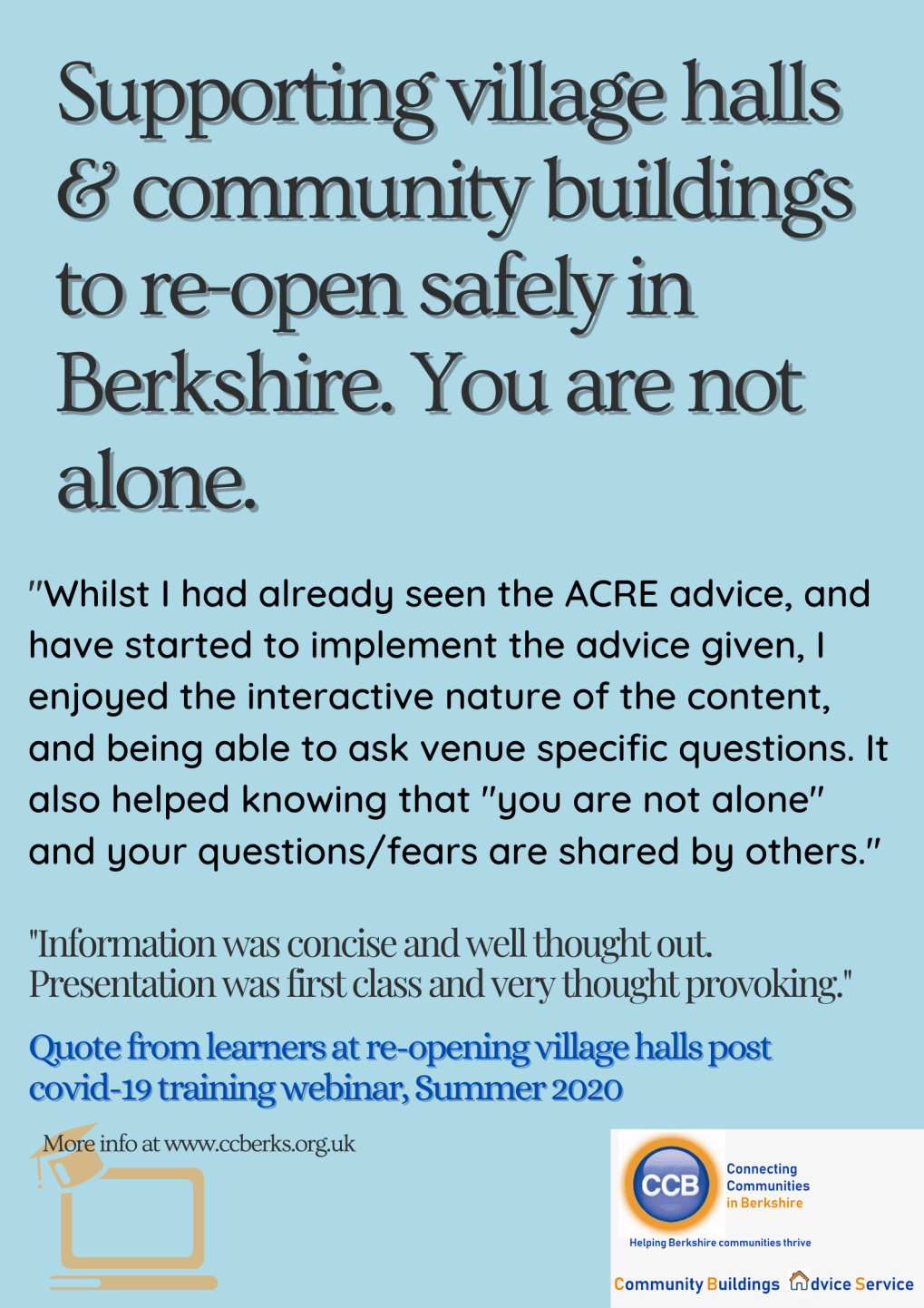
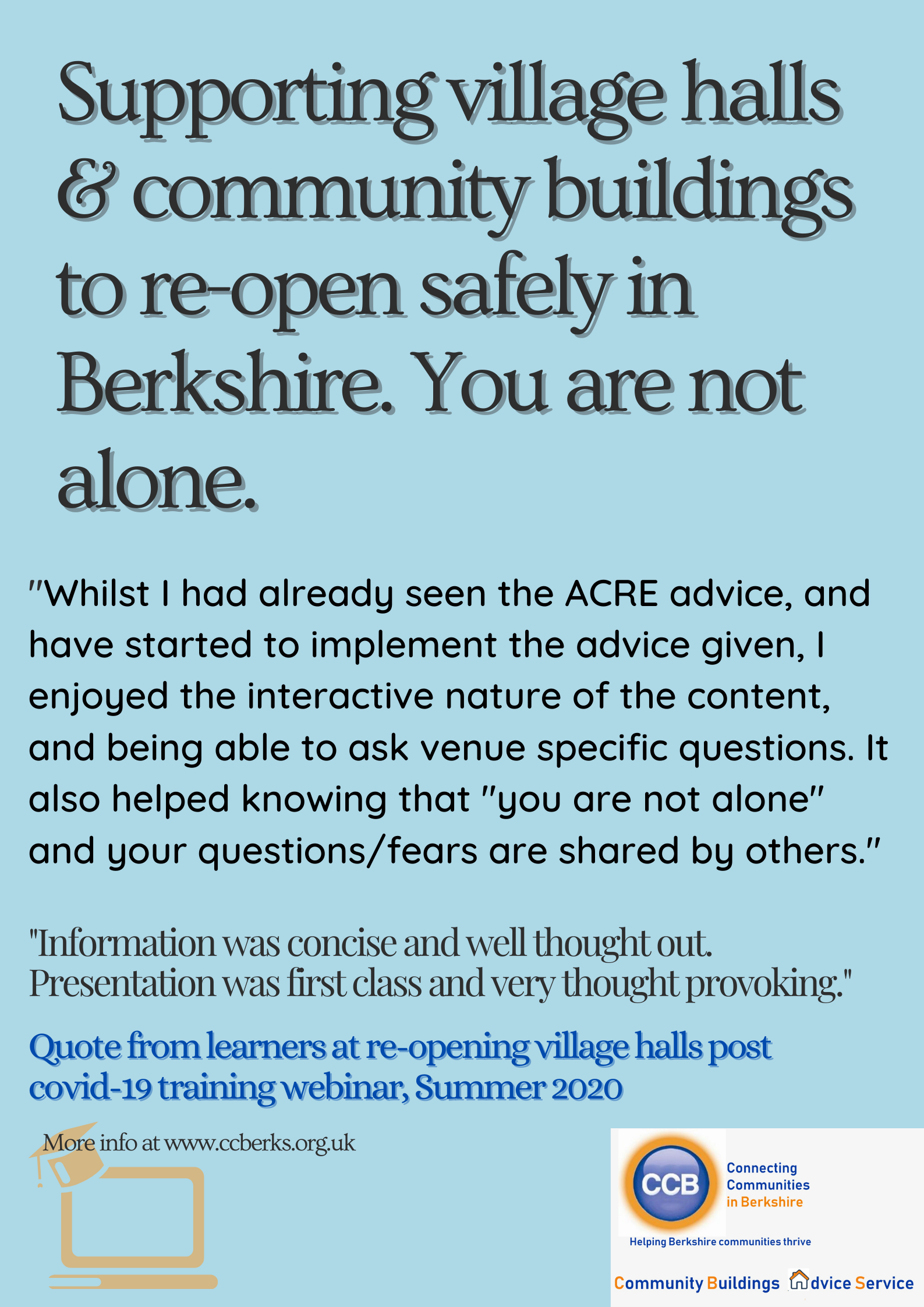
At Connecting Communities in Berkshire the summer was spent delivering our community focusing training delivery through Zoom webinars. We successfully delivered a number of training webinars to volunteers and community groups in Berkshire on subjects like accessing funding opportunities, community led housing as well as specialized training for Trustees of Village Halls. We thank the Adult Community Learning Teams in West Berkshire and Wokingham Council for their funding support.

Village Halls and Community Buildings play a major part in community life in Berkshire and pre Covid provided a fantastic meeting point for fitness & dance classes, indoor markets, afternoon teas, weight management programs, brownies/cubs meetings, lunch clubs, birthday parties, toddler groups, theatre performances and many more ‘coming together’ opportunities. The role that village halls play in helping local people to combat loneliness and isolation should not be undervalued and like many other groups and businesses have suffered from a lack of income during lockdown and a new set of seemingly confusing and ever-changing rules in re-opening. CCB’s Community Buildings Advisor Kate Meads, with help from our national network Action with Communities in Rural England (ACRE), pulled together a course specifically designed to help and re-assure trustees regarding how they can re-open safely and measures they need to arrange to ensure that can happen safely. The course was very well attended and received with some fantastic comments from learners.

Webinar Quotes 2

“Very informative especially on how to risk assess and when to safely open the hall.  Advice about checking the objectives of the Charity so that specific activities may re-start rather than just keeping the hall permanently closed.  Have had confirmation that the hall will receive a grant and this will help hugely to cover loss of income and to pay for necessary PPE and extra cleaning.”

“Faced with a daunting amount of paperwork, I was very worried about what we needed to do about reopening our Hall. Kate’s presentation was very reassuring and gave me confidence to get on with the job!”

Kate is running another training session for Village Hall Trustees in West Berkshire later this month for further details please click here.


Is your home or community building on heating oil? Be Prepared for the Colder months by reading this handy guide


We don’t know yet what kind of winter Berkshire will be in for in 2020-21 yet but the colder months can cause a range of issues for heating oil users and we wanted to share with you some top tips that will help you feel more confident this winter.

Do you need a top up?
With winter being the prime time for heating suppliers, ordering your oil before that rush can save you some pennies. If you will need a top up soon buying your heating oil before the lower temperatures creep in could save you money. Marion at OFPS who manages the CCB Oil Club always recommends buying your oil early in the winter if you can and not to wait until the temperature drops before checking if the tank needs topping up as traditionally prices always rise when demand is greatest. Over the summer months CCB Oil Club members saved over £650 on orders compared to normal prices. Our club is open to anyone on heating oil to join from within Berkshire, saving you money, reducing oil tank deliveries and helping to support a local charity please click here for more details on the club.

Check your heating oil tank for damages
Don’t forget to give your tank a once over as with changeable temperatures in the autumn and winter seasons, any damages that your oil tank may have can worsen due to the weather. Look out for cracks, rusting, tank bulging, distortion, loose/damaged caps and filling points and if you do notice any issues try to get them fixed before leaks and other expensive problems can occur.

Get a boiler service
Your boiler is vital to keep your home warm in the winter, with boiler working less in the summer preparing it for the extra work in the winter reduces the risk of a breakdown. It is recommended that those who have a oil- fired boilers should servuce it twice a year.

Tidy Up
Cut and neaten any plants around your oil tank. Trimming back the plants around your oil tank now will make it easier in the winter to access your oil tank in harsher weather conditions. Foliage and leaves can get into vents and the bund which can cause a blockage. Keep an eye on your plants as if they are overgrown it can make it harder for you to spot any damage on your tank.

Soften your oil tank lock

Making sure your lock is easy for you to access is important as old locks in the winter weather have a tendency to seize making it harder for you to access and lock up your oil. To reduce accidentally leaving your lock open, aim to lubricate you lock before the cold weather approaches.


Call for Government to level-up rural areas to support England’s economic recovery from COVID-19


by Paul Dixon, Rural Evidence Manager, Action with Communities in Rural England (ACRE)

A coalition of thirteen leading rural organisations is urging the Government to commit to more equitable funding in rural areas to support England’s economic recovery from COVID-19.

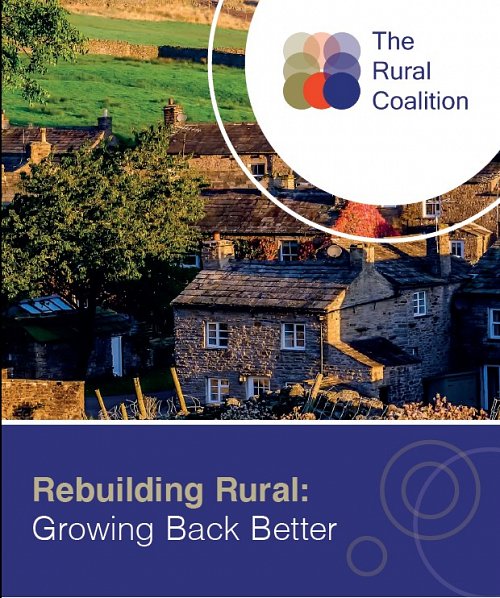
The Rural Coalition has published Rebuilding Rural: Growing Back Better, setting out its priorities for a successful recovery by seizing the potential social and economic opportunities across rural England.

Rural areas are home to 9.3 million people – more than Greater London – but they have long faced the challenges of sparsity, remoteness, poor connectivity and a history of unequal funding and patchy service delivery. Some communities which are heavily dependent on tourism and seasonal work are now at risk of being left further behind. The COVID-19 crisis has exposed weaknesses in the narrow economic base of some of these areas, but also highlighted the opportunities rural economies can make to the recovery. Now, this potential needs to be unlocked through a programme of investment.

To read more please click here.