Research reveals impact of the pandemic on village halls

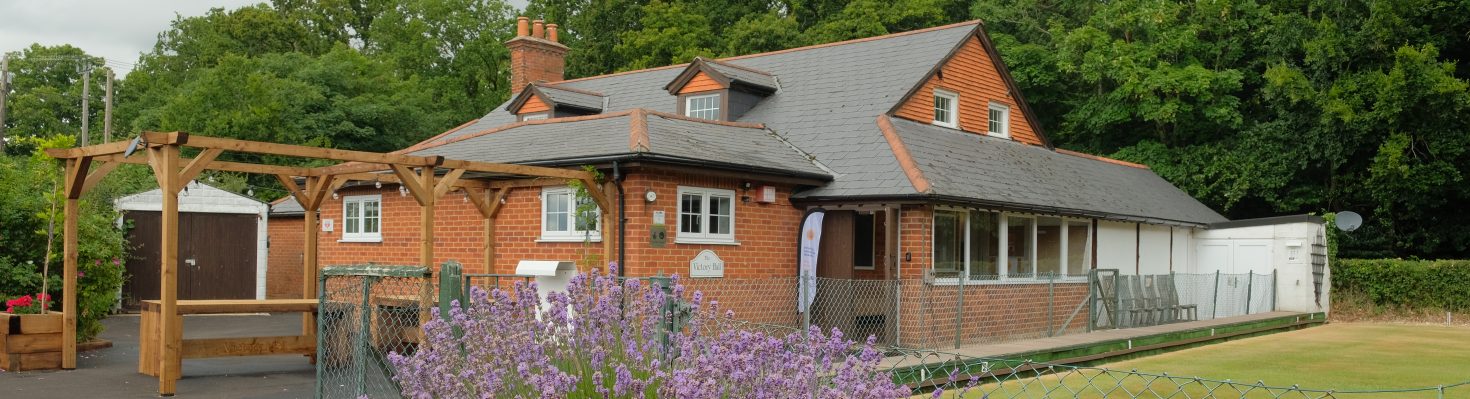
Whilst 3 in 20 halls supported Covid relief efforts, the majority stayed closed and will need ongoing support and funding to recover.

Much has changed since England’s 10,000+ village halls were surveyed at the beginning of 2020 by our national body, Action with Communities in Rural England (ACRE).

Almost immediately after the survey closed, so too had the majority of these buildings – and with it the community activities, events and rural livelihoods they ordinarily provide a space for.

Now, new research sheds light on the extent to which halls have been variously affected by three successive national lockdowns.

15% of halls contacted said they had played an active role in supporting their community during the pandemic. Taking advantage of exemptions in the regulations, they provided a limited number of ‘essential services’ to support vulnerable members of their community and help the NHS – sometimes without any additional resources.

Through its network, ACRE is aware of a number of halls, such as Wraysbury Village Hall in Berkshire and Yarm Community Centre in Durham, that have stepped up to the plate and used existing facilities to prepare meals on wheels and delivery services providing a lifeline to isolated members of the community.

Others, like Frenchay Village Hall in Gloucestershire continued to provide childcare for key workers and in Mawdesley Village Hall in Lancashire, the committee went one step further and transformed their main hall and annex to help their local primary school accommodate more children safely for the last three weeks of term last year.

Creative solutions were also found in the face of crisis. For example, in Warwickshire, the volunteer committee managing Shotteswell Village Hall set up a scrubs’ hub making protective clothing for NHS workers.

And more recently, some village halls like Clifton Hampden Village Hall in Oxfordshire have been used as vaccination centres serving the wider rural area.

But aside from these inspiring examples of community camaraderie, many halls expressed concern that they would find it hard to attract volunteers and users back once they reopen, particularly older generations who may be less inclined to meet in person.

Dr Tom Archer, of Sheffield Hallam University who authored the report said, “Halls face major challenges in reopening and re-establishing services. The pandemic has had a significant impact on their volunteers and staff, as well as their users, and the future remains very much uncertain.

What we’ve learnt is that the last year has affected halls in diverse ways. Whilst a third of respondents to the survey said their financial situation had improved during the past year, a similar proportion said their situation had worsened, with many drawing on their reserves. Most worryingly, we have reason to believe at least 140 halls nationally could close and not reopen without further support.”

Deborah Clarke, ACRE’s Rural Evidence & Village Halls Manager said, “The research demonstrates a clear and urgent need for continued funding support to be made available to village halls during this period of uncertainty, particularly those facing financial difficulty. This should involve bridging funds and continued relief from business rates.”

If you are a hall or community buildings based in Berkshire please visit our Community Buildings Advice page for further information on how CCb can help you.

Findings are based on a follow up questions to the 2020 Village Halls Survey, answered by 1,017 halls from across England between March and April 2021. The research was undertaken by The Centre for Regional Economic and Social Research, Sheffield Hallam University on behalf of ACRE and funded by the Department for Environment and Rural Affairs.



West Berkshire Volunteer Recruitment & Retention Training

FREE Online Session

Tuesday 6 July 10am to 12 noon

Finding the right people, with the right skills, and then keeping them can be a challenge for organisations reliant on volunteer support.

This course will explore attitudes towards volunteering, how to recruit and retain volunteers and how to manage them effectively. There will be opportunities for you to share experiences and ask questions.

The aims of the course
• To challenge attitudes towards volunteering.
• Demonstrate proven recruitment and retention ideas.
• Stimulate thinking that could be used in your own community settings.

What will I get out of it?

Course outcomes:
• Gain a wider knowledge of the principles behind successful volunteer recruitment.
• Be inspired to think about different ways to recruit people.
• Encourage wider thinking around volunteering and how your work adds value to society.
• Inspire a volunteer recruitment campaign for your organisation.
• Think about existing volunteers and how to reinvigorate their stake and to ensure they are engaged and in tune with your aims.
• Participate in a collaborative way and to share your own experiences.

Who’s delivering the course?

Garry Poulson, Director, Volunteer Centre West Berkshire
Garry has extensive knowledge of recruiting and retaining volunteers. He has been running the Volunteer Centre for 23 years, playing a leading role in local and regional voluntary and community initiatives. Garry has designed and implemented a range of volunteer lead projects and programmes that work in close partnership with local authorities and communities. He manages around 220 volunteers and three community transport schemes.

Chris Read, Volunteer Recruitment Officer, Volunteer Centre West Berkshire
Chris has worked in the not-for-profit sector for 18 years and has been responsible for managing volunteer recruitment at the Volunteer Centre for the past 6 years. By meeting potential volunteers and using IT software that matches volunteers to suitable voluntary roles, Chris will outline how he can support you with your volunteer recruitment.

Book your place

To book your place email jan@vcwb.org.uk
A Zoom link will be sent to you after booking.


Celebrating Windrush Day 2021 in Reading

The Reading Windrush Steering Group is pleased to announce that it has been successful for a third year running in receiving a grant from the Ministry of Housing, Communities and Local Government (MHCLG) to deliver events and activities to celebrate Windrush Day on 22 June 2021.

The Windrush Steering Group consists of representatives from the Alliance for Cohesion and Racial Equality (ACRE), Caribbean Associations Group (CAG) Reading, Age UK Berkshire and  Reading Museum Service/Reading Borough Council (RBC). Regular updates on the planning will be posted on partners’ websites and social media pages and shared with Caribbean Community Secretariats in the Greater Reading Area.

Commemoration events and activities reflect the wishes of the Reading Windrush community and will commence in the week beginning 21 June 2021. They include:

  • Windrush ‘Thanks and Praise’ Church Service
  • Video recordings of the experiences of Windrush Elders and Windrush Children (with emphasis on school experiences)
  • History of Black worship in Reading
  • Windrush poetry competition in partnership with Barbados Museum and Historical Society
  • Windrush Day Experience
Jeff Jones, Chair of the Caribbean Associations Group, said:

The Reading Caribbean Community welcomes the opportunity this grant gives to celebrate our Caribbean forebears’ legacy. The members of the Reading Windrush Group are working together to deliver the Windrush Day 2021 programme of events. We encourage members of the Reading community to join with us in celebrating Windrush Day and to participate in the exciting projects that will appeal to all.

Victor Koroma – General Manager, Alliance for Cohesion and Racial Equality commented:

The Windrush Steering Group is looking forward to working with members of the Reading Windrush community in order that their lived experiences are captured and that these experiences can be shared with the wider Reading community.

Further information

The Windrush Steering Group reiterates its invitation to the community – if you are interested in contributing to any of the above, and especially if you have a personal Windrush story you wish to have included in our video recordings, please contact Annette Levy on 07387 980 215 or by email: caribbeanassociationsgroup@gmail.com.


West Berkshire collective energy switch

West Berkshire residents are being invited to sign up for the West Berkshire Collective Energy Switch and save on their energy bills.

The scheme runs in partnership with Big Community Switch and offers a no-obligation collective energy switching scheme giving people the opportunity to group together and pay less for their energy. All energy will be 100% renewable and will be available for both electric and dual fuel tariffs. 

Top 10 energy

Overall, £691,213 has collectively been saved for West Berkshire residents since the scheme began. New figures published by Energy UK’s Energy Switch Guarantee at the end of May also revealed that customers in West Berkshire were in the top ten for energy switching in Great Britain during 2020.

You have until 6 July to register and/or accept your personal offer.


Beat the Street Wokingham launches

With us all feeling the impact of Covid, particularly disadvantaged communities and the disproportionate inequality in disadvantaged communities’ access to good quality physical activities for people who can’t afford them a new free physical activity launches in Wokingham Beat the Street offering young people, adults and older people the opportunity to have some fun and get out and explore Wokingham either walking, cycling, wheeling or scooting boosting their mental and physical wellbeing. The Sir Michael Marmot review Build Back Fairer urged everyone in the country to offer more equal access to physical activity and Beat the Street certainly does that.

The popular physical activity game Beat the Street gets underway across Wokingham Town Centre, Finchampstead and Woosehill.

People of all ages are invited to ditch the car and get active as Beat the Street Wokingham gets underway.

Primary school pupils will be provided with fobs while parents and teachers will receive a card from the school so they can accompany children. The wider community can pick up a contactless card from a distribution point listed at www.beatthestreet.me/wokingham

You can pick up the items you need, a fob for children or a card for adults, from Emmbrook Convenience Store (Reading Road, Wokingham), Morrisons (Woosehill), Wokingham Library (Denmark Street, Wokingham), the Co-Op (Finchampstead Road, Finchampstead) and Aldi (Wellington Road, Wokingham).

The game takes place across Wokingham town centre, Woosehill and Finchampstead for six weeks and challenges residents of all ages and abilities to see how far they can walk, run, scoot, wheel or cycle around the game area.

The free, fun game will take place across Wokingham’s air quality management areas from Tuesday, 8 June until Tuesday, 20 July and encourages people of all ages to incorporate active travel into their daily lives in return for points and the chance to win prizes. It has been played in more than 100 towns and cities all over the UK, including Woosehill and Emmbrook in 2015 and Woodley in 2016.

Cllr Pauline Jorgensen, executive member for highways and transport, said: “Beat the Street is a fantastic, free-to-enter initiative and anyone can get involved. Remember you’ll need to pick up your fobs and cards before it all starts next week.

“Why not consider starting a workplace team or joining a school team and see if you could walk or cycle to work as well as getting out and about at lunchtime? Not only would you be doing great things for your health and to improve air quality, but you could walk your way to supporting a local charity.”

Beat the Street was devised by Reading GP Dr William Bird MBE in 2010 to get communities active and to make physical activity accessible to everyone.

The game helps communities to increase their physical activity levels, reduce traffic and congestion plus helps improve air quality and helps families spend time safely in green spaces together.

Players use a free card (adults) or fob (primary school-aged children) which they hover over the 73 special sensors called “Beat Boxes” which will appear on lampposts around the game area. Simply find your nearest Beat Box on the map to register your journey, hover your card or fob over it until it beeps and flashes, then walk, cycle, run, wheel or scoot to the next Beat Box within an hour to score 10 points!

Players then walk, roll, scoot, cycle or run between the 73 Beat Boxes scoring points with their fobs or cards as they go. The further players travel, the more points they score for their community or school team. Each week is themed with different activities to help participants get the most out of their Beat the Street experience.

Beat the Street is being organised by Intelligent Health on behalf of Wokingham Borough Council and My Journey Wokingham, and is funded by the Department of Environment, Food and Rural Affairs (DEFRA). The game areas have been selected in line with Wokingham town centre’s air quality management area (AQMA) but anyone from across Wokingham borough is welcome to take part.

The changes to the game mean that you do not need to touch a Beat Box, players can simply hover their card or fob near the sensor and it will register the swipe. Further measures such as frequent sanitisation of Beat Boxes and temporary pavement markings to help with social distancing will also be put in place.

For more information, click onto www.beatthestreet.me/wokingham or search for BTS Wokingham on social media.