West Berkshire: Have your say on main changes to the Local Plan Review

West Berkshire Council public consultation on the main changes to the district’s Local Plan 2022- 2039 is now live.

The Local Plan sets out planned development for West Berkshire and guides decisions on future development proposals in line with the needs of the district.

The Public Examination stage began earlier this year with a number of public hearings – the last of which took place on 3 October 2024. During this process, the Planning Inspector required additional sites to be identified to address a shortfall in the number of houses to be delivered within the next five years. Consequently the Council put forward the following amendments and additions to the plan:

  • An increase in the number of homes in North East Thatcham from 1,500 to 2,500, including a masterplan Supplementary Planning Document 
  • Additional sites proposed for housing at: 
  • Henwick Park, Bowling Green Rd Thatcham – approximately 225 homes 
  • East of Regency Park Hotel Thatcham – approximately 45 homes 
  • Pincents Lane, Calcot – approximately 138 homes 
  • Land north of Pangbourne Hill Pangbourne – approximately 25 homes. 

These sites achieve the enhanced housing numbers the inspector expected to have in the Local Plan. 

The Government requires every Local Plan to be reviewed at least once every five years. West Berkshire’s current Local Plan sets out our planning policies up to 2026, and this latest review, if approved, will take them up to 2041.

Regularly reviewing the Local Plan ensures the Council will meet both the current and emerging housing needs of the district. It sets the strategy for distributing development and policies for protecting, conserving, and enhancing the natural built and historic environment.

Speaking about the Local Plan Review, Councillor Denise Gaines, Deputy Leader, and West Berkshire’s Executive Member for Planning said, 

“We have now reached the next key milestone in the Local Plan process after a long and difficult journey. The council has been put in the most challenging position of being told to progress this plan by Central Government. We were ready to vote to withdraw the plan, but we were directed to proceed to examination by the Secretary of State. The sites identified in the main modifications are extremely contentious with many residents in West Berkshire, but we are in the invidious position of having to proceed to consultation.

 “If we do not continue to work with the Inspector then there is a very high probability that the development of the Plan will be taken over by Central Government and the Council will lose any influence and control over the process at considerable cost to our residents. 

“The Inspector now requires that we carry out a full public consultation on the main modifications which will give you, our communities, another opportunity to highlight your views and concerns to the Inspector.” 

The consultation runs until Friday 31 January 2025 and we’re encouraging residents to have their say.

Following the consultation the Council will be able to make a brief written response to any submissions received. All submissions and the Council’s response will then be sent to the Inspector so that he can prepare his final report. Click here for more.


A Manifesto for Delivering Thriving Rural Communities Through Affordable Housing

Rural Housing Week (1st to 5th July) is an opportunity to focus on the housing challenges facing people living in rural communities.  It is a chance to highlight how we can do things differently and develop lasting solutions to the rural housing crisis which is driven by a combination of low local incomes, high housing costs due to external demand, and a limited affordable housing supply. With affordable housing constituting only 9% of villages compared to 17% in urban areas, the disparity is striking.

Workplace incomes in rural areas are lower than in urban areas, but housing costs are higher. This can mean that what is known as Affordable Rent, charged at up to 80% of market rents, is unaffordable for many. Local Housing Allowance rates are often insufficient to cover higher rural rents, leaving a gap that many rural working residents find difficult to fill.

Rural Exception Sites –  small plots of land which can only be developed for affordable housing for local people,  are often the only route to meet housing needs in rural communities. However, development on these sites has halved over the past five years. 

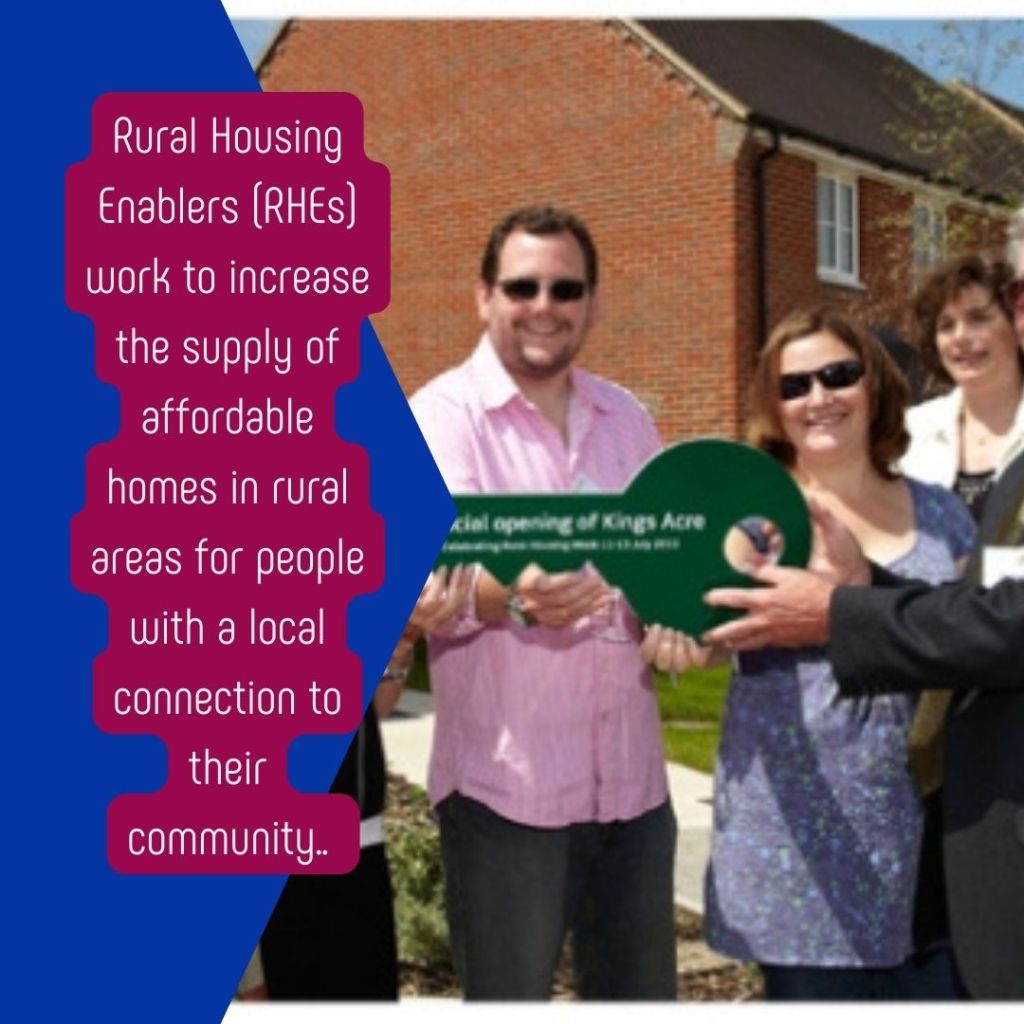
Rural Housing Enablers are impartial advisors from rural community organisations like Connecting Communities in Berkshire, Community Impact Bucks and Community First Oxfordshire. They play an essential role in  supporting communities, landowners, local authorities, and housing associations to deliver housing on Rural Exception Sites

A New Strategy for Thriving Rural  Communities

A Manifesto for Delivering Thriving Rural Communities Through Affordable Housing is a strategic document developed by a coalition of rural charities and housing associations. It makes several evidence-based recommendations to address the rural housing crisis, focusing on a long-term strategy for scaling up and delivering a national programme of affordable rural housebuilding. Key recommendations include:

  • Housing Needs Requiring local authorities to assess and document the specific housing needs in their rural communities and devise targeted policies and strategies to address them.
  • Enhanced Planning Policy improving national planning policy and guidance to accelerate delivery of homes through Rural Exception Sites.
  • Funding for Enablers Establishing an annual fund of approximately £2.6 million to sustain a national network of Rural Housing Enablers.
  • Adapted Homelessness Strategies Adapting homelessness and rough sleeping strategies to rural areas, focusing on prevention and using enhanced data collection to uncover hidden needs.

Affordable rural housing projects, often small in scale,  yield major benefits, contributing significantly to community investment and economic prosperity. Building just ten such homes can provide a £1.4m economic boost, support 26 local jobs, and secure a net return of around £250k for the Treasury, before considering other local multiplier effects.

By understanding and addressing these challenges, the strategy aims to make the countryside a viable, inclusive, and attractive living option, enriched with opportunities for all.

Collaboration for Impact

Connecting Communities in Berkshire, Community Impact Bucks and Community First Oxfordshire are working together under the banner of the Rural Thames Valley Partnership. By sharing knowledge and resources, we aim to get the most out of our respective rural housing projects for the rural communities we serve.


What is a Rural Exception Site?

Have you heard of a Rural Exception Site? These were originally introduced in 1991 as a mechanism for delivering affordable homes on small plots of rural land that would not otherwise be granted permission for housing development.

An exception site is literally an exception in planning terms. It allows for planning permission to be granted on land that would not normally be granted planning permission, possibly due to contraints like Area of Outstanding Natural Beauty, Green Belt, or simply because it is outside the settlement envelope or boundary of the village. Almost all exception sites are adjacent to a settlement boundary, as land within the boundary often has development value. It is this very fact of not having development value that makes the land more affordable for affordable housing development.

Our Rural Housing Enablers (RHEs) are keen to hear from Berkshire parish councils or rural community groups that think there may be a housing need in their village or parish. They have recently produced a Developing New Affordable Housing in Rural Exception Sites guide which can be found here.

Our RHEs can help groups and parish councils plot a route through the various processes and help put them in touch with others who might need to become involved.

“Building the homes people need brings vitality to rural communities and helps boost the rural economy at this difficult time,” our CEO Tim Parry observed. “This project helps rural communities in Berkshire carry out a housing needs survey and identify potential sites. We have already engaged with eight rural communities looking for advice and guidance about affordable housing and we have two housing needs surveys in the pipeline. Any rural community interested in exploring their options for meeting the local need for affordable housing should contact our Rural Housing Enablers at the earliest opportunity.”


Exciting News for Rural Communities in Berkshire

We recently learned that we have been successful in our application to the Department for Environment, Food & Rural Affairs (DEFRA) for funding to provide a rural housing-enabling service to support Parish Councils in Berkshire to address their local affordable housing needs.

We are currently in the process of recruiting for this post and will be able to share more news about this shortly. This type of support has not been available since 2017 when funding for our previous project dropped to unsustainable levels. Since that time the housing situation for many rural communities has worsened, with increased house prices and a drop in the availability of rented homes. We are really keen to we use this funding to make a real impact on the provision of high-quality affordable homes for those living in our villages.

Through this service, CCB will be able to work with rural parishes in Berkshire to: 

  • Undertake a housing needs survey to establish evidence for the numbers and tenures of homes that might be needed.  We have budget available to carry out some surveys at no cost where a parish wants to explore rural affordable housing options.
  • Help with site identification and site appraisals to find a potential rural exception site in the parish.
  • Help parishes decide on the best delivery route to meet their ambitions: for example through a community-led approach whereby the community takes the lead in designing and commissioning the project, or through transferring the site to a housing association to develop in consultation with the community. We have built strong links with local housing associations who are committed to rural affordable housing and working collaboratively with communities.
  • Liaise with the local housing and planning authority to help the scheme achieve a planning permission. We are working closely with the Berkshire housing and planning authorities to deliver this programme.
  •  Coordinate the delivery of the site, including community engagement, funding, partnership agreements, and letting and sales arrangements.

This initial funding is only available until March 2025. Whilst we hope that the funding will be extended, we do want to use this period to make significant progress in the identification of suitable sites that can lead to new affordable homes for people priced out of local housing.

If you would like to register you interest in this project please contact Tim.Parry@ccberks.org.uk