More than half of energy customers are on poor value deal

Article from Which? on 1st November 2017

Gas and electricity bills are higher than 10 years ago

Six in 10 energy customers are on out-of-contract gas and electricity tariffs and paying over the odds for the gas and electricity they use, the energy regulator Ofgem revealed.

Almost as many (58%) customers admit they’ve never changed energy supplier, or have switched only once. Those who do switch can be paying around £300 less for the same gas and electricity.

Although the number of customers on poor value (standard variable) tariffs has fallen in the last two years, progress ‘isn’t happening fast enough’ Ofgem said in its annual State of the Market report.

Which? managing director of home products and services, Alex Neill, said: ‘Today’s report makes it crystal clear that the energy market is not working for consumers, with far too many people still stuck on expensive standard variable tariffs.

As the temperature drops and bills start rising, it is vital that the Government’s interventions really do fix the broken energy market. ‘Our advice to consumers who aren’t getting a good deal is to switch to a better deal now, before you find yourself overpaying for another winter.’

Read more: https://www.which.co.uk/news/2017/11/more-than-half-of-energy-customers-are-on-poor-value-deals/ – Which?

If you run or are involved with a group that would benefit from advice on energy costs please contact our Energy Expert, Helen – Helen.Dean@ccberks.org.uk, to find out about advice and guidance that she can give.


FareShare Go Scheme: Getting unsold food direct from local stores to charities for free 

FareShareGetting unsold food direct from local stores to charities for free.

The food we redistribute is fresh, quality and in date surplus from the food industry and the charities we work with can be found across the UK. Last year we redistributed enough food for 25.8 million meals. But it’s about more than meals. The organisations we supply food to – from breakfast clubs for disadvantaged children, to homeless hostels, community cafes and domestic violence refuges – are places that provide life changing support, as well as lunch and dinner. By making sure good food is not wasted, we turn an environmental problem into a social solution.

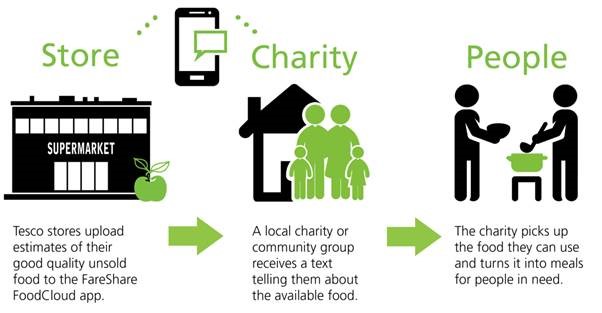
We use simple technology, provided by our partner FoodCloud, to match charities and community groups directly with a local Tesco store that has unsold food. By working together we cut down on waste, save organisations money and help provide nutritious meals to people in need.

How does it work?

1. The charity/organisation nominates one or more mornings per week that they are available to collect surplus food from their local store.

2. On the evening prior to nominated collection day at 7:30pm, they will be notified via text that their donation is available for collection.

3. The fresh surplus food will be packaged and available for collection from the store from 7-10am. Organisations are not obliged to take everything that is available.

4. The food then needs to be taken back to the registered premises, rather than the staff member’s house.

5. There are also Evening collections where charities/groups can collect anytime between 8.30pm-10pm available from Tesco Metro and Tesco Extra stores

What food is available?

  • Baked goods – from loaves of bread to pastries
  • Fruit and vegetables• Dried goods (e.g. cereals, tins, pasta)
  • Chilled goods – including meat and dairy products (evening collections only)

How can you use the food?

If you have a community café or provide a meal for your clients then this is a fantastic way to add some extras to the food you already provide. If you have a weekly group you could use the bread to provide tea and toast, or snacks for people attending. There is also the opportunity to provide small food parcels if you have identified some residents or clients who are in need of food to supplement their income.

Can my organisation receive food?

In order to receive food, your organisation needs to be equipped to receive, store, prepare and serve foods safely. However, charities and community groups do not need to cook meals and they can distribute food to vulnerable people in the form of food parcels. We will need to come and visit you to make sure that everything is in place with regards to food safety before you can start collecting.


Voluntary Sector Recruitment in Berkshire for Educator

EducatorLife Education

Part-time, term time only (0.6 – 0.8)


Salary: £19,060 – £19,623 (pro-rata)

A rare opportunity to join our team of Educators in the delivery of specialised health, well-being and drug education programmes to primary aged children throughout Thames Valley/ North Hampshire.

Ideally resident in the Reading area, you will preferably have recent experience of working with young children and knowledge of and an interest in health, well-being and drug issues. A flexible approach is required as the days worked each week may vary.

Life Education Wessex & Thames Valley is a charity working with schools and the community to help children make informed healthy choices and stay safe. Educators use positive and dynamic teaching strategies and specially designed visual aids and models to make children aware of the wonders of the body and how to look after it. The fun, age-appropriate and memorable programmes are primarily delivered in purpose built mobile classrooms.

The successful candidate will be required to undergo and pass an intensive three month training course and be subject to an enhanced DBS check.

Visit www.lifeeducationwessex.org.uk/join-us/ for information pack. Closing date 13th December 2017. Interviews 19th December 2017. Applicants must have eligibility to work in the UK and a full UK driving licence.


Autumn Training Update

This Autumn CCB successfully ran two free training topics in community buildings in Berkshrie:

Marketing Your Village Hall in Padworth Village Vall

A repeat of the marketing training held at Tidmarsh village hall in June was run in Padworth in October 2017. 9 attendees attended a presentation run by Sara Charlesworth, CCB trustee, as to how to market your hall and increase the number of bookings. Participants were asked to think of 10 new activities which could take place in their halls and how they would target those people who might like to use it. The meeting was supported by West Berkshire Council and sponsored by Norris and Fisher Insurance Brokers.

The use of social media was referred to and it was agreed to run another session in 2018 to concentrate on that as a marketing tool for halls so look out for this!

HeartStart - image 1-COLLAGE

First Aid training taking place at Woolhampton Village Hall recently

Emergency first aid and use of defibrillators @ Acland Memorial Hall Cold Ash

15 people attended another in the series of emergency first aid and use of defibrillator meetings delivered by HeartStart Thatcham. The training included sessions on what to do with conscious and unconscious casualties, choking, bleeding and how to use a defibrillator. A number of villages have installed defibrillators as a result of these training meetings which have always been very well received.

CCB is very pleased to have been awarded another grant from Scottish and Southern Energy’s Resilient Communities Fund to run 3 more meetings during 2018. Details of the first one will be announced soon.


Funding Update – November 2017

BlueSpark Foundation 

BlueSpark Foundation is a registered charity which supports the education and development of children and young people by providing grants for educational, cultural, sporting and other projects.

They are particularly keen to support projects which will help  the self-confidence, team working skills and future employability of children and young people. They will fund schools, voluntary groups, and individuals.
Many grants will be under £2,000, most will be under £5,000 and only in a few cases will grants exceed £10,000. http://bluesparkfoundation.org.uk/

Masonic Charitable Foundation

The Foundation makes grants to registered charities which help people to live happy, fulfilling lives and to participate actively in society. Issues they support are:

  • financial hardship
  • health and disability
  • education and employability
  • social exclusion and disadvantage

Small Grants

Between £500 – £5,000 can be awarded to smaller charities with an annual income that does not exceed approximately £500,000. Small Grants can be used for core expenditure such as general running or overhead costs of the charity.Large Grants. Over £5,000 can include funding salary costs, specific project costs and refurbishment costs. These are available only to charities with an income above £500,000. The next deadline for applications is 2nd February 2018.
https://mcf.org.uk/community/

Segro Thames Valley Community Fund

The SEGRO Thames Valley Community Fund is part of a three year partnership between SEGRO and Berkshire Community Foundation (BCF) to help tackle barriers to work and education and help local people into employment.

The SEGRO Thames Valley Community Fund will tackle barriers to work and support those suffering from disadvantage who require help to get into, or return to, the workplace through skills training,apprenticeships and educational activity to boost their chances of employment. The funding will focus on supporting, but not be exclusive to, young people and those suffering from mental health difficulties, physical disabilities, language barriers or a criminal background.

This Fund will award at least five grants of up to £5,000 and local groups from the Slough, Reading or Bracknell areas are eligible to apply.
http://www.berkshirecf.org/grants/segro-thames-valley-community-fund/

Grow Wild
Grow Wild is awarding funding of £2,000 or £4,000 to groups and projects that:

  • Stand out from the crowd – think something creative, or even better something that hasn’t been done before!
  • Focus on UK native wildflowers, plants and/or fungi, highlighting the importance of these species for the environment, and for quality of life.
  • Will engage one or more of these groups:
    • Young people aged 12-18
    • Students and young people aged 18-25
    • People living in urban areas
    • People experiencing hardship and reduced access to services
    • Adults that are less engaged with their community and environmental activities
  •  Will encourage large scale community involvement, ideally in the hundreds!
  • Will deliver the project in a space or location that is accessible to the general public i.e. is not in a restricted or controlled area

https://www.growwilduk.com/content/community-project-funding-2018

Information courtesy of Slough CVS